 56 citations
,
December 2011 in “The Plant Journal”
56 citations
,
December 2011 in “The Plant Journal” AGD1 is important for root hair development in Arabidopsis, working with phosphoinositide signaling and the actin cytoskeleton.
26 citations
,
September 1999 in “Canadian Journal of Botany” The RHD4 gene is crucial for consistent root hair growth in Arabidopsis thaliana.
 October 2025 in “Proceedings of the National Academy of Sciences”
 Phospholipids help plant proteins move by regulating receptor interactions.
 September 2023 in “Plant journal”
 A protein called GIS3 is important for the growth of root hairs in Arabidopsis by controlling two genes with the help of certain growth signals.
37 citations
,
August 2011 in “Journal of Bone and Mineral Research” A girl had rickets due to a gene mutation affecting vitamin D response.
 80 citations
,
April 2011 in “Plant physiology”
80 citations
,
April 2011 in “Plant physiology” White lupin uses specific genes to grow root hairs and access phosphorus when it's scarce.
 September 2018 in “Epsilon Archive for Student Projects (University of Southampton)”
 Bacillus amyloliquefaciens can boost root hair growth in some Arabidopsis plants, potentially improving agriculture.
5 citations
,
December 2023 in “Current Biology” A feedback loop between LRH and RSL4 controls root hair growth in Arabidopsis.
 6 citations
,
June 2018 in “Journal of pediatric endocrinology & metabolism/Journal of pediatric endocrinology and metabolism”
6 citations
,
June 2018 in “Journal of pediatric endocrinology & metabolism/Journal of pediatric endocrinology and metabolism” Patients with the same genetic mutation for vitamin D-resistant rickets showed different symptoms but all improved with treatment except for hair loss.
 August 2025 in “International Journal of Contemporary Pediatrics”
 HLD10 can include increased body hair and Mongolian spots.
 6 citations
,
January 2014 in “Journal of pediatric endocrinology & metabolism/Journal of pediatric endocrinology and metabolism”
6 citations
,
January 2014 in “Journal of pediatric endocrinology & metabolism/Journal of pediatric endocrinology and metabolism” Three siblings with a genetic form of rickets showed different symptoms of the disease.
 10 citations
,
September 2019 in “Experimental Eye Research”
10 citations
,
September 2019 in “Experimental Eye Research” The enzyme RDH12 plays a role in vision and retinal disease, with mutations leading to early onset visual loss and blindness, but the exact disease mechanism is unclear and there are no treatments yet.
 January 2024 in “Ankara City Hospital Medical Journal”
 Rhupus is a complex syndrome that is hard to diagnose due to unclear clinical criteria.
 1 citations
,
October 2022 in “Rheumatology”
1 citations
,
October 2022 in “Rheumatology” RHUPUS should be considered in children with deforming arthritis.
January 2024 in “Ankara City Hospital Medical Journal” Rhupus is a complex syndrome that combines rheumatoid arthritis and lupus, making diagnosis challenging.
29 citations
,
January 2003 in “KARGER eBooks” HVDRR is caused by VDR gene mutations, leading to vitamin D resistance, treatable with high calcium doses, but alopecia remains permanent.
26 citations
,
August 2009 in “Journal of Pediatric Gastroenterology and Nutrition” Hoyeraal-Hreidarsson syndrome in infants causes severe gastrointestinal issues.
12 citations
,
September 2014 in “Bone” A vitamin D receptor mutation causes rickets and affects immune responses.
 4 citations
,
January 2017 in “Journal of pediatric endocrinology & metabolism/Journal of pediatric endocrinology and metabolism”
4 citations
,
January 2017 in “Journal of pediatric endocrinology & metabolism/Journal of pediatric endocrinology and metabolism” Two different mutations in the vitamin D receptor gene cause different symptoms and responses to treatment in Lebanese patients with hereditary rickets.
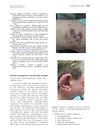
A 72-year-old man was diagnosed with a rare skin form of Rosai-Dorfman disease after years of misdiagnosis.
33 citations
,
October 2005 in “Journal of Investigative Dermatology” A specific gene mutation causes sparse, brittle hair in a family.
67 citations
,
August 2004 in “Endocrinology” A specific gene mutation causes vitamin D resistance, but certain vitamin D analogs might help.
 10 citations
,
September 2015 in “PLoS ONE”
10 citations
,
September 2015 in “PLoS ONE” New mutations in the VDR gene cause vitamin D-resistant rickets without hair loss.
 52 citations
,
November 2003 in “Journal of Investigative Dermatology”
52 citations
,
November 2003 in “Journal of Investigative Dermatology” Different harmful mutations in the CDH3 gene cause HJMD, but symptoms vary among individuals.
11 citations
,
July 2010 in “European Journal of Dermatology” The condition is linked to chromosome 12, but no mutations were found in the known genes.
5 citations
,
July 2017 in “International journal of endocrinology and metabolism/International journal of endocrinology and metabolism.” Two siblings with a genetic mutation had a form of rickets that doesn't respond to vitamin D.
 7 citations
,
June 2016 in “Bone Research”
7 citations
,
June 2016 in “Bone Research” A Chinese family had a child with a specific gene mutation causing vitamin D-resistant rickets, but the child improved with calcium and low-dose calcitriol.
13 citations
,
April 1994 in “Baillière's clinical endocrinology and metabolism” Some people have genetic mutations that make them resistant to vitamin D, leading to rickets even with enough vitamin D intake.
57 citations
,
August 1997 in “Pediatrics International” VDDR I and II are genetic disorders affecting vitamin D use, causing rickets, with VDDR I treatable by vitamin D supplements and VDDR II needing high doses and calcium.
25 citations
,
September 2005 in “Journal of the American Academy of Dermatology” Rapp-Hodgkin syndrome, AEC, and EEC are different expressions of the same genetic disorder caused by TP63 gene mutations.