December 2018 in “Bioscience Journal” Leporacarus gibbus mite was found in a domestic rabbit in Espírito Santo, Brazil, for the first time.
January 2026 in “Veterinarski glasnik” The orphaned foal stayed healthy despite challenges, showing the need for thorough health checks.
 9 citations
,
November 2007 in “Veterinary dermatology”
9 citations
,
November 2007 in “Veterinary dermatology” Boxer and Labrador dogs' hair growth is affected by the tropical climate, but Schnauzers' is not.
1 citations
,
May 2025 in “BMC Veterinary Research” Early diagnosis and treatment of hypothyroidism in dogs is crucial to prevent serious complications.
 March 2021 in “Research Square (Research Square)”
 Patients with RASopathies have a higher risk of autoimmune disorders and should be routinely screened.
December 2017 in “Journal of the Hellenic Veterinary Medical Society” Canine acral lick dermatitis is a complex skin issue in dogs caused by excessive licking, often needing various treatments.
June 2016 in “Journal of Coastal Life Medicine” The terrier dog with pituitary-dependent hyperadrenocorticism was successfully treated with mitotane.
5 citations
,
April 2019 in “Veterinary Dermatology” Cats infested with Lynxacarus radovskyi can lose hair without inflammation, treatable with selamectin.
 January 2026 in “Preprints.org”
 Posaconazole effectively treated a resistant fungal infection in a Spitz dog.
 8 citations
,
June 2018 in “ACTA SCIENTIAE VETERINARIAE”
8 citations
,
June 2018 in “ACTA SCIENTIAE VETERINARIAE” A maned wolf was successfully treated for a fungal infection, highlighting the need to understand such diseases for conservation.
 2 citations
,
July 2013 in “Veterinary dermatology”
2 citations
,
July 2013 in “Veterinary dermatology” Dog skin with hair loss, when transplanted to mice, regrew hair, suggesting the hair loss cause is likely body-wide, not skin-specific.
 July 2025 in “Buletin Veteriner Udayana”
 The dog's skin condition improved with treatment, but full recovery wasn't achieved, and environmental cleaning is advised to prevent re-infection.
5 citations
,
November 2011 in “Journal of Cutaneous Medicine and Surgery” Hairless dogs can be used to study human hypertrophic scars.
11 citations
,
May 2019 in “Journal of Medical Primatology” Alopecia in rhesus macaques is linked to pregnancy, not stress.
 16 citations
,
April 2007 in “Journal of Medical Primatology”
16 citations
,
April 2007 in “Journal of Medical Primatology” The monkey's hair loss was due to an autoimmune disease, not genetics.
27 citations
,
June 2020 in “Genes” Lykoi cats' unique sparse hair is linked to specific genetic variants in the Hairless gene.
 December 2014 in “Bangladesh Journal of Veterinary Medicine”
 Ectoparasites cause skin issues in Egyptian lesser blind mole rats, affecting their population.
12 citations
,
August 2004 in “Veterinary Dermatology” Fipronil effectively treats Lynxacarus radovskyi in outdoor cats.
 10 citations
,
April 2013 in “Veterinary dermatology”
10 citations
,
April 2013 in “Veterinary dermatology” A new skin disease in four Labrador retrievers responded well to immunosuppressive treatment.
 February 2024 in “Buletin Veteriner Udayana”
 Using sulfur soap helped improve skin problems in a dog with demodecosis.
 3 citations
,
February 2016 in “Pediatric dermatology”
3 citations
,
February 2016 in “Pediatric dermatology” Strong skin creams work well for long-term scalp inflammation in Rapp-Hodgkin Ectodermal Dysplasia.
 September 2024 in “Seven Editora eBooks”
 Dermatophylosis sporadically affects adult sheep in Sertão da Paraíba, causing alopecic and crusty skin lesions.
 January 2021 in “Revista brasileira de higiene e sanidade animal”
 A dog with skin lesions was successfully treated for a human-type fungal infection.
1 citations
,
July 2025 in “Frontiers in Veterinary Science” Tibetan sheep have specific genes for high-altitude adaptation and wool traits, aiding breeding strategies.
1 citations
,
May 2024 in “Preprints.org” Rex rabbit fur is best harvested at 120 days for optimal hair density and quality.
 109 citations
,
October 2007 in “American Journal of Human Genetics”
109 citations
,
October 2007 in “American Journal of Human Genetics” Giving a special protein to dogs with a certain genetic disease improved their symptoms but didn't help with hair growth.
 6 citations
,
July 2009 in “Veterinary dermatology”
6 citations
,
July 2009 in “Veterinary dermatology” Vesiculobullous lesions should be considered part of canine cutaneous epitheliotropic T-cell lymphoma.
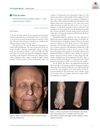 March 2019 in “Journal der Deutschen Dermatologischen Gesellschaft”
 Rothmund-Thomson syndrome type 2 can cause chronic, poorly healing wounds.
1 citations
,
April 2010 in “Cancer Research” WYE-130600 may cause skin thickening and irritation.
January 2026 in “Animal Genetics” A genetic variant in the GJB6 gene likely caused the Labrador's paw pad condition.