26 citations
,
January 2020 in “Dermatology Online Journal” Certain skin rashes can indicate COVID-19 severity, with chilblains-like rashes linked to milder cases and livedoid patterns to more severe cases.
10 citations
,
June 2019 in “Transplant infectious disease” The virus linked to a rare disease was found in a patient's blood and urine before skin symptoms appeared.
16 citations
,
January 1995 in “Dermatology” The treatment for alopecia areata with diphenylcyclopropenone was unsuccessful.
28 citations
,
February 2010 in “Experimental Dermatology” The frizzy mouse and hairless rat mutations are due to changes in the Prss8 gene.
September 2017 in “Journal of Investigative Dermatology” LRIG1 protein affects hair growth by regulating skin receptors, leading to hair loss when overexpressed.
 April 2018 in “Asian-Australasian journal of bioscience and biotechnology”
 The study concluded that tick infestation was the most common skin problem in hospitalized dogs in Chennai, with various treatments used for different conditions.
124 citations
,
January 1995 in “The journal of allergy and clinical immunology/Journal of allergy and clinical immunology/The journal of allergy and clinical immunology” Netherton's syndrome is linked to high IgE levels and unique skin and hair symptoms, and may improve with ammonium lactate lotion and allergy management.
16 citations
,
August 2023 in “JAAD Case Reports” JAK inhibitors, like ruxolitinib, may effectively treat frontal fibrosing alopecia.
 1 citations
,
January 2021 in “Our Dermatology Online”
1 citations
,
January 2021 in “Our Dermatology Online” A scalp infection can look like alopecia areata and get worse if treated incorrectly.
June 2023 in “Journal of Biosciences and Health” Healthy dogs and cats often carry skin fungi without showing symptoms, which can spread to others.
27 citations
,
November 2007 in “Genomics” Mutations in specific keratin genes cause improper hair structure in mice due to faulty keratin protein assembly.
July 2025 in “Journal of the European Academy of Dermatology and Venereology” 33 citations
,
May 2017 in “Journal of Clinical Oncology” ETC-159 was safe up to 30 mg, but no tumor shrinkage was seen.
 September 2024 in “Seven Editora eBooks”
 Dermatophylosis sporadically affects adult sheep in Sertão da Paraíba, causing alopecic and crusty skin lesions.
116 citations
,
October 1982 in “The Journal of Pathology” Cyclosporin A is highly toxic to rats, causing severe health issues and death.
 1 citations
,
November 2020 in “International Journal of Dermatology”
1 citations
,
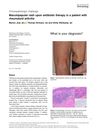
November 2020 in “International Journal of Dermatology” Methotrexate caused a rare skin rash in a rheumatoid arthritis patient, which resolved after stopping the drug.
 1 citations
,
November 2011 in “Journal of AIDS & Clinical Research”
1 citations
,
November 2011 in “Journal of AIDS & Clinical Research” Raltegravir may cause hair loss in some patients.
3 citations
,
January 2021 in “Veterinary dermatology” A litter of cats had a hair condition similar to a mouse mutation, leading to hair loss and abnormal hair and skin.
35 citations
,
October 2021 in “Journal of the European Academy of Dermatology and Venereology” COVID-19 vaccination may trigger recurrence of cutaneous T-cell lymphoma in some patients.
January 2024 in “Editora In Vivo eBooks” A dog had a fungal skin infection that can also affect humans.
 6 citations
,
August 2012 in “The Journal of Pediatrics”
6 citations
,
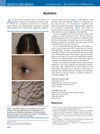
August 2012 in “The Journal of Pediatrics” A 12-year-old girl was diagnosed with monilethrix, a genetic condition causing fragile, beaded hair that breaks easily, with no effective treatment available.
 1 citations
,
November 2022 in “Anais Brasileiros de Dermatologia”
1 citations
,
November 2022 in “Anais Brasileiros de Dermatologia” Many hospitalized children with COVID-19 had skin, mouth, or nail changes, with skin rashes being common.
 33 citations
,
September 2007 in “Veterinary dermatology”
33 citations
,
September 2007 in “Veterinary dermatology” Topical 0.1% tacrolimus significantly improved ear infections in cats.
Using regulatory T cells and Rapamycin together improves chronic graft-versus-host disease treatment outcomes in mice.
 1 citations
,
March 2022 in “Berkala Ilmu Kesehatan Kulit dan Kelamin/Berkala ilmu kesehatan kulit dan kelamin (Periodical of dermatology and venerology)”
1 citations
,
March 2022 in “Berkala Ilmu Kesehatan Kulit dan Kelamin/Berkala ilmu kesehatan kulit dan kelamin (Periodical of dermatology and venerology)” Trichoscopy helps diagnose and monitor the treatment of fungal scalp infections in children.
A rare genetic mutation causes severe immune issues, hair loss, and nail problems.
3 citations
,
January 2019 in “Case Reports in Ophthalmology” VKHD and sarcoidosis may share a common cause.
January 2024 in “Indian Journal of Paediatric Dermatology” A rare case links early-onset alopecia universalis and nephrotic syndrome, suggesting genetic immune issues.
1 citations
,
February 2014 in “Italian journal of medicine” An 80-year-old woman with Cronkhite-Canada syndrome had multiple polyps and symptoms like diarrhea, hair loss, nail issues, and dark skin.
4 citations
,
October 2018 in “JAMA Dermatology” Ruxolitinib may help treat hair loss and symptoms in patients with chronic graft-versus-host disease.