 December 2025 in “Journal of Mycology and Infection”
 Griseofulvin effectively treats tinea capitis in infants.
November 2025 in “JEADV Clinical Practice” Itraconazole is effective for treating scalp ringworm, and a Wood's lamp is a useful diagnostic tool.
 October 2025 in “Indian Dermatology Online Journal”
 Trichoscopy helped correctly diagnose and treat a scalp and eyebrow fungal infection.
April 2025 in “Indian Journal of Paediatric Dermatology” Trichorrhexis invaginata can occur with tinea capitis, though it's rare.
 January 2025 in “Journal of Clinical Medicine”
 Unsanitary barber practices can spread scalp infections, treatable with oral antifungals.
A Moroccan athlete got a rare scalp infection, stressing the need for better hygiene in sports.
 May 2024 in “CRC Press eBooks”
 Children's hair loss can have various causes, including infections, autoimmune issues, physical stress, nutritional problems, and genetic factors.
Visible lesions are not always needed to diagnose tinea capitis.
May 2024 in “Journal of Fungi” Tinea capitis in adults, especially postmenopausal Black women, needs prompt treatment with oral antifungals to avoid scarring.
Neem leaf extract combined with eucalyptus and lemongrass oils can effectively treat Tinea capitis.
A rapid screening method using trichoscopy and clinical data can improve diagnosis and treatment of tinea capitis.
 February 2024 in “Infection and drug resistance”
 Tinea capitis in a child was caused by a fungus from cats, highlighting the need for accurate diagnosis and treatment.

Transfer learning with three neural network architectures accurately classifies hair diseases.
 September 2023 in “Cosmoderma”
 Early diagnosis and treatment of favus can prevent permanent hair loss.
 September 2023 in “Journal of the American Academy of Dermatology”
 Oral terbinafine is more effective than griseofulvin for treating certain scalp infections in children.
 July 2023 in “Al-Azhar Assiut Medical Journal”
 Trichoscopy helps diagnose and manage hair and scalp disorders in children.
 June 2023 in “British journal of dermatology/British journal of dermatology, Supplement”
 The case suggests that dissecting cellulitis of the scalp can occur in a White child and should be considered when diagnosing pediatric scarring alopecia.
 October 2022 in “Gadua Journal of Pure and Allied Science”
 Terbinafine is the most effective treatment for tinea capitis, a scalp infection often confused with other conditions.
 March 2022 in “Berkala Ilmu Kesehatan Kulit dan Kelamin/Berkala ilmu kesehatan kulit dan kelamin (Periodical of dermatology and venerology)”
 Touching cats can increase the risk of getting a fungal scalp infection, especially in boys and kids over 5.
 December 2021 in “Journal of clinical images and medical case reports”
 Moth-eaten alopecia is linked to various skin diseases and requires early treatment to prevent worsening.
November 2021 in “CRC Press eBooks” Tinea capitis is a fungal infection of the scalp that mainly affects children and can cause symptoms from mild itching to severe inflammation.
April 2021 in “Cermin Dunia Kedokteran” Two siblings with tinea capitis improved after treatment with ketoconazole.
April 2021 in “Cermin Dunia Kedokteran” Two siblings with scalp fungus improved after 2 months of treatment.
 October 2020 in “The Egyptian Journal of Hospital Medicine”
 Hair and scalp disorders are common in children and require early treatment due to their effect on physical and mental development.
 April 2019 in “Dermatology reports”
 A 12-year-old boy's hair fully regrew after 8 weeks of treatment for tinea capitis, and dermoscopy was useful for diagnosis and monitoring.
 July 2018 in “IP Indian journal of clinical and experimental dermatology”
 Hair loss in rural Indian children is often due to malnutrition, poor grooming, stress, and infections.
Griseofulvin is still the best treatment for tinea capitis.
 December 2014 in “Berkala Ilmu Kesehatan Kulit dan Kelamin”
 Griseofulvin effectively treats tinea capitis kerion type.
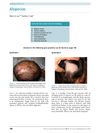 February 2013 in “Archives of Disease in Childhood: Education & Practice”
 Different types of alopecia in children require specific diagnoses and treatments.
February 2013 in “Archives of Disease in Childhood Education & Practice” Kerion, a severe scalp infection, causes hair loss and needs oral antifungal treatment.