 January 2025 in “MEDS Public Health and Preventive Medicine”
 Spermidine supplements can help extend the hair growth phase and may be useful for treating hair loss.
 January 2025 in “Repository of the Academy's Library (Library of the Hungarian Academy of Sciences)”
 Nucleic acids trigger chemokine production in skin cells, affecting skin inflammation.

Meis2 is essential for whisker development, independent of nerve involvement.
 August 2024 in “Qucosa (Saxon State and University Library Dresden)”
 White fat tissue in the skin helps control inflammation by affecting certain immune cells.
 May 2024 in “International Journal of Advanced Multidisciplinary Research and Studies”
 COVID-19 can cause various skin issues, like rashes and hair loss, which help in early diagnosis.
 May 2024 in “Brazilian Journal of Hair Health”
 Phototherapy with red and blue light can effectively treat hair loss.
 April 2024 in “Cell death and disease”
 Long COVID causes various long-term health issues and needs better awareness and treatment.
 January 2024 in “PloS one”
 Rat hair-follicle stem cells can become heart cells with specific supplements.
 November 2023 in “bioRxiv (Cold Spring Harbor Laboratory)”
 Adipocytes can change into fibroblast-like cells to help with wound healing.
 October 2023 in “Biomedical science and engineering”
 Innovative methods are reducing animal testing and improving biomedical research.
 September 2023 in “Nature communications”
 Alk1 in specific cells is crucial for proper nerve branching and hair function.
 December 2022 in “KSBB Journal”
 Activating TLR3 boosts autophagy gene expression in skin cells.
 November 2022 in “CARDIOMETRY”
 A group has developed therapies that show promise for treating cancer and various other conditions.
 November 2022 in “bioRxiv (Cold Spring Harbor Laboratory)”
 MOF controls skin development by regulating genes for mitochondria and cilia.
 November 2021 in “Research Square (Research Square)”
 MRI can enhance the quality and effectiveness of certain stem cells.
 June 2021 in “bioRxiv (Cold Spring Harbor Laboratory)”
 Gene therapy in mice increased lifespan and improved health without causing cancer.

Human hair keratins can self-assemble and support cell growth, useful for biomedical applications.
 April 2019 in “Journal of Investigative Dermatology”
 Wnt-signaling is regulated differently in skin cells and immune responses during wound healing.
 April 2019 in “Journal of Investigative Dermatology”
 Activating the Sonic hedgehog pathway can help regenerate hair follicles during wound healing in mice, potentially improving regeneration after injury.
 April 2019 in “Journal of Investigative Dermatology”
 DPP4-positive fibroblasts play a major role in producing proteins that lead to skin fibrosis.
 April 2019 in “Journal of Investigative Dermatology”
 Removing REDD1 in mice increases skin fat by making fat cells larger and more numerous.
 April 2019 in “Journal of Investigative Dermatology”
 Combining platelet-rich plasma injections and gel may effectively treat morphea, improving skin elasticity and reducing pain.
 April 2019 in “Journal of Investigative Dermatology”
 Fractional photothermolysis helps wounds heal with minimal scarring.
 April 2019 in “Journal of Investigative Dermatology”
 New vitamin D3 forms need the vitamin D receptor to reduce fibrosis in human cells.
 April 2019 in “Journal of Investigative Dermatology”
 BRG1 is essential for skin cells to move and heal wounds properly.
 September 2017 in “Springer eBooks”
 Low-level laser therapy seems to promote hair growth but requires more research to confirm its effectiveness.
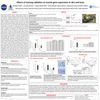 January 2017 in “NASA Technical Reports Server (NASA)”
 Early changes in skin gene expression can predict later bone mass loss after radiation exposure.
 December 2016 in “University of Birmingham Institutional Research Archive (University of Birmingham)”
 Steroid-producing capabilities in certain cancers may contribute to treatment resistance.
 January 2016 in “Research Explorer (The University of Manchester)”
 Activating the Eda/Edar pathway improves wound healing by enhancing hair follicle growth.
 March 2014 in “Institutional Repositories DataBase (IRDB)”
 Skin-derived stem cells could help treat skin aging and pigmentation issues.