 24 citations
,
August 2011 in “Experimental Dermatology”
24 citations
,
August 2011 in “Experimental Dermatology” The flap assay grows the most natural hair but takes the longest, the chamber assay is hard work but gives dense, normal hair, and the patch assay is quick but creates poorly oriented hair with some issues.
 2 citations
,
August 1994 in “The Journal of Dermatologic Surgery and Oncology”
2 citations
,
August 1994 in “The Journal of Dermatologic Surgery and Oncology” The article concludes that hair transplantation is advancing, but a reliable way to ensure complete tumor removal is still needed.
 September 2012 in “Faculty Opinions – Post-Publication Peer Review of the Biomedical Literature”
 Scientists successfully created fully functional hair follicles using bioengineering methods and stem cells.
 15 citations
,
January 1999 in “Archives of Facial Plastic Surgery”
15 citations
,
January 1999 in “Archives of Facial Plastic Surgery” Advancements in hair transplantation have resulted in more natural-looking hair and increased patient satisfaction.
 66 citations
,
May 2012 in “Scientific Reports”
66 citations
,
May 2012 in “Scientific Reports” Scientists successfully created and transplanted bioengineered hair follicles that function like natural ones, suggesting a new treatment for hair loss.
26 citations
,
January 2012 in “Journal of the American Academy of Dermatology” Eflornithine cream makes laser hair removal more effective for treating pseudofolliculitis barbae.
1 citations
,
January 2012 in “CINECA IRIS Institutial research information system (University of Pisa)”  6 citations
,
January 2020 in “Methods in molecular biology”
6 citations
,
January 2020 in “Methods in molecular biology” The method successfully isolates cells that are important for hair growth and could help study hair loss.
 11 citations
,
June 2005 in “Journal of Cosmetic Dermatology”
11 citations
,
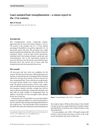
June 2005 in “Journal of Cosmetic Dermatology” Lasers in hair transplantation show promise but are not yet standard, with current methods causing some side effects and needles still being preferred for creating recipient sites.
 September 2006 in “Plastic and Reconstructive Surgery”
 Hair transplant surgeries can be improved by preserving follicles in a special solution, and surgeries done at outpatient facilities are more profitable than those at hospitals.
 316 citations
,
June 2004 in “The journal of investigative dermatology/Journal of investigative dermatology”
316 citations
,
June 2004 in “The journal of investigative dermatology/Journal of investigative dermatology” Microspheres about 1.5 micrometers in size can best penetrate hair follicles, potentially reaching important stem cells.
 August 2001 in “Dermatologic Surgery”
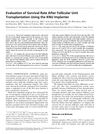
 The KNU implanter for hair transplants showed a high survival rate of 90%+ for transplanted hairs after 6 months, with benefits like natural hair direction and fewer scars.
2 citations
,
October 2023 in “Aesthetic Plastic Surgery” Females, especially over 40, are more likely to experience temporary hair loss after hair restoration surgery.
2 citations
,
March 2010 in “Plastic & Reconstructive Surgery” A simple, safe, and cost-effective method using adhesive drapes effectively removes hair from scalp grafts, reducing infection risk.
 21 citations
,
October 2008 in “Indian Journal of Plastic Surgery”
21 citations
,
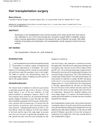
October 2008 in “Indian Journal of Plastic Surgery” Hair transplantation surgery has improved, giving more natural results, and success depends on a skilled team and proper technique.
 March 2009 in “Medical & surgical dermatology”
 Women with androgenetic alopecia have fewer terminal hairs, phenol in nail surgery is safe, and a new hair transplant method is faster and less damaging.
2 citations
,
October 2007 in “PubMed” Topical scalp treatments could potentially reduce hair extraction.
Autologous Regenerative Therapy may improve hair restoration by using stem cells from fat.
 51 citations
,
May 2019 in “Biomaterials”
51 citations
,
May 2019 in “Biomaterials” Researchers developed a method to grow hair follicles using special beads that could help with hair loss treatment.
1 citations
,
February 2025 in “International Journal of Molecular Sciences” Enzymatic digestion is an efficient method for isolating cells from hair follicles for tissue-engineered skin.
 45 citations
,
November 2017 in “Biomaterials”
45 citations
,
November 2017 in “Biomaterials” Researchers found a new way to create hair-growing structures in the lab that can grow hair when put into mice.
2 citations
,
January 2013 in “Journal of Clinical & Experimental Dermatology Research” Human hair follicles can be grown in a lab for about a week.
 11 citations
,
January 2011 in “Journal of Cutaneous and Aesthetic Surgery”
11 citations
,
January 2011 in “Journal of Cutaneous and Aesthetic Surgery” Follicular unit transplant successfully repigmented vitiligo patch on upper lip.
February 2021 in “International journal of regenerative medicine” A new method using fat tissue cells may help treat hair loss.
 23 citations
,
May 2005 in “British Journal of Cancer”
23 citations
,
May 2005 in “British Journal of Cancer” Plucked human hair can be used to study drug effects on certain cell markers.

The bar-cartridge type implanter is the best for implanting dermal papilla cells efficiently and at controlled depths.
 August 2023 in “Journal of Cosmetic Dermatology”
 Exosomes from hair papilla cells and the Chinese medicine Liao Tuo Fang can potentially promote hair growth and could be used to develop hair growth drugs.
6 citations
,
January 2019 in “Indian Journal of Dermatology, Venereology and Leprology” Low-cost dermoscopes can effectively diagnose early female pattern hair loss.

Injecting follicular cells into skin can lead to the formation of new hair follicles.
 10 citations
,
May 2012 in “Journal of Plastic Reconstructive and Aesthetic Surgery”
10 citations
,
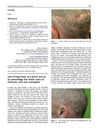
May 2012 in “Journal of Plastic Reconstructive and Aesthetic Surgery” Beard hair can effectively hide hair transplant scars.