 September 2017 in “Springer eBooks”
 FUE hair transplants have improved to give more natural results with less scarring and pain.
 June 2026 in “International Journal of Bioprinting”
 3D bioprinting shows promise for skin regeneration but needs more development to fully replicate natural skin.
106 citations
,
August 2024 in “Annals of Medicine and Surgery” AI in robotic surgery improves precision and safety but faces cost and ethical challenges.
 January 2018 in “Springer eBooks”
 Lasers are less favored for hair transplant surgery but show promise for hair growth in controlled trials.
January 2026 in “Journal of Clinical Medicine” Robotic technology in plastic surgery shows promise but needs more research and cost reduction for wider use.
 January 2024 in “Wiadomości Lekarskie”
 AI and advanced technologies are improving medical diagnostics and treatments.
 1 citations
,
October 2018 in “InTech eBooks”
1 citations
,
October 2018 in “InTech eBooks” The document concludes that treatments for cicatricial alopecia are not well-supported by evidence, but hair transplantation shows more predictable and satisfactory results.
 February 2024 in “Journal of Robotic Surgery”
 The document concludes that surgical robots improve surgery and recovery but are costly and can stress surgeons due to less patient contact.
 August 2023 in “Clinical, Cosmetic and Investigational Dermatology”
 The new hair transplant device reduces damage to hair follicles and makes surgery more comfortable for the surgeon.
 10 citations
,
August 2015 in “Journal of Cosmetic Dermatology”
10 citations
,
August 2015 in “Journal of Cosmetic Dermatology” Successful eyebrow restoration can be done using careful hair transplant techniques and choosing the right patients.
June 2021 in “Cosmoderma” Hair transplantation techniques have improved, making the process safer and more effective with less visible scarring.
 5 citations
,
October 2013 in “Clinics in Plastic Surgery”
5 citations
,
October 2013 in “Clinics in Plastic Surgery” Hair transplant improves with regenerative medicine and FUE technique.
2 citations
,
September 2024 in “Journal of Cosmetic Dermatology” Robotic technology greatly improves cosmetic dermatology outcomes and patient satisfaction.
 July 2025 in “Chinese Journal of Dermatology”
 The domestic hair follicle extraction system is as effective and safe as traditional FUE.
 July 2011 in “Facial Plastic Surgery”
 The document provides a quiz for physicians to earn continuing medical education credits in facial plastic surgery.
 January 2017 in “Journal of Investigative Dermatology Symposium Proceedings”
 The 2015 Hair Research Congress concluded that stem cells, maraviroc, and simvastatin could potentially treat Alopecia Areata, topical minoxidil, finasteride, and steroids could treat Frontal Fibrosing Alopecia, and PTGDR2 antagonists could also treat alopecia. They also found that low-level light therapy could help with hair loss, a robotic device could assist in hair extraction, and nutrition could aid hair growth. They suggested that Alopecia Areata is an inflammatory disorder, not a single disease, indicating a need for personalized treatments.
 December 2025 in “International Research Journal on Advanced Engineering and Management (IRJAEM)”
 AI improves cosmetic surgery but requires ethical and legal oversight to ensure safe use.
 2 citations
,
January 2015 in “Hair therapy & transplantation”
2 citations
,
January 2015 in “Hair therapy & transplantation” Both sutures and staplers are equally effective for hair transplant donor area closure, but staplers are faster and easier to use.
Surgeons should evaluate new technologies critically, offer a range of services including non-surgical options, and be aware of marketing influences to meet patient needs and maintain a successful practice.
 January 2016 in “Georg Thieme Verlag eBooks”
 Hair transplantation in East Asians needs special techniques to ensure natural results and prevent complications due to their unique hair and scalp characteristics.
 2 citations
,
May 2018 in “PubMed”
2 citations
,
May 2018 in “PubMed” Follicular Unit Extraction should be limited to preserve donor hair density and avoid side effects.
 June 2023 in “Journal of Cosmetic Dermatology”
 AI and AR are improving cosmetic dermatology but face challenges like data quality and ethical concerns.
1 citations
,
January 2020 FUE is a preferred hair restoration method because it avoids large scars and offers less pain.
Proper planning of the recipient area is crucial for natural-looking hair transplants.
 August 2023 in “Journal of The American Academy of Dermatology”
 New treatments for hair loss include low-dose pills, updated drugs, supplements, light therapy, plasma injections, and advanced hair transplant techniques.
 January 2024 in “Wiadomości Lekarskie”
 Robotic surgery and artificial hearts are revolutionizing cardiac surgery.
 January 2024 in “Wiadomości Lekarskie”
 Robotic surgery's benefits over traditional methods are unclear and need more research.
 6 citations
,
July 2019 in “Journal of Cosmetic Dermatology”
6 citations
,
July 2019 in “Journal of Cosmetic Dermatology” Surgeons make more mistakes in hair transplant procedures as they get tired or do more work.
 8 citations
,
March 2016 in “Hair transplant forum international”
8 citations
,
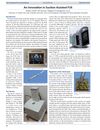
March 2016 in “Hair transplant forum international” The new FUE device improves hair transplant safety and efficiency.
 January 2026 in “Cosmetics”
 New regenerative treatments show promise in improving hair growth for androgenetic alopecia.