April 2017 in “Journal of dermatological science” Removing PLCg1 from skin cells caused thicker oil glands and less hair in mice.
78 citations
,
May 2012 in “Journal of Investigative Dermatology” A specific gene mutation causes woolly hair and hair loss.
 November 2025 in “Scientific Reports”
 COVID-19 may cause hair loss by affecting hair follicles.
 June 2024 in “Computational and Structural Biotechnology Journal”
 Multi-omics techniques help understand the molecular causes of androgenetic alopecia.
 2 citations
,
December 2020 in “Endocrinology, diabetes & metabolism case reports”
2 citations
,
December 2020 in “Endocrinology, diabetes & metabolism case reports” A man with hypoparathyroidism had other health issues that led to a diagnosis of a rare autoimmune disorder, APS-1.
86 citations
,
June 1998 in “Journal of Investigative Dermatology” The hairless gene mutation causes baldness by disrupting hair follicle structure.
 33 citations
,
April 2020 in “Journal of Clinical Investigation”
33 citations
,
April 2020 in “Journal of Clinical Investigation” Stress in hair follicle stem cells causes inflammation in a chronic skin condition through a specific immune response pathway.
29 citations
,
October 2010 in “Journal of Investigative Dermatology” Activating Kras in mouse skin causes excess skin and hair loss.
 1 citations
,
June 2021 in “Case reports in gastrointestinal medicine”
1 citations
,
June 2021 in “Case reports in gastrointestinal medicine” Using camphorated and mentholated chlorophenol in dental treatments can lead to severe gastrointestinal issues and hair and nail loss.
6 citations
,
January 2004 in “DNA Research” A mutation in the Sgkl gene causes defective hair growth in mice.
97 citations
,
March 2010 in “The American Journal of Human Genetics” A mutation in the KRT74 gene causes tightly curled hair.
 1 citations
,
October 2012 in “Medical Hypotheses”
1 citations
,
October 2012 in “Medical Hypotheses” The conclusion suggests that treatments targeting root causes of chronic diseases may be developed by focusing on gene expression and lifestyle factors.
 September 2019 in “The journal of investigative dermatology/Journal of investigative dermatology”
 Hair follicles repair 3D injuries using a 2D healing process.
 30 citations
,
May 2018 in “Experimental Dermatology”
30 citations
,
May 2018 in “Experimental Dermatology” The conclusion is that future hair loss treatments should target the root causes of hair thinning, not just promote hair growth.
 February 2026 in “PubMed”
 A personalized nutrition plan improved hair and skin health in a young man.
 4 citations
,
December 2021 in “Journal of Pharmacopuncture”
4 citations
,
December 2021 in “Journal of Pharmacopuncture” Microneedle Treatment System is effective for hair growth and skin improvement with no serious side effects, but more research is needed.
 1 citations
,
February 2009 in “Journal of Investigative Dermatology”
1 citations
,
February 2009 in “Journal of Investigative Dermatology” Lipase H is important for hair follicle function and shaping hair fibers.
95 citations
,
July 2007 in “Journal of Experimental Botany” Root hairs help barley grow better in zinc-deficient soil.
9 citations
,
May 2014 in “BMC medical genetics” A woman with a unique syndrome similar to TRPS has a genetic change near the TRPS1 gene, affecting its regulation.
2 citations
,
July 2022 in “Frontiers in Veterinary Science” A female dog with mixed male and female traits was treated successfully with surgery.
October 2025 in “International Journal of Cosmetic Science” Hair properties vary by ethnicity and environment, affecting surface charge and particle deposition.
139 citations
,
September 2001 in “The journal of investigative dermatology/Journal of investigative dermatology” Mutations in the Vitamin D receptor gene can cause hair loss similar to mutations in the Hairless gene.
61 citations
,
August 1993 in “PubMed” Basal cell epithelioma likely starts from the hair follicle's outer root sheath.
54 citations
,
December 2011 in “American Journal Of Pathology” A Gsdma3 mutation causes hair loss due to stem cell damage from skin inflammation.
 23 citations
,
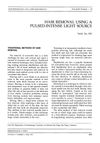
April 1999 in “Dermatologic Clinics”
23 citations
,
April 1999 in “Dermatologic Clinics” Pulsed-intense light can significantly reduce hair, with effectiveness depending on treatment number and timing, and has mild side effects.
 6 citations
,
March 2014 in “Herba Polonica”
6 citations
,
March 2014 in “Herba Polonica” Plant extracts may help treat hormone-related hair loss.
 April 2018 in “The journal of investigative dermatology/Journal of investigative dermatology”
 Electrical epilation damages hair follicles and surrounding skin, likely preventing hair regrowth.
 April 2018 in “Journal of Investigative Dermatology”
 Glycogen metabolism is important for energy and processes in human hair follicles, and hair follicles may produce glucose from lactate.
 May 2016 in “Research opinions in animal & veterinary sciences”
 Maternal aspartame consumption during pregnancy leads to skin damage and higher apoptosis in newborn rat offspring.
 94 citations
,
February 1994 in “The journal of investigative dermatology/Journal of investigative dermatology”
94 citations
,
February 1994 in “The journal of investigative dermatology/Journal of investigative dermatology” EGF makes hair follicles grow longer but stops hair production.