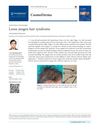
 February 2023 in “Cosmoderma”
 Loose anagen hair syndrome causes easily shed hair but usually improves with time.
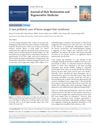
Loose anagen hair syndrome in children may improve with age, but treatment results vary.
Loose anagen syndrome causes easy hair shedding in children, often resolving on its own.
317 citations
,
August 1997 in “The Plant Journal” Calcium is crucial for sustaining root hair growth in Arabidopsis thaliana.
24 citations
,
February 2011 in “The American journal of pathology” AIRE protein, defective in APECED patients, is found in skin and hair cells and interacts with cytokeratin 17.
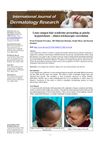 January 2026 in “International Journal of Dermatology Research”
 Early recognition of loose anagen hair syndrome is important to prevent misdiagnosis and unnecessary treatments.
73 citations
,
May 2009 in “Proceedings of the National Academy of Sciences” Disrupting the Sox21 gene in mice causes hair loss and regrowth cycles.
283 citations
,
February 2011 in “Cell stem cell” COL17A1 is crucial for preventing hair graying and loss by supporting hair and pigment stem cells.
8 citations
,
March 2010 in “The journal of investigative dermatology/Journal of investigative dermatology” The 14-3-3σ gene is essential for preventing hair loss.
35 citations
,
April 2008 in “Journal of Biological Chemistry” Hirosaki hairless rats lack hair due to missing DNA with key keratin genes.
 2 citations
,
December 2020 in “bioRxiv (Cold Spring Harbor Laboratory)”
2 citations
,
December 2020 in “bioRxiv (Cold Spring Harbor Laboratory)” The SYP123-VAMP727 complex is important for transporting materials that harden the root hair shank in Arabidopsis.
 32 citations
,
December 1969 in “The Lancet”
32 citations
,
December 1969 in “The Lancet” Children with marasmus have more resting hair follicles and thinner, less pigmented hair, showing long-term malnutrition.
 193 citations
,
February 2015 in “Nature Communications”
193 citations
,
February 2015 in “Nature Communications” Fungi-produced compounds can change plant root growth.
 1 citations
,
May 2024 in “PLoS ONE”
1 citations
,
May 2024 in “PLoS ONE” Horse hair follicles can be stored at cool or room temperature for a week without losing RNA quality.
 December 2023 in “Frontiers in plant physiology”
 Root hairs are key for developing cereals that can fertilize themselves with nitrogen.
 29 citations
,
July 1982 in “British Journal of Dermatology”
29 citations
,
July 1982 in “British Journal of Dermatology” Lithium treatment can cause increased hair shedding and hair loss in patients.
 September 2019 in “The journal of investigative dermatology/Journal of investigative dermatology”
 Hair follicles repair 3D injuries using a 2D healing process.
 85 citations
,
February 1989 in “Journal of The American Academy of Dermatology”
85 citations
,
February 1989 in “Journal of The American Academy of Dermatology” Children with loose anagen hair have easily pluckable hair due to root sheath problems, and it might improve without treatment.
 19 citations
,
July 2012 in “Biotechnic & Histochemistry”
19 citations
,
July 2012 in “Biotechnic & Histochemistry” Less AgNOR protein production is linked to hair loss.
 22 citations
,
December 2013 in “Molecular biology of the cell”
22 citations
,
December 2013 in “Molecular biology of the cell” ILK is essential for proper hair follicle development and structure.
35 citations
,
October 2013 in “Journal of Dermatological Science” VEGF165 influences hair follicle cell growth and movement through VEGFR-2 activation.
183 citations
,
July 2000 in “American Journal of Botany” Root hairs help Arabidopsis plants absorb more phosphorus when it's scarce.
13 citations
,
September 2012 in “Cell & tissue research/Cell and tissue research” pCLCA2 protein may help maintain skin structure and function.
8 citations
,
October 2010 in “Advances in plant biology” 30 citations
,
June 1993 in “The Journal of Cell Biology” The oncoprotein causes abnormal hair growth without increasing skin cancer risk.
5 citations
,
August 2011 in “Journal of Dermatological Science” Dentin sialoprotein and phosphophoryn are present in rodent hair follicles and may help hair growth and development.
1 citations
,
June 2006 in “Experimental dermatology” The conclusion suggests that early signs of hidradenitis suppurativa may start in the hair follicle, with genetic and immune factors playing a role, highlighting the need for more research on the hair follicle's immune system.
May 2010 in “Faculty Opinions – Post-Publication Peer Review of the Biomedical Literature” A mutation in the KRT74 gene causes woolly hair by affecting hair texture.
May 2010 in “Faculty Opinions – Post-Publication Peer Review of the Biomedical Literature” A mutation in the KRT74 gene causes woolly hair by affecting hair texture.
 April 2024 in “Cellular signalling”
 Activating TRPMLs helps human cells important for hair growth and increases hair growth in mice.