 6 citations
,
January 2017 in “Journal of toxicologic pathology”
6 citations
,
January 2017 in “Journal of toxicologic pathology” Rabbit skin with active hair growth shows thicker, redder areas due to larger, more numerous hair follicles and increased blood vessels.
11 citations
,
January 2005 in “Brazilian Journal of Medical and Biological Research” Hairless USP mice have enlarged skin cysts as they age.
 May 2026 in “The Scientific Issues of Ternopil Volodymyr Hnatiuk National Pedagogical University Series pedagogy”
 Optical methods are better for measuring surface roughness in modern manufacturing.
 1 citations
,
July 2021 in “Chemical & pharmaceutical bulletin/Chemical and pharmaceutical bulletin”
1 citations
,
July 2021 in “Chemical & pharmaceutical bulletin/Chemical and pharmaceutical bulletin” Rubbing skin increases absorption of water-soluble drugs from lotions and creams, but not oil-soluble drugs.
53 citations
,
September 1999 in “Journal of Synchrotron Radiation” Keratinous tissues have multiple structural layers, including ordered keratin and lipid granules.
 January 2026 in “Frontiers in biomedical technologies”
 DHT causes thicker and less elastic skin, linked to hair loss.
8 citations
,
November 2020 in “Skin Research and Technology” Enlarged facial pores are denser, more contrasted, and linked to changes in skin structure and hair follicles.
44 citations
,
February 2023 in “Cell” Fingerprints form uniquely before birth due to specific genetic pathways and local signals.
 2 citations
,
January 2004 in “PubMed”
2 citations
,
January 2004 in “PubMed” Conditioners with PQ-10 soften the flat part of hair cuticles but harden the edges.
25 citations
,
October 1962 in “Journal of Ultrastructure Research” The hair follicle structure is more complex than thought, with new findings on protein formation.
Lichen spinulosus, usually seen in young people, can rarely occur in adults, as shown by a 52-year-old woman with a rough, bumpy rash.
January 2019 in “Durham e-Theses (Durham University)” Less stiff collagen promotes higher cell growth in hair follicles.

The treatment was ineffective in humans.
January 2013 in “Wool textile journal” January 2014 in “Journal of Guangdong Pharmaceutical University” The new rabbit model better mimics human acne symptoms.
85 citations
,
October 2007 in “International Journal of Dermatology” Curly hair shape is due to uneven growth patterns in the hair follicle.
 161 citations
,
July 2003 in “ACM Transactions on Graphics”
161 citations
,
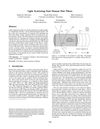
July 2003 in “ACM Transactions on Graphics” Researchers developed a new model for more realistic computer graphics rendering of hair by considering how light scatters on hair fibers.
6 citations
,
August 2011 in “Anais Brasileiros de Dermatologia” Vellus hair cysts can cause acne-like bumps that don't respond to treatment.
6 citations
,
April 2001 in “The Anatomical Record” A new method using hair pores can help align skin grafts better, improving results.
 6 citations
,
September 2021 in “Experimental Brain Research”
6 citations
,
September 2021 in “Experimental Brain Research” Rats have different touch receptors in their paws that help with movement and handling objects.
 108 citations
,
January 2003 in “Journal of Cosmetic Dermatology”
108 citations
,
January 2003 in “Journal of Cosmetic Dermatology” Wrinkles form due to structural skin changes and vary in type and treatment response.
March 2004 in “Journal of Investigative Dermatology” Razor bumps are linked to a genetic variant, misoprostol helps erythromelalgia pain, steroid ointments don't affect skin rhythms, and certain antibodies are common in localized scleroderma.
 September 2019 in “Journal of Investigative Dermatology”
 The 3D-SeboSkin model effectively simulates Hidradenitis suppurativa and is useful for future research.
27 citations
,
December 1997 in “Archives of Dermatological Research” Rat dermal papilla cells have unique properties and interact differently with their environment compared to other skin cells.
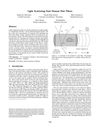
Researchers developed a new model for more realistic computer graphics of hair by considering how light scatters on hair fibers.
44 citations
,
October 1990 in “Archives of Dermatological Research” The connective tissue around hair follicles changes structure throughout the hair cycle.
 September 2022 in “bioRxiv (Cold Spring Harbor Laboratory)”
 A new staining method shows a special area in the hair's skin layer with lots of proteoglycans.
 May 2026 in “Zenodo (CERN European Organization for Nuclear Research)”
 The herbal cream effectively smooths and straightens hair safely.

Stiffness gradients in alginate gels can guide cancer cell invasion and study cellular behaviors.
 40 citations
,
May 2016 in “Proceedings of the National Academy of Sciences of the United States of America”
40 citations
,
May 2016 in “Proceedings of the National Academy of Sciences of the United States of America” Changes in keratin make hair follicles stiffer.