Search
for
Sort by
Research
390-420 / 1000+ results
research 944 Non-coding double stranded RNA induces retinoic acid synthesis and retinoid signaling to control regeneration
Non-coding RNA boosts retinoic acid production and signaling, aiding regeneration.
research 411 The efficacy of 1550-nm erbium-glass fractional laser treatment and its effect on the expression of insulin-like growth factor 1 and Wnt/β-catenin in androgenetic alopecia
Finasteride helps female-pattern hair loss.
research LncRNA MSTRG.14227.1 regulates the morphogenesis of secondary hair follicles in Inner Mongolia cashmere goats via targeting ADAMTS3 by sponging chi-miR-433
LncRNA MSTRG.14227.1 hinders hair follicle development in cashmere goats, affecting cashmere quality.
research A newly identified missense mutation of the HR gene is associated with a novel, unusual phenotype of Marie Unna Hereditary Hypotrichosis 1 including limb deformities
A new mutation in the HR gene is linked to a rare form of hair loss with limb deformities.
research Virtual Bioequivalence Assessment of Ritlecitinib Capsules with Incorporation of Observed Clinical Variability Using a Physiologically Based Pharmacokinetic Model
50-mg ritlecitinib capsules are bioequivalent to 100-mg capsules.
research An Autosomal Recessive Woolly Hair/Hypotrichosis Case with LIPH Mutation in a Turkish Patient
A Turkish woman has a hair condition caused by a LIPH gene mutation.
research Treatment of vitiligo with the topical Janus kinase inhibitor ruxolitinib: A 32-week open-label extension study with optional narrow-band ultraviolet B
research Dermatopathia Pigmentosa Reticularis with Salzmann’s nodular degeneration of cornea: A rare association
An 11-year-old girl with a rare skin disorder also had cornea issues and dry eye, needing careful management.

research Corrigendum: Stimulation of hair regrowth in an animal model of androgenic alopecia using 2-deoxy-D-ribose
The correction does not change the conclusion that 2-deoxy-D-ribose helps hair regrowth.
research Sex dependent influence of a functional polymorphism in steroid 5‐α‐reductase type 2 (SRD5A2) on post‐traumatic stress symptoms
SRD5A2 gene variations affect PTSD symptoms differently in males and females.
research The β9 Loop Domain of PA-PLA1α Has a Crucial Role in Autosomal Recessive Woolly Hair/Hypotrichosis
A specific mutation in PA-PLA1α causes abnormal hair growth.
research A Mouse Model for the Basal Transcription/DNA Repair Syndrome Trichothiodystrophy
Researchers created a mouse with the same mutation as humans with trichothiodystrophy, showing similar symptoms and confirming the condition is due to defects in DNA repair and gene activity.
research Cost-effectively dissecting the genetic architecture of complex wool traits in rabbits by low-coverage sequencing
Low-coverage sequencing is a cost-effective way to find genetic factors affecting rabbit wool traits.
research Induction of ornithine decarboxylase activity in hairless rat epidermis as a pharmacological model: validation of the animal model
Female rats aged 8 weeks are best for this model.
research Connexin 26 (GJB2) mutations in keratitis–ichthyosis–deafness syndrome presenting with squamous cell carcinoma
Connexin-26 gene mutations may increase cancer risk in KID syndrome patients.
research Identification of novel mutation in theHRgene responsible for atrichia with papular lesions in a Pakistani family
Researchers found a new mutation in the HR gene causing hair loss and skin bumps in a Pakistani family.
research In Silico Screening of DrugBank Compounds as Potential Inhibitors for Human Steroid 5α-Reductase 2 for Androgen-Related Diseases
Stiripentol shows promise as a potential treatment for androgen-related diseases but needs more testing.

research Patient Profile and Treatment Characteristics of Early Ritlecitinib Initiators in the US
Ritlecitinib provides new treatment options for diverse alopecia areata patients.
research A novel MBTPS2 variant associated with BRESHECK syndrome impairs sterol‐regulated transcription and the endoplasmic reticulum stress response
A new genetic variant causes BRESHECK syndrome by disrupting cell growth and stress response.
research ESDR303 – The role of rare variants in male-pattern hair loss: Analysis of whole exome sequencing data in the UK Biobank

research Codes of Conduct and Professional Standards for Hair Transplant Surgical Assistant Members of the British Association of Hair Restoration Surgery (BAHRS)
Hair transplant assistants in the UK must follow certain behavior and quality rules.
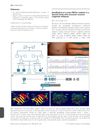
research Identification of a novelPNPLA1mutation in a Spanish family with autosomal recessive congenital ichthyosis
A new gene mutation linked to a skin condition was found in a Spanish family.
research Cost-effectively dissecting the genetic architecture of complex wool traits in rabbits by low-coverage sequencing
Low-coverage sequencing is a cost-effective way to identify genes related to wool traits in rabbits.
research Preclinical Study of Hibiscus Leaves (Hibiscus rosa-sinensis L.) as SimplicialOintment on Albino Rats (Rattus norvegicus)
Hibiscus leaf ointment helps hair growth and reduces UV skin damage in rats.

research Insights learned from L457(3.43)R, an activating mutant of the human lutropin receptor
The L457(3.43)R mutation in the human lutropin receptor causes increased activity and hormone insensitivity, leading to precocious puberty.

research The evaluation of IL-4 intron 3 VNTR and TNF-α (rs1799964) gene polymorphisms in Egyptian patients with Alopecia Areata: a case-control study
These specific gene polymorphisms are not linked to Alopecia Areata in Egyptians.
research 490 Samcyprone (diphenylcyclopropenone ointment) for the treatment of common warts
Samcyprone ointment is effective for treating common warts if a sensitization reaction occurs first.
research P273 : Recalcitrant alopecia areata improved with intralesional polydeoxyribonucleotide injection: two case reports
Two patients with stubborn hair loss grew hair after PDRN injections.
research Presence of a Deletion Mutation (c.716delA) in the Ligand Binding Domain of the Vitamin D Receptor in an Indian Patient with Vitamin D-Dependent Rickets Type II
A genetic mutation caused severe rickets and alopecia in an Indian patient, but high-dose calcium and phosphate treatment improved their condition.