 8 citations
,
October 2019 in “Immunological investigations”
8 citations
,
October 2019 in “Immunological investigations” The AIRE gene variant rs2075876 is linked to a higher risk of alopecia areata in males.
 April 2018 in “The journal of investigative dermatology/Journal of investigative dermatology”
 Double-stranded RNA helps regenerate hair follicles by increasing retinoic acid production and signaling.
 March 2019 in “Journal der Deutschen Dermatologischen Gesellschaft”
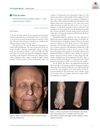
 Rothmund-Thomson syndrome type 2 can cause chronic, poorly healing wounds.

Removing SIX1 in fat cells reduces skin fibrosis.
 April 2017 in “Journal of Investigative Dermatology”
 HPH-15, a new compound, effectively reduces skin fibrosis in experiments without causing harm.
1 citations
,
August 2019 in “Journal of Investigative Dermatology” PRDX5 enzyme may contribute to alopecia areata by affecting oxidative stress and autoimmunity.
Introducing the OTC gene improved symptoms in mice with OTC deficiency.
 1 citations
,
April 2022 in “AACE clinical case reports”
1 citations
,
April 2022 in “AACE clinical case reports” A 36-year-old person with a female appearance but male chromosomes was diagnosed with a rare enzyme deficiency affecting sexual development.
January 2010 in “China Animal Husbandry & Veterinary Medicine” RORs may influence cashmere growth cycles.
The scant hair in snthr-1Bao mice is likely caused by a deletion affecting the Plcd1 gene.
 3 citations
,
August 2021 in “Research Square (Research Square)”
3 citations
,
August 2021 in “Research Square (Research Square)” The most common sign of aging at the gene level is more Ectodysplasin A2 Receptor (EDA2R) being made.
November 2022 in “Journal of Investigative Dermatology” NCSTN gene mutation causes abnormal skin cell differentiation and more inflammation, contributing to Hidradenitis Suppurativa.
April 2019 in “Journal of Investigative Dermatology” Researchers created a new mouse model for studying scleroderma.
 40 citations
,
January 2017 in “Intestinal Research”
40 citations
,
January 2017 in “Intestinal Research” Genotyping for NUDT15 p.Arg139Cys can help predict thiopurine side effects in Japanese IBD patients.
January 2026 in “American Journal of Medical Genetics Part A” A new genetic variant causes trichothiodystrophy in two brothers, but their mother may carry it without showing symptoms.
2 citations
,
November 2004 in “Blood” RXRa is crucial for Th2 immune cell development and may link nutrition to immune health.
 1 citations
,
March 2023 in “Frontiers in Cardiovascular Medicine”
1 citations
,
March 2023 in “Frontiers in Cardiovascular Medicine” A specific gene variant is linked to heart disease, increased heart muscle, curly hair, and thick skin on palms and soles.
January 2026 in “Nature Reviews Urology”  June 2026 in “Zenodo (CERN European Organization for Nuclear Research)”
 The system aims to extend human lifespan to 130-150 years by improving cellular health and reducing stress.
 June 2026 in “Zenodo (CERN European Organization for Nuclear Research)”
 The system aims to extend human lifespan to 130-150 years by improving cellular health and reducing stress.
 4 citations
,
October 2021 in “Scientific Reports”
4 citations
,
October 2021 in “Scientific Reports” NKIRAS2 can suppress certain skin tumors but its effect on cancer varies with context and expression level.
11 citations
,
December 2013 in “Clinical and experimental dermatology” A child with skin and heart issues had rare genetic mutations affecting skin and heart cell cohesion.
10 citations
,
November 2023 in “Science Immunology” Super-enhancers control CD25 expression in specific cell types, affecting immune function.
 1 citations
,
April 2018 in “Journal of Investigative Dermatology”
1 citations
,
April 2018 in “Journal of Investigative Dermatology” Fzd2 is important for skin and hair development through various signaling ways.
3 citations
,
July 2025 in “Clinical and Experimental Dermatology” Ritlecitinib may be more effective for severe alopecia areata than conventional treatments.
September 2023 in “Journal of the American Academy of Dermatology” Oral difelikefalin significantly reduces itch in notalgia paresthetica.
 1 citations
,
November 2023 in “Rice”
1 citations
,
November 2023 in “Rice” PRX102 is essential for rice root hair growth by helping transport substances to the tips.
November 2025 in “Journal of Investigative Dermatology”  11 citations
,
July 2014 in “Gene”
11 citations
,
July 2014 in “Gene” The S250C variant in a gene may cause autoimmunity and immunodeficiency by impairing protein function.
 7 citations
,
June 2011 in “Movement Disorders”
7 citations
,
June 2011 in “Movement Disorders” A specific gene mutation is linked to a hereditary form of dystonia that responds well to certain medications.