August 2024 in “British Journal of Dermatology” Rezpegaldesleukin shows promise for treating severe alopecia areata.
February 2024 in “Cancers” New treatments targeting androgen receptors show promise for drug-resistant prostate cancer.
 136 citations
,
April 2013 in “Clinical Cancer Research”
136 citations
,
April 2013 in “Clinical Cancer Research” The drug IPI-926 is safe at 160 mg daily and may help treat certain tumors, especially basal cell carcinoma.
 May 2017 in “Journal of The American Academy of Dermatology”
 595 nm pulsed dye laser is a cost-effective treatment for nonmelanoma skin cancer with a low recurrence rate.
January 2016 in “Más dermatología” Platelet-rich plasma therapy helps heal skin ulcers and stimulates hair growth in dermatology.
1 citations
,
January 2021 323 citations
,
November 1984 in “Journal of Investigative Dermatology” 28 citations
,
June 2003 in “Applied immunohistochemistry & molecular morphology” Combining cell conditioning with mild protease digestion effectively shows versican mRNA in mouse skin sections.
33 citations
,
January 2008 in “Journal of Molecular Neuroscience” 41 citations
,
January 2006 in “Dermatology” Noncultured epidermal cell transplantation is effective for repigmenting stable vitiligo.
 1 citations
,
June 2010 in “Development”
1 citations
,
June 2010 in “Development” The document concludes that pig iPSCs show promise for transplant therapies and the field is advancing in controlling cell behavior for biology and medicine.
 February 2025 in “International Journal of Morphology”
 Vitamin E can reduce the negative effects of valproic acid on hair and skin development.
51 citations
,
December 2006 in “Mammalian Genome” November 2023 in “Biomolecules” The research showed that Vitamin D and its receptor are important for healthy bones and normal hair and skin in rats.
 April 2016 in “Journal of Investigative Dermatology”
 Decreasing MIG6 can increase the movement and invasiveness of MEK-inhibited mutant NRAS melanoma, particularly when stimulated by EGF.
 December 2023 in “Journal of ethnopharmacology”
 Tribuloside can increase skin pigmentation by enhancing melanin production and distribution.
5 citations
,
October 2021 in “Journal of the American Academy of Dermatology” PRAME helps distinguish between benign and malignant skin cells in most cases.
January 2011 in “Junshi yixue” A mouse model for studying scleroderma in chronic graft-versus-host disease was successfully created.
130 citations
,
January 2000 in “Nature biotechnology”  60 citations
,
April 2006 in “International Journal of Dermatology”
60 citations
,
April 2006 in “International Journal of Dermatology” Surgical methods like suction blister grafting and split-thickness skin grafting are highly successful for vitiligo repigmentation, but choosing the right patients is crucial for success.
2 citations
,
October 2024 in “Indian Journal of Orthopaedics”  40 citations
,
June 2013 in “Molecular Pharmaceutics”
40 citations
,
June 2013 in “Molecular Pharmaceutics” The gelatin/β-TCP scaffold with nanoparticles improves wound healing and skin regeneration.
 March 2025 in “Authorea (Authorea)”
 PRP injections for hair growth can cause temporary vision loss, which may be resolved with treatment.
December 2024 in “International Journal of Molecular Sciences” Platelet-rich fibrin may help reduce nonmelanoma skin cancer cell growth.
103 citations
,
April 2005 in “Experimental dermatology” Prostaglandin F2alpha and related compounds can increase hair growth and darken hair in mice.
 1 citations
,
January 2022 in “Electronic Imaging”
1 citations
,
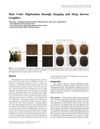
January 2022 in “Electronic Imaging” A new method accurately captures and renders hair color for virtual reality and hair dye use.
 2 citations
,
April 2012 in “Science-business Exchange”
2 citations
,
April 2012 in “Science-business Exchange” Blocking a protein called prostaglandin D2 might help treat hair loss.
April 2005 in “Journal of Investigative Dermatology” Vitamin D helps protect skin, PSORS1 gene's risk interval for psoriasis is expanded, hair follicles can be generated from mouse cells, and interferon-γ may cause pigmented skin lesions.
September 2024 in “Revista Foco” Platelet-Rich Plasma (PRP) is a safe and effective tool for facial rejuvenation and scar treatment.
 18 citations
,
February 2012 in “Experimental Dermatology”
18 citations
,
February 2012 in “Experimental Dermatology” No link found between specific genes and female pattern hair loss.