 January 2013 in “International Journal of Trichology”
 A new mutation in the TRPS1 gene was found in a Ukrainian girl with Trichorhinophalangeal syndrome type I.
24 citations
,
December 2013 in “Archives of Dermatological Research” 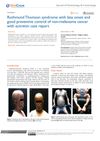 August 2024 in “Journal of Dermatology & Cosmetology”
 Acitretin effectively prevented skin cancer in a patient with late-onset Rothmund-Thomson syndrome.
January 2008 in “HAL (Le Centre pour la Communication Scientifique Directe)” The mutant HR bmh protein affects hair follicle formation by failing to repress vitamin D receptor activity.
137 citations
,
January 2006 in “Frontiers in bioscience” CRH in the skin acts like the body's stress response system, affecting cell behavior and immune activity.
14 citations
,
September 1999 in “Journal of Investigative Dermatology” Lack of TrkC receptor delays hair follicle development.
December 2025 in “Actas Dermo-Sifiliográficas” Ritlecitinib is effective and safe for treating severe alopecia areata in people aged 12 and older.
 32 citations
,
January 2012 in “Clinical & Developmental Immunology”
32 citations
,
January 2012 in “Clinical & Developmental Immunology” Targeting CD200 could be a new treatment for rheumatoid arthritis.
May 2010 in “OPAL (Open@LaTrobe) (La Trobe University)” Vaccines and targeting TrxR variants can help prevent cancer and reduce metastasis.
 10 citations
,
February 2008 in “Photochemistry and photobiology”
10 citations
,
February 2008 in “Photochemistry and photobiology” Vitamin D receptor can control the hairless gene linked to hair loss even without vitamin D.
 January 2018 in “bioRxiv (Cold Spring Harbor Laboratory)”
 Auxin helps root hairs grow in high phosphate by affecting ROS and involving RSL2 and RSL4.
19 citations
,
May 2001 in “Endocrinology” Mrp3 may aid in wound healing and hair growth.
46 citations
,
May 2021 in “Stem Cell Research & Therapy” Strontium ranelate helps cartilage growth by blocking a specific cell pathway.

A 72-year-old man was diagnosed with a rare skin form of Rosai-Dorfman disease after years of misdiagnosis.
 October 2024 in “Journal of the Endocrine Society”
 A rare genetic mutation causes resistance to vitamin D, leading to severe rickets and requiring high doses of calcium and vitamin D for treatment.
 45 citations
,
January 2010 in “Journal of Veterinary Medical Science”
45 citations
,
January 2010 in “Journal of Veterinary Medical Science” A gene mutation causes curly hair and hair loss in rats.
 3 citations
,
August 2021 in “Research Square (Research Square)”
3 citations
,
August 2021 in “Research Square (Research Square)” The most common sign of aging at the gene level is more Ectodysplasin A2 Receptor (EDA2R) being made.
4 citations
,
March 2025 in “The Journal of Dermatology” Ritlecitinib is effective and safe for hair regrowth in Asian patients with alopecia areata.
 5 citations
,
July 2022 in “Orphanet journal of rare diseases”
5 citations
,
July 2022 in “Orphanet journal of rare diseases” RSPO1 mutations in certain patients lead to skin cells that don't develop properly and are more likely to become invasive, increasing the risk of skin cancer.
Ritlecitinib can reduce inflammation and help hair regrow in Alopecia Areata.
September 2017 in “Journal of Investigative Dermatology” LRIG1 protein affects hair growth by regulating skin receptors, leading to hair loss when overexpressed.
 12 citations
,
June 2019 in “The journal of pharmacology and experimental therapeutics/The Journal of pharmacology and experimental therapeutics”
12 citations
,
June 2019 in “The journal of pharmacology and experimental therapeutics/The Journal of pharmacology and experimental therapeutics” Activating TRPV3 channels stops hair growth by killing hair follicle cells.
8 citations
,
March 2011 in “Endocrine” A new gene mutation causes vitamin D-resistant rickets and hair loss in two siblings.
 6 citations
,
June 2018 in “Journal of pediatric endocrinology & metabolism/Journal of pediatric endocrinology and metabolism”
6 citations
,
June 2018 in “Journal of pediatric endocrinology & metabolism/Journal of pediatric endocrinology and metabolism” Patients with the same genetic mutation for vitamin D-resistant rickets showed different symptoms but all improved with treatment except for hair loss.
15 citations
,
June 2012 in “British Journal of Dermatology” A new mutation in the KRT86 gene causes a hair disorder with variable expression.
January 1987 in “Toxicological sciences” SMR-2 and SMR-6 are much more toxic than retinoic acid, causing severe symptoms and organ damage in mice.
Ritlecitinib significantly regrows scalp hair in people with alopecia areata.
 2 citations
,
January 2023 in “BMC plant biology”
2 citations
,
January 2023 in “BMC plant biology” Scientists found new genetic areas that affect how rice root hairs grow and develop.
 September 2021 in “Research Square (Research Square)”
 Not having enough or having too much of the protein Grainyhead-like 3 leads to various developmental problems.
512 citations
,
February 2008 in “Science” Reactive oxygen species and calcium create a feedback loop that shapes root hair cells.