1 citations
,
July 2006 in “Journal of Investigative Dermatology” A 4kb fragment of the desmocollin 3 promoter targets gene expression to specific skin and hair follicle areas.
2 citations
,
September 1998 in “Der Hautarzt” A gene mutation causes a rare hereditary hair loss, offering potential for new treatments.
11 citations
,
December 2020 in “G3 Genes Genomes Genetics” Chi-miR-130b-3p helps develop hair follicles in goat fetuses by targeting the WNT10A gene.
412 citations
,
January 1998 in “Science” A mutation in the human hairless gene causes alopecia universalis.
 April 2016 in “Journal of Investigative Dermatology”
 Lymphoid-specific helicase (Lsh) is crucial for skin growth, change, and healing after injury.
 April 2023 in “Journal of Investigative Dermatology”
 The research mapped gene activity in developing mouse skin and found key markers for skin cell types and changes from fetal to early postnatal stages.
23 citations
,
June 1992 in “PubMed” RAR-gamma 1 is important for normal skin maintenance and differentiation.
 17 citations
,
June 2020 in “Animals”
17 citations
,
June 2020 in “Animals” lncRNAs may regulate hair follicle development in Hu sheep.
 17 citations
,
August 2018 in “BMC Genomics”
17 citations
,
August 2018 in “BMC Genomics” The HOXC13 gene affects different hair proteins in cashmere goats in varied ways and is controlled by a feedback loop and other factors.
A specific gene mutation causes monilethrix in this family, and minoxidil treatment improves hair condition.
333 citations
,
March 2000 in “Proceedings of the National Academy of Sciences” Overexpressing GLI-1 in mice skin can cause tumors like human basal cell carcinomas.
43 citations
,
September 2001 in “Annals of Neurology” Hair root analysis can effectively detect somatic mosaicism in double cortex syndrome.
37 citations
,
June 2000 in “Experimental dermatology” The Lanceolate hair-J mutation in mice mimics human hair disorders like Netherton's syndrome.
 May 2026 in “Discover Oncology”
 Targeting LGR4 may help treat cancer by reducing cancer stem cell traits and drug resistance.
Ocu-miR-205 affects hair density in Rex rabbits by promoting cell changes and influencing hair follicle phases.
July 2017 in “Cancer Research” Krt15+ cells in mice can resist radiation, regenerate tissue, and start tumors, suggesting new cancer treatment targets.
The trichohyalin gene is located at chromosomal region 1q21 with other skin-related protein genes.
7 citations
,
March 2023 in “The Journal of Biochemistry” LONRF1 is important for oxidative damage response and tissue remodeling during wound healing.
4 citations
,
January 2009 in “PubMed” A mutation in the KRT86 gene causes hair fragility in a Turkish family.
8 citations
,
January 2013 in “genesis” Zfp157 is active in many mouse tissues during development and in specific adult cells.
7 citations
,
January 2021 in “Frontiers in genetics” Inherited color dilution in rabbits is linked to DNA methylation changes.
 69 citations
,
January 2013 in “Frontiers in Immunology”
69 citations
,
January 2013 in “Frontiers in Immunology” The FOXN1 gene is crucial for developing immune cells and preventing immune disorders.
 1 citations
,
August 2018 in “bioRxiv (Cold Spring Harbor Laboratory)”
1 citations
,
August 2018 in “bioRxiv (Cold Spring Harbor Laboratory)” A new mutation in the TMEM173 gene and a risk allele in IFIH1 cause a unique set of immune-related symptoms.
5 citations
,
May 2023 in “Frontiers in Cell and Developmental Biology” Integrin α6 helps identify different neural crest cell types in the skin.
25 citations
,
June 2017 in “Journal of Investigative Dermatology” HPV8 causes skin cancer by expanding specific skin stem cells.
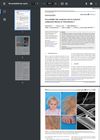 December 2022 in “American journal of medical genetics. Part A”
 A person got uncombable hair syndrome from two copies of chromosome 1 from their mother.
133 citations
,
January 2009 in “Nature” Lgr5 and the vitamin D receptor are key in controlling skin inflammation and tumor risk in mice.
 60 citations
,
August 2008 in “Human molecular genetics online/Human molecular genetics”
60 citations
,
August 2008 in “Human molecular genetics online/Human molecular genetics” A position effect on the TRPS1 gene causes excessive hair growth in humans and mice.

Hidradenitis Suppurativa has genetic links, with certain gene mutations more common in patients and a third of cases having a family history.
 1 citations
,
January 2023 in “In vivo/In Vivo”
1 citations
,
January 2023 in “In vivo/In Vivo” Box A of HMGB1 can improve stem cell function, aiding anti-aging therapy.