 September 2022 in “Research Square (Research Square)”
 Increasing Rps14 helps grow more inner ear cells and repair hearing cells in baby mice.
50 citations
,
February 2007 in “The Journal of Pathology” Somatic BHD mutations are rare in Japanese renal tumors.
 April 2023 in “Journal of Investigative Dermatology”
 Mutations in the SHH pathway in certain skin cells can cause skin tumors and abnormal hair growth.
 6 citations
,
January 2013 in “The Journal of Dermatology”
6 citations
,
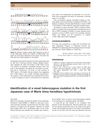
January 2013 in “The Journal of Dermatology” Researchers found a new genetic mutation causing a rare hair loss condition in the first Japanese child studied.
October 2024 in “Developmental Dynamics” Recent advances show zebrafish can model anemia, Alx4 affects craniofacial and hair development, and mTORC1 is crucial for retinal development.
1 citations
,
October 2023 in “Heliyon” An infant with Hutchinson-Gilford Progeria Syndrome had successful surgery to fix breathing issues caused by a new genetic mutation.
46 citations
,
May 1995 in “Proceedings of the National Academy of Sciences” A specific gene region can control targeted and responsive gene expression in mice, useful for skin disorder treatments.
58 citations
,
July 2005 in “Molecular and Cellular Biology” A specific gene segment can make mouse skin cells glow, helping study hair growth and gene effects.
125 citations
,
August 2003 in “Development” Mice with human-like EGFR had growth issues, skin defects, heart problems, and unusual bone development.
27 citations
,
July 1997 in “PubMed” The harlequin ichthyosis mouse mutation causes thick skin and early death, resembling a human skin disorder.
 5 citations
,
June 2023 in “BMC genomics”
5 citations
,
June 2023 in “BMC genomics” A specific gene mutation causes long hair in Angora rabbits.
136 citations
,
March 1998 in “Oncogene” Overexpression of E2F1 can lead to skin tumors and disrupt hair growth.
53 citations
,
October 2003 in “Genetics” The mK6irs1/Krt2-6g gene likely causes wavy hair in mice.
166 citations
,
July 1999 in “American Journal Of Pathology” The hairless (hr) gene is essential for normal hair follicle function and its mutation leads to hair loss.
 September 2021 in “Research Square (Research Square)”
 Not having enough or having too much of the protein Grainyhead-like 3 leads to various developmental problems.
 January 2025 in “Cell Communication and Signaling”
 CXXC5 can both suppress and promote cancer, making it a complex target for treatment.
 2 citations
,
August 2020 in “Scientific reports”
2 citations
,
August 2020 in “Scientific reports” Genes related to keratin, skin cell differentiation, and immune functions are key in hedgehog skin and spine development.
 9 citations
,
February 2018 in “The Journal of Dermatology”
9 citations
,
February 2018 in “The Journal of Dermatology” A new mutation in the LIPH gene was found to cause a rare hair disorder in a Japanese boy.
16 citations
,
July 1996 in “Journal of Investigative Dermatology”  4 citations
,
May 2006 in “médecine/sciences”
4 citations
,
May 2006 in “médecine/sciences” The hairless gene is crucial for hair health, and its mutations cause hair loss.
 10 citations
,
October 2016 in “Monoclonal antibodies in immunodiagnosis and immunotherapy”
10 citations
,
October 2016 in “Monoclonal antibodies in immunodiagnosis and immunotherapy” Researchers created specific antibodies that detect a protein important in development and various conditions, and can be used for research and diagnosis.
14 citations
,
October 2017 in “Gene Expression Patterns” A new mouse model helps study melanocyte cells using GFP expression.
December 2004 in “PLoS ONE” The Foxn1(-/-) phenotype disrupts hair growth and affects skin stem cells.
January 2026 in “American Journal of Medical Genetics Part A” A new genetic variant causes trichothiodystrophy in two brothers, but their mother may carry it without showing symptoms.
 6 citations
,
May 1997 in “Journal of Dermatological Science”
6 citations
,
May 1997 in “Journal of Dermatological Science” Researchers found a gene in hamsters that responds to male hormones and may be indirectly controlled by them.
The scant hair in snthr-1Bao mice is likely caused by a deletion affecting the Plcd1 gene.
 November 2020 in “bioRxiv (Cold Spring Harbor Laboratory)”
 Dermal EZH2 controls skin cell growth and differentiation in mice.
 36 citations
,
October 2000 in “British Journal of Dermatology”
36 citations
,
October 2000 in “British Journal of Dermatology” A different gene near the hairless gene on chromosome 8p21 causes a rare hair loss condition in a German family.
 67 citations
,
August 2007 in “American Journal of Pathology”
67 citations
,
August 2007 in “American Journal of Pathology” Overexpressing the mineralocorticoid receptor in mouse skin causes skin thinning, early skin barrier development, eye issues, and hair loss.
5 citations
,
April 2022 in “Genes” miR-129-5p affects hair growth by targeting the HOXC13 gene.