Higher cannabis exposure may worsen hair loss.
Higher cannabis exposure may lead to increased hair loss.
Higher cannabis use may be linked to more severe hair loss.
 19 citations
,
November 2011
19 citations
,
November 2011 Using systemic drugs as creams for skin conditions shows promise, but more research is needed to confirm their effectiveness and safety.
 4 citations
,
January 2019 in “Dermatologic Therapy”
4 citations
,
January 2019 in “Dermatologic Therapy” Scalp basal cell carcinoma may be more aggressive and harder to treat than other types, requiring special attention and further research.
May 2026 in “Mayo Clinic Proceedings” Early diagnosis and coordinated care are crucial for managing lupus effectively.
February 2026 in “Australasian Journal of Dermatology” A new tool simplifies alopecia areata severity scoring but needs validation.
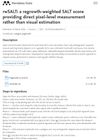 March 2026 in “Mendeley Data”
 rwSALT accurately measures hair regrowth in alopecia areata using scalp photos.
14 citations
,
June 2022 in “British Journal of Dermatology” A SALT score of ≤ 20 indicates meaningful improvement in alopecia areata treatment.
May 2024 in “JEADV Clinical Practice” A change in SALT scores of 42 or 43 indicates meaningful improvement in alopecia areata treatment.
19 citations
,
October 1996 in “International Journal of Dermatology” Pseudopelade is a rare inherited hair loss condition with a genetic cause.
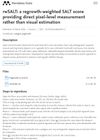 March 2026 in “Mendeley Data”
 rwSALT provides precise hair regrowth measurement from scalp photos.
 44 citations
,
November 2016 in “Journal of The American Academy of Dermatology”
44 citations
,
November 2016 in “Journal of The American Academy of Dermatology” The updated SALT II tool offers a more precise way to measure scalp hair loss.
 January 2024 in “JEADV clinical practice”
 The study helps doctors use patient images to understand and apply SALT scores for treating severe alopecia areata.
July 2026 in “Journal of the American Academy of Dermatology” 5 citations
,
April 2024 in “JAAD International” AI can accurately measure hair loss severity in alopecia areata.
 20 citations
,
December 2017 in “Journal of Investigative Dermatology Symposium Proceedings”
20 citations
,
December 2017 in “Journal of Investigative Dermatology Symposium Proceedings” Researchers created a fast, accurate computer program to measure hair loss in alopecia areata patients.
 April 2021 in “Research Square (Research Square)”
 Achieving 80% or more scalp hair regrowth is considered a successful treatment for significant hair loss.
March 2026 in “Pediatric Dermatology” Generative AI tools can accurately score alopecia areata, reducing subjectivity in evaluations.
 July 2024 in “Medical alphabet”
 The SBN system effectively assesses alopecia areata severity and predicts its course.
 July 2022 in “Journal of Investigative Dermatology”
 The conclusion suggests that a new system for measuring hair loss could be created using automated analysis of photographs.
 November 2025 in “Frontiers in Medicine”
 The SAALIQ is a reliable tool for measuring the impact of alopecia areata on Spanish-speaking patients' quality of life.
March 2026 in “Journal of Investigative Dermatology” Generative AI tools like GPT-4o can effectively automate SALT scoring for alopecia areata, matching clinician accuracy.
40 citations
,
October 2012 in “Journal of the American Academy of Dermatology” CLASI is a valid tool for assessing skin activity and damage in lupus patients.
1 citations
,
November 2024 in “Journal of Dermatological Treatment” Significant hair regrowth doesn't always mean complete hair recovery in alopecia areata.
 24 citations
,
March 2007 in “International Journal of Dermatology”
24 citations
,
March 2007 in “International Journal of Dermatology” The Arabic Skindex-16 is a reliable and valid way to measure the impact of skin conditions on quality of life in Saudi patients.
 7 citations
,
March 2025 in “Archives of Dermatological Research”
7 citations
,
March 2025 in “Archives of Dermatological Research” Trichoscopy helps better understand and manage alopecia areata, improving patient outcomes.
8 citations
,
June 2023 in “British Journal of Dermatology” The SAAD-41 scale effectively measures the psychosocial impact of alopecia areata.
 5 citations
,
June 2016 in “TURKDERM”
5 citations
,
June 2016 in “TURKDERM” Scoring systems help doctors assess and treat skin diseases effectively.
 August 2023 in “Skin Research and Technology”
 Measuring bald patch size can help grade hair loss severity, with photograph-based evaluation being more reliable.