16 citations
,
May 1995 in “Biochemical and Biophysical Research Communications” Both enzyme forms can sulfate minoxidil.
 July 2025 in “Scientific Reports”
 Pioglitazone, Trimipramine, and Dimetindene may be repurposed to treat psoriasis.
10 citations
,
May 1991 in “Journal of the American Academy of Dermatology”  38 citations
,
November 2016 in “Aaps Pharmscitech”
38 citations
,
November 2016 in “Aaps Pharmscitech” Nanoparticles with more oleic acid improved the delivery and stability of the drug spironolactone.
 September 2024 in “Journal of the American Academy of Dermatology”
 Continued baricitinib treatment leads to significant scalp hair regrowth in severe alopecia areata patients.
January 2026 in “Colloids and Surfaces B Biointerfaces” A silicone treatment makes damaged hair more water-resistant and stronger.
 March 2024 in “Biochimica et biophysica acta. Molecular basis of disease”
 Deferoxamine may help protect inner ear cells from damage caused by oxidative stress.
October 2025 in “Jurnal Mutu Pangan Indonesian Journal of Food Quality” Adding 25% Brebes shallot powder to wet noodles extends their shelf life and improves flavor but reduces elasticity.
June 2023 in “Zenodo (CERN European Organization for Nuclear Research)”  September 2023 in “Journal of The American Academy of Dermatology”
 Baricitinib treatment can help regrow scalp hair and eyebrows or eyelashes in people with severe alopecia areata.
 September 2024 in “Journal of the American Academy of Dermatology”
 Experts agree on guidelines for safely using low-dose oral minoxidil to treat hair loss.

The text is about acne, excessive hair growth, and hair loss due to hormones.
 May 2023 in “Reproductive Biology and Endocrinology”
 The internet has accurate information on Polycystic Ovarian Syndrome, but it's not high quality or easy to read, so we need better, user-friendly resources.
1 citations
,
November 2023 in “Journal of Investigative Dermatology” Farudodstat may effectively treat alopecia areata without harming hair follicles.
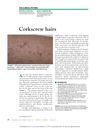 3 citations
,
April 2015 in “Cleveland Clinic Journal of Medicine”
3 citations
,
April 2015 in “Cleveland Clinic Journal of Medicine” The woman has scurvy and needs more vitamin C.
 December 2023 in “International Journal of Pharmaceutics”
 New nanoparticles deliver plant extracts to hair follicles to treat conditions like hair loss and acne.
 January 2024 in “International Journal of Advanced Research”
 Topical 6% salicylic acid effectively reduced skin plaques in a patient with wooly hair and palmoplantar keratoderma.
Naproxen can cause serious lung issues, but high-dose aspirin might be safer.
 4 citations
,
January 1994 in “Yakugaku zasshi”
4 citations
,
January 1994 in “Yakugaku zasshi” EPC-K is stable except at very acidic pH or when exposed to sunlight, and it can decompose in low ethanol concentrations.
 61 citations
,
June 2010 in “European Journal of Pharmaceutics and Biopharmaceutics”
61 citations
,
June 2010 in “European Journal of Pharmaceutics and Biopharmaceutics” Cationic polymers improved liposome stability and increased skin absorption of aciclovir and minoxidil.
June 2025 in “British Journal of Dermatology” Low-dose oral minoxidil is increasingly used by dermatologists in the UK and Ireland to treat various hair loss conditions.
1 citations
,
July 2022 in “Bali Medical Journal” A combination of cyclosporine and oral corticosteroid successfully regrew hair in a 19-year-old with alopecia universalis.
 July 2013 in “Our Dermatology Online”
 Oral methylprednisolone pulse therapy helped an 11-year-old regrow 80% of his hair in six months.
Baricitinib effectively treats alopecia areata, with over half of patients improving after 52 weeks.
 January 2025 in “Current Drug Delivery”
 TrichoSol™ and TrichoFoam™ are stable and effective for personalized alopecia treatments.
11 citations
,
January 2020 in “Engineered science” 22 citations
,
July 1987 in “Transplantation” Topical cyclosporine significantly extends skin graft survival in rats.
Spearmint tea may help reduce testosterone levels in women with PCOS, but longer studies are needed to confirm its effect on hirsutism.
3 citations
,
April 2019 in “Journal of the Endocrine Society” Satoyoshi syndrome can occur without causing premature ovarian failure.
October 2025 in “Aquaculture” Coconut oil boosts testosterone but doesn't fully trigger reproductive maturity in pufferfish.