November 2025 in “SKIN The Journal of Cutaneous Medicine” Ritlecitinib is generally safe for adolescents with alopecia areata over 5 years.
 September 2025 in “Journal of Medicinal Chemistry”
 Targeting the Wnt/β-catenin pathway may lead to better treatments for hair loss.
 July 2025 in “SKIN The Journal of Cutaneous Medicine”
 Ritlecitinib is generally safe for alopecia areata patients over 72 months.
 December 2020 in “Research Square (Research Square)”
 The AndroCoV Clinical Scoring is a quick, affordable, and accurate method for diagnosing COVID-19.
 July 2025 in “International Journal of Allied Medical Sciences and Clinical Research”
 Eclipta prostrata is a medicinal herb with potential health benefits for various conditions and could be used in modern medicine.
16 citations
,
April 2023 in “Physical Medicine and Rehabilitation Clinics of North America”  July 2021 in “International journal of innovative research in medical science”
 Some COVID-19 patients in Saudi Arabia had skin symptoms, with rashes being the most common.
 November 2011 in “Journal of Infection”
 Many women with HIV in the North of England are diagnosed late and have other health conditions.
January 2023 in “Brazilian Journals Editora eBooks” 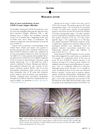 32 citations
,
July 2021 in “Journal of The American Academy of Dermatology”
32 citations
,
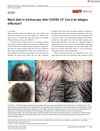
July 2021 in “Journal of The American Academy of Dermatology” Hair loss from COVID-19 usually starts around 45 days after infection and lasts about 47.5 days.
 2 citations
,
July 2021 in “Dermatologic Therapy”
2 citations
,
July 2021 in “Dermatologic Therapy” A woman's hair loss after COVID-19 was likely due to a mix of pressure-induced alopecia and acute telogen effluvium.

COVID-19 may be linked to hair loss called Telogen Effluvium, affecting quality of life and self-esteem.
 44 citations
,
January 2021 in “Dermatologic Therapy”
44 citations
,
January 2021 in “Dermatologic Therapy” COVID-19 may cause hair loss due to infection stress or treatments.
 36 citations
,
November 2020 in “Journal of The European Academy of Dermatology and Venereology”
36 citations
,
November 2020 in “Journal of The European Academy of Dermatology and Venereology” 5-alpha-reductase inhibitors may reduce COVID-19 symptoms in bald males.
 26 citations
,
September 2020 in “Journal of the European Academy of Dermatology and Venereology”
26 citations
,
September 2020 in “Journal of the European Academy of Dermatology and Venereology” A certain genetic variant in the androgen receptor may predict the severity of COVID-19 in men.
 21 citations
,
February 2021 in “BMJ case reports”
21 citations
,
February 2021 in “BMJ case reports” Anabolic steroid users may face higher risk of severe COVID-19.
 12 citations
,
January 2010 in “Hair transplant forum international”
12 citations
,
January 2010 in “Hair transplant forum international” The survival rates of hair grafts are similar regardless of how they are trimmed.
 9 citations
,
November 2020 in “Medical Hypotheses”
9 citations
,
November 2020 in “Medical Hypotheses” Hair loss may link to weaker COVID-19 immunity, suggesting possible need for extra vaccine boost.
 7 citations
,
June 2021 in “JAAD Case Reports”
7 citations
,
June 2021 in “JAAD Case Reports” A woman had hair loss, nail changes, and skin peeling after a COVID-19 infection, which got better on their own.
 6 citations
,
April 2022 in “JMIR Dermatology”
6 citations
,
April 2022 in “JMIR Dermatology” Public interest in COVID-19-related hair loss increased during COVID-19 surges, especially with the omicron variant.
 January 2024 in “International Journal of Applied Research”
 COVID-19 may cause hair loss, especially in young adults.
 April 2023 in “Research Square (Research Square)”
 Many healthcare workers who had Covid-19 suffer from long-term symptoms like hair loss and fatigue, especially women.

Interest in COVID-19 hair loss increased during COVID-19 surges, especially in higher-income countries.
 June 2021 in “EBioMedicine”
 The authors maintain that shorter androgen receptor alleles may lead to milder COVID-19 by positively affecting the immune response, not due to changes in testosterone levels or activity.
 November 2020 in “Journal of The American Academy of Dermatology”
 Men with male pattern baldness may be more at risk for severe COVID-19, and anti-androgen treatments could offer protection.
 July 2004 in “Clinics in Dermatology”
 The Third World Congress of the International Academy of Cosmetic Dermatology discussed various topics like hair disorders, skin conditions, wound healing, shampoo technology, acne treatment, and the use of lasers in dermatology.
 1 citations
,
February 2023 in “JMIR. Journal of medical internet research/Journal of medical internet research”
1 citations
,
February 2023 in “JMIR. Journal of medical internet research/Journal of medical internet research” Social media data can help track COVID-19 symptoms and predict the pandemic's status.
January 2021 in “Indian dermatology online journal” The document lists various skin conditions and structures named "corona" that are not related to the coronavirus.
 1 citations
,
September 2023 in “Research Square (Research Square)”
1 citations
,
September 2023 in “Research Square (Research Square)” The new method improves bone repair by enhancing cell loading and stability in bioprinted scaffolds.
August 2023 in “Current Pharmaceutical Design” CBD may help manage severe lung issues in COVID-19 patients.