 4 citations
,
April 2020 in “medRxiv (Cold Spring Harbor Laboratory)”
4 citations
,
April 2020 in “medRxiv (Cold Spring Harbor Laboratory)” Men taking 5-alpha reductase inhibitors for prostate issues may be less likely to experience severe COVID-19, but it doesn't prevent ICU admission or death.
 19 citations
,
November 2021 in “Reviews in endocrine and metabolic disorders”
19 citations
,
November 2021 in “Reviews in endocrine and metabolic disorders” Sex hormones like estrogen and testosterone may affect COVID-19 severity differently in men and women, potentially influencing prevention and treatment strategies.
 23 citations
,
September 2021 in “Frontiers in Cellular and Infection Microbiology”
23 citations
,
September 2021 in “Frontiers in Cellular and Infection Microbiology” Testosterone's effects on COVID-19 are unclear and need more research.
 41 citations
,
February 2021 in “Cureus”
41 citations
,
February 2021 in “Cureus” Dutasteride treatment in men with mild to moderate COVID-19 reduced viral shedding, inflammation, and recovery time without serious side effects.
June 2023 in “Institutional Repositories DataBase (IRDB)” COVID-19 can cause various skin symptoms, with different patterns seen in younger and older patients.
 29 citations
,
March 2021 in “Frontiers in Endocrinology”
29 citations
,
March 2021 in “Frontiers in Endocrinology” Testosterone may influence COVID-19 severity and outcomes.
18 citations
,
June 2021 in “Endocrinology” Anti-androgens might help reduce COVID-19 severity in men.
6 citations
,
January 2024 in “Cancers” Antiandrogens don't help with COVID-19 and aren't recommended.
 2 citations
,
September 2021 in “Orphanet Journal of Rare Diseases”
2 citations
,
September 2021 in “Orphanet Journal of Rare Diseases” People with hypohidrotic ectodermal dysplasia are more likely to experience long-term fatigue and hair loss after COVID-19.
2 citations
,
October 2020 in “Annals of Oncology” Androgen deprivation therapy might help prevent severe COVID-19, but more research is needed.

COVID-19 infection is highly related to increased hair loss, especially in women.
April 2023 in “Media Dermato Venereologica Indonesiana” COVID-19 reinfection may trigger alopecia areata.
2 citations
,
September 2025 in “Microorganisms” COVID-19 can worsen autoimmune skin diseases and increase their occurrence.
1 citations
,
January 2024 in “Microorganisms” Mice with a virus similar to COVID-19 had skin damage, but a special treatment helped repair it.
 July 2022 in “Conjeturas”
 Androgens play a key role in causing alopecia by changing the hair growth cycle.
 7 citations
,
February 2022 in “JAAD International”
7 citations
,
February 2022 in “JAAD International” COVID-19 may be linked to hair loss or worsening of hair loss in some people.
 2 citations
,
May 2022 in “JAAD Case Reports”
2 citations
,
May 2022 in “JAAD Case Reports” A woman lost all her hair after mild COVID-19, but it started to regrow after treatment with a specific medication.
 1 citations
,
October 2022 in “Current Dermatology Reports”
1 citations
,
October 2022 in “Current Dermatology Reports” COVID-19 and vaccines cause various skin reactions and highlight the need for dermatologists in managing these issues and addressing vaccine distribution disparities.
 November 2022 in “Revista Hospital Clínico Universidad de Chile”
 COVID-19 may cause hair loss due to the virus's effects and stress from the pandemic.
COVID-19 can cause hair loss and nail issues, with treatments available for these conditions.
September 2021 in “Journal of Education, Health and Sport” No clear link between androgenetic alopecia and COVID-19 was found.
 January 2023 in “International Journal of Dermatology and Venereology”
 Many people experienced hair loss after having COVID-19, with the worst cases in hospitalized patients, and some saw hair regrowth within six months.
 4 citations
,
April 2023 in “Cutis”
4 citations
,
April 2023 in “Cutis” COVID-19 can cause or worsen skin issues.
 42 citations
,
June 2020 in “Seminars in Oncology”
42 citations
,
June 2020 in “Seminars in Oncology” Sex hormones may affect COVID-19 severity, with men often faring worse, and targeting related pathways could offer treatment options.
 121 citations
,
November 2020 in “Endocrine”
121 citations
,
November 2020 in “Endocrine” Male hormones like testosterone may make COVID-19 worse, and testing for sensitivity to these hormones could help predict how severe a patient's symptoms might be. Treatments that reduce these hormones are being explored.
 January 2024 in “Pediatria Polska”
 Long-COVID symptoms in children after MIS-C are similar across different COVID-19 variants, with older age being a key factor.
 65 citations
,
June 2021 in “Frontiers in Pharmacology”
65 citations
,
June 2021 in “Frontiers in Pharmacology” Targeting abnormal lung fluid metabolism could reduce COVID-19 deaths and ventilator use.
 7 citations
,
July 2020 in “Journal of The American Academy of Dermatology”
7 citations
,
July 2020 in “Journal of The American Academy of Dermatology” Skin symptoms linked to COVID-19 are hard to confirm, and more testing is needed to identify which are truly caused by the virus.
 5 citations
,
April 2020 in “Journal of The American Academy of Dermatology”
5 citations
,
April 2020 in “Journal of The American Academy of Dermatology” Hydroxychloroquine might help prevent COVID-19, but more research is needed.
 January 2023 in “Acta dermatovenerologica Alpina, Pannonica et Adriatica (Tiskana izd.)”
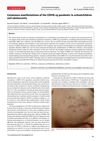
 The article concludes that schoolchildren and adolescents experienced various skin issues during the COVID-19 pandemic, including acne from masks and other skin reactions from the virus and vaccines.