 49 citations
,
January 2021 in “Journal of The European Academy of Dermatology and Venereology”
49 citations
,
January 2021 in “Journal of The European Academy of Dermatology and Venereology” Anti-androgens, like finasteride, dutasteride, and spironolactone, may lessen the severity of COVID-19 in men, leading to fewer ICU admissions.
 25 citations
,
January 2022 in “Endocrine journal”
25 citations
,
January 2022 in “Endocrine journal” Long COVID patients may have hormonal imbalances linked to their symptoms.
 12 citations
,
August 2020 in “Annals of Oncology”
12 citations
,
August 2020 in “Annals of Oncology” Androgen deprivation therapy might be better for preventing COVID-19 than treating it.
 2 citations
,
July 2023 in “bioRxiv (Cold Spring Harbor Laboratory)”
2 citations
,
July 2023 in “bioRxiv (Cold Spring Harbor Laboratory)” COVID-19 causes more taste, smell, hair, memory, and concentration issues than other respiratory infections.

COVID-19 can cause significant hair loss.
 July 2022 in “International Journal of Research in Dermatology”
 Some children with COVID-19 develop skin symptoms linked to a severe inflammatory condition.
 April 2021 in “Bioscientia Medicina Journal of Biomedicine and Translational Research”
 Hydroxychloroquine may help COVID-19 patients with lupus.
 September 2023 in “medRxiv (Cold Spring Harbor Laboratory)”
 Long-COVID has diverse, long-term health impacts, especially in young people.
 4 citations
,
March 2021 in “Le infezioni in medicina”
4 citations
,
March 2021 in “Le infezioni in medicina” Men with hair loss are more likely to experience moderate to severe COVID-19 symptoms.
 16 citations
,
December 2021 in “Frontiers in Endocrinology”
16 citations
,
December 2021 in “Frontiers in Endocrinology” Sex hormones may affect COVID-19 severity, with estrogen possibly reducing risk and testosterone potentially increasing it.
10 citations
,
January 2023 in “SAGE Open Medical Case Reports” COVID-19 infection and vaccination may trigger hair loss and rapid hair whitening.
September 2021 in “Journal of Education, Health and Sport” No clear link between androgenetic alopecia and COVID-19 was found.
 23 citations
,
September 2021 in “Frontiers in Cellular and Infection Microbiology”
23 citations
,
September 2021 in “Frontiers in Cellular and Infection Microbiology” Testosterone's effects on COVID-19 are unclear and need more research.
2 citations
,
September 2025 in “Microorganisms” COVID-19 can worsen autoimmune skin diseases and increase their occurrence.
 1 citations
,
October 2022 in “Current Dermatology Reports”
1 citations
,
October 2022 in “Current Dermatology Reports” COVID-19 and vaccines cause various skin reactions and highlight the need for dermatologists in managing these issues and addressing vaccine distribution disparities.
 January 2023 in “International Journal of Dermatology and Venereology”
 Many people experienced hair loss after having COVID-19, with the worst cases in hospitalized patients, and some saw hair regrowth within six months.
 22 citations
,
October 2021 in “Dermatologic Therapy”
22 citations
,
October 2021 in “Dermatologic Therapy” COVID-19 may cause temporary hair loss in some people.
 7 citations
,
February 2022 in “JAAD International”
7 citations
,
February 2022 in “JAAD International” COVID-19 may be linked to hair loss or worsening of hair loss in some people.
 7 citations
,
December 2020 in “Endocrine-related Cancer”
7 citations
,
December 2020 in “Endocrine-related Cancer” The over-the-counter supplement DHEA could make COVID-19 worse, especially in diabetics and people with G6PD deficiency.
 11 citations
,
November 2020 in “Movement Disorders Clinical Practice”
11 citations
,
November 2020 in “Movement Disorders Clinical Practice” A man developed neurological issues from SARS-CoV-2 without severe breathing problems, worsening to death.
 185 citations
,
August 2020 in “Mayo Clinic Proceedings”
185 citations
,
August 2020 in “Mayo Clinic Proceedings” Men are more likely to have severe COVID-19 cases and fatalities than women due to factors like lifestyle, aging, and biological differences.
 176 citations
,
May 2020 in “Dermatologic Therapy”
176 citations
,
May 2020 in “Dermatologic Therapy” COVID-19 can cause different skin symptoms that may help with early diagnosis and show how severe the disease is.
52 citations
,
August 2021 in “Microorganisms” Higher ACE2 levels in certain tissues may worsen COVID-19 in people with other health issues, especially older adults.
Finasteride may help reduce COVID-19 infection by altering a key gene.
 4 citations
,
April 2023 in “Cutis”
4 citations
,
April 2023 in “Cutis” COVID-19 can cause or worsen skin issues.
 January 2024 in “Pediatria Polska”
 Long-COVID symptoms in children after MIS-C are similar across different COVID-19 variants, with older age being a key factor.
 May 2022 in “Голова и шея.”
 COVID-19-positive patients with prosthetic speech implants face increased risks and need special care.
 6 citations
,
October 2024 in “npj Digital Medicine”
6 citations
,
October 2024 in “npj Digital Medicine” Long-COVID causes more health issues after COVID-19, varying by age, sex, and infection wave.
 January 2023 in “Acta dermatovenerologica Alpina, Pannonica et Adriatica (Tiskana izd.)”
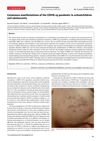
 The article concludes that schoolchildren and adolescents experienced various skin issues during the COVID-19 pandemic, including acne from masks and other skin reactions from the virus and vaccines.
 April 2021 in “Journal of Investigative Dermatology”
 The new skin-targeted COVID-19 vaccine creates strong immune responses and could improve vaccination methods.