January 2024 in “Brazilian Journal of Hair Health” Hair science has grown significantly, focusing on conditions like alopecia and improving treatments and techniques.
 June 2023 in “JAAD Case Reports”
 A man had a rare skin cancer that looked like a bald spot.
 January 2023 in “PARIPEX INDIAN JOURNAL OF RESEARCH”
 Vitamin D Dependent Rickets Type-2A can cause complete hair loss and bone growth issues in infants.
 January 2023 in “Indian dermatology online journal”
 A boy with Pachyonychia congenita has a confirmed gene mutation, highlighting the need for a local genetic database in India.
 January 2023 in “Przegla̧d dermatologiczny”
 There are two main types of alopecia areata with different severity, and diagnosis is made through clinical examination and trichoscopy, influencing treatment choices.
 December 2022 in “Research Square (Research Square)”
 Key genes linked to immune response are upregulated in hair follicles and skin tissues in chronic discoid lupus erythematosus.

Caffeine in Alpecin shampoo may help prolong hair root activity and reduce hair loss.

The paper concludes that the patchiness of alopecia areata is likely due to when the immune attack happens in the hair growth cycle.
September 2019 in “Journal of Investigative Dermatology” Innate lymphoid cells type 1 may contribute to alopecia areata.
Hair transplantation showed the most promise for repigmenting white hair, especially for eyebrows and eyelashes.
 September 2017 in “Journal of Investigative Dermatology”
 Thermal imaging is a useful non-invasive method to diagnose active inflammation in frontal fibrosing alopecia.
 June 2017 in “Journal of the American Academy of Dermatology”
 Tofacitinib is effective and safe for treating severe alopecia areata and related conditions.
 January 2017 in “Springer eBooks”
 The document concludes that Cutaneous Lupus Erythematosus has different forms, is influenced by genetic and environmental factors, and can be treated with various medications, but more targeted therapies are needed.
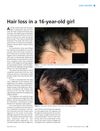 November 2014 in “Prescriber”
 The 16-year-old girl with hair loss was successfully treated for alopecia areata, leading to significant hair regrowth.
 December 1986 in “Plastic and Reconstructive Surgery”
 Wax injection did not stop hair loss and caused changes to the skull.

Alopecia areata often starts around age 23, can be permanent in 30% of cases, and treatments are usually temporary.
March 2026 in “PubMed Central” Female pattern hair loss is common in women, treatable with medications, and can affect mental health.
 January 2008 in “Journal of The American Academy of Dermatology”
 A nonchemical lotion was found effective in killing head lice and their eggs in most people, indicating it could be useful for managing head lice.
186 citations
,
October 1957 in “A M A Archives of Dermatology” Alopecia mucinosa is a challenging condition with unclear diagnosis and treatment.
 107 citations
,
November 2008 in “The Journal of Rheumatology”
107 citations
,
November 2008 in “The Journal of Rheumatology” Fibromyalgia slightly more common in SLE patients but doesn't affect SLE activity assessments.
55 citations
,
December 1987 in “Archives of Dermatology” Two enzyme defects in biotin metabolism cause severe skin, hair, and metabolic issues.
39 citations
,
July 2000 in “British Journal of Dermatology” Identical twins both had a rare hair loss condition, suggesting it might be genetic.
18 citations
,
December 2017 in “Medicine” Adding celecoxib to chemotherapy improves survival and quality of life for gastric cancer patients with positive COX-2.
10 citations
,
December 2024 in “Allergy” Tralokinumab effectively improved atopic dermatitis symptoms in most patients, but some stopped due to side effects like hair loss.
9 citations
,
December 1987 in “Archives of Dermatology” Two genetic disorders affect biotin metabolism, causing severe skin, hair, and metabolic issues.
3 citations
,
April 2025 in “International Journal of Molecular Sciences” TSG from Polygonum multiflorum may help with anti-aging by protecting the brain, heart, bones, and hair.
August 2024 in “Skin Research and Technology” TAF can be identified by excessive skin thickening and clogged hair follicles, helping distinguish it from similar skin conditions.
January 2024 in “Indian Journal of Dermatology” Unilateral keratosis follicularis squamosa may be a new subtype, successfully treated with asiaticoside ointment.
January 2013 in “대한피부과학회지” Men with longer-lasting hair loss eat more meat and less fish.
 25 citations
,
June 2018 in “Journal of The American Academy of Dermatology”
25 citations
,
June 2018 in “Journal of The American Academy of Dermatology” Genes linked to fibrosis are more active in people with central centrifugal cicatricial alopecia.