 July 2025 in “JOURNAL OF CLINICAL AND DIAGNOSTIC RESEARCH”
 Trichofolliculoma should be considered in children with scalp nodules for accurate diagnosis and treatment.
May 2025 in “International Ayurvedic Medical Journal” Ayurvedic Shamana therapy effectively treats alopecia areata with minimal side effects.

Phytotherapy offers a safer alternative for managing hair loss with fewer side effects.
May 2024 in “JDDG Journal der Deutschen Dermatologischen Gesellschaft” A rare scalp tumor was removed from a 49-year-old woman, with a good outlook if benign but needing careful monitoring if malignant.
 March 2024 in “Journal of biobased materials and bioenergy”
 Tea tree oil may help treat scalp alopecia by promoting hair follicle stem cell growth.
 January 2024 in “Elsevier eBooks”
 Increasing regulatory T cells may help treat alopecia areata by reducing autoimmunity and promoting hair growth.

Changes in gut and skin bacteria are linked to different hair loss conditions, and treatments like fecal transplants and probiotics might help, but more research is needed.
November 2022 in “Journal of Investigative Dermatology” A new tool helps study hair follicle cells to develop better treatments for hair disorders.
May 2021 in “DOAJ (DOAJ: Directory of Open Access Journals)” New technologies may improve topical treatments for hair loss.
 March 2021 in “CRC Press eBooks”
 Trichoscopy helps tell apart Lichen planopilaris and Frontal fibrosing alopecia from other hair loss conditions.
 March 2021 in “CRC Press eBooks”
 The document concludes that different patterns of hair thickness and scalp changes can help diagnose types of non-scarring hair loss.
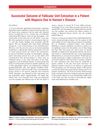 January 2021 in “Journal of Cutaneous and Aesthetic Surgery”
 Follicular unit extraction successfully restored hair growth in a leprosy patient without disease relapse.
 June 2020 in “Journal of cosmetic medicine”
 Eyebrow transplants use hair from the scalp or pubic area, with blonde hair looking more natural, and can leave scars depending on the method used.
 April 2018 in “Journal of Investigative Dermatology”
 Different types of stem cells in the skin contribute to the variety of melanoma forms.
 March 2018 in “Surgical and Radiologic Anatomy”
 High-resolution imaging is crucial for diagnosing and planning treatments in clinical anatomy and aging.
 October 2017 in “Anesthesia and Pain Medicine”
 Repeated left stellate ganglion blocks may improve skin elasticity, water content, and hair follicle density on the treated side.

The document concludes that the FOLLYSIS© system improves hair transplant processes and patient monitoring with high accuracy and less skin trauma.
April 2016 in “Journal of Investigative Dermatology” Mutations in the TSPEAR gene cause a new form of ectodermal dysplasia affecting hair and tooth development.
 December 2015 in “Focus on catalysts”
 Pomiferin may improve skin and scalp health by boosting important protein expression.
January 2012 in “Chinese Journal of Aesthetic Medicine” Increased androgen receptor expression in certain hair follicle areas may cause male pattern baldness.
 May 2010 in “Journal of the Dermatology Nurses' Association”
 Cicatricial alopecia causes permanent hair loss and is treated to relieve symptoms and stop progression.
 June 2001 in “Proceedings of SPIE”
 Low energy laser therapy effectively treats certain skin conditions and improves recovery time without side effects.
January 2001 in “대한피부과학회지” Horizontal sectioning helps diagnose hair loss, but Korean follicle differences matter.
 September 1997 in “Journal of The European Academy of Dermatology and Venereology”
 Examining scalp tissue under a microscope helps diagnose and understand hair loss diseases.

The new dutasteride gel improves hair growth for treating baldness.
 May 2023 in “Elsevier eBooks”
 Scalp micropigmentation is a safe way to hide hair loss and scalp scars by tattooing tiny dots that look like hair follicles.
September 2021 in “CRC Press eBooks” Traumatic alopecia causes hair loss from pulling or rubbing, leading to broken hairs and changes in the scalp.
 August 2018 in “Journal of the American Academy of Dermatology”
 Reflectance confocal microscopy helped diagnose and manage a woman's hair loss without needing a biopsy.
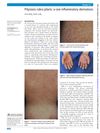 February 2018 in “BMJ case reports”
 An 18-year-old woman was diagnosed with a rare skin condition called Pityriasis rubra pilaris.
 January 2018 in “Springer eBooks”
 Congenital triangular alopecia is a harmless, non-spreading hair loss condition often seen in young children.