September 2020 in “Zenodo (CERN European Organization for Nuclear Research)” Childhood alopecia totalis is hard to treat, with few effective therapies available.
May 2020 in “Lithuanian University of Health Sciences” Alopecia areata is an autoimmune disease causing hair loss, with treatments often ineffective but new options are being researched.
January 2020 in “JAAD case reports” Systemic mastocytosis may cause a type of hair loss called cicatricial alopecia.
January 2020 in “Dermatology Online Journal” A young Caucasian man experienced a rare type of hair loss on the back of his head.
 July 2018 in “Elsevier eBooks”
 Discoid Lupus Erythematosus often causes scarring hair loss, is influenced by genetics and environment, and requires early treatment to prevent worsening.
 January 2017 in “Journal of Investigative Dermatology Symposium Proceedings”
 The 2015 Hair Research Congress concluded that stem cells, maraviroc, and simvastatin could potentially treat Alopecia Areata, topical minoxidil, finasteride, and steroids could treat Frontal Fibrosing Alopecia, and PTGDR2 antagonists could also treat alopecia. They also found that low-level light therapy could help with hair loss, a robotic device could assist in hair extraction, and nutrition could aid hair growth. They suggested that Alopecia Areata is an inflammatory disorder, not a single disease, indicating a need for personalized treatments.
 April 2016 in “Plastic and reconstructive surgery. Global open”
 Tafluprost could be a potential treatment for hair loss by promoting hair growth phase changes.
 February 2016 in “Acta Medica Marisiensis”
 A woman with chronic hepatitis C had a rare skin condition linked to her illness.
 May 2014 in “Clinical and Experimental Dermatology”
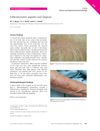
 A 70-year-old woman with a rare skin condition improved after treatment with topical steroids and acitretin.
 February 2013 in “Journal of the American Academy of Dermatology”
 A woman's hair loss looked like a different condition due to her hairstyle, and treatment stopped further hair loss but didn't regrow hair.
 January 2013 in “The Pan African medical journal”
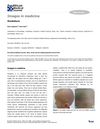
 Monilethrix causes short, fragile hair with no specific treatment available.
 December 2005 in “Journal of the American Academy of Physician Assistants”
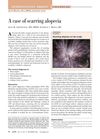
 The woman was diagnosed with lichen planopilaris and can be treated with corticosteroids.
January 2004 in “Linchuang pifuke zazhi” A man lost hair permanently from a salon burn, and surgery was needed to fix the scar.
 September 1998 in “Journal of The European Academy of Dermatology and Venereology”
 Aging affects hair density and skin health, and Behcet's disease, a complex condition with no specific test, involves sores and systemic issues, treated with various medications.
 December 1986 in “Plastic and Reconstructive Surgery”
 Wax injection did not stop hair loss and caused changes to the skull.
February 2023 in “Journal of The American Academy of Dermatology” Low-dose oral minoxidil helps increase hair density in traction alopecia.
 January 2022 in “Clinical Cases in Dermatology”
 Androgenetic alopecia, a common hair loss condition, can be treated with topical minoxidil, oral finasteride, or oral spironolactone, and new treatments like platelet-rich plasma, low-level laser therapy, and janus-kinase inhibitors are being explored.
 April 2019 in “Journal of emerging technologies and innovative research”
 Early treatment of Female Pattern Hair Loss is important to stop it from getting worse, and various treatments can help, especially in mild to moderate cases.
 September 2015 in “SelfCare Journal”
 Two treatments for male pattern hair loss are minoxidil and finasteride, but they have side effects and may not satisfy everyone.

Alopecia areata, a type of hair loss, may be passed through T cells and has genetic links, while treatments vary in effectiveness. Male pattern baldness can be treated with finasteride and is influenced by androgens in hair follicles.
 147 citations
,
January 2003 in “American journal of clinical dermatology”
147 citations
,
January 2003 in “American journal of clinical dermatology” The document concludes that accurate diagnosis of ichthyosis is crucial for treatment and genetic advice, and ongoing research is needed for better therapies.
11 citations
,
January 2015 in “JOURNAL OF HEALTH SCIENCE” A 12-year-old boy's rare skin condition improved with topical treatments and may resolve by puberty.
3 citations
,
January 2012 in “Journal of cosmetics, dermatological sciences and applications” Many Iraqi patients had skin problems at the site where a vein was taken for heart surgery.
 1 citations
,
January 2015 in “Hair therapy & transplantation”
1 citations
,
January 2015 in “Hair therapy & transplantation” New drug dutasteride effectively treats hair loss, but use cautiously due to potential sexual side effects.
 June 2026 in “Revista Ibero-Americana de Humanidades, Ciências e Educação”
 5% topical Minoxidil is the best treatment for female hair loss, improving hair density and thickness.
 September 2025 in “OBM Genetics”
 Early diagnosis and comprehensive management improve life quality for Netherton syndrome patients.

Spironolactone is generally safe and effective for treating hair loss in women, but may be less effective in severe cases.
 January 2024 in “Skin appendage disorders”
 A man with follicular psoriasis got better after treatment with skin cream and allergy pills.
 August 2023 in “British journal of dermatology/British journal of dermatology, Supplement”
 Rubbing or pressing on the face can cause small bumps, and changing posture along with certain creams can improve them.
 October 2022 in “Veterinária notícias/Veterinária Notícias”
 A 5-year-old Akita with a rare skin condition improved significantly after treatment.