 4 citations
,
December 2001 in “Endoscopy”
4 citations
,
December 2001 in “Endoscopy” Prednisolone and Bactrim improved symptoms in a woman with Cronkhite-Canada syndrome.
October 2019 in “Zenodo (CERN European Organization for Nuclear Research)” Capilcep effectively promotes hair growth and is safe, but long-term effects need more research.
 December 2023 in “Journal of General Procedural Dermatology and Venereology Indonesia”
 A 61-year-old Filipino man had a skin condition that looked like another disease, making diagnosis difficult.
 September 2025 in “Tạp chí Da liễu học Việt Nam”
 2.5 mg/mL TAC is as effective and safe as 5 mg/mL, but 5 mg/mL may improve hair regrowth and density more.
 July 2025 in “Russian Journal of Skin and Venereal Diseases”
 Lichen planus on the scalp can cause scarring hair loss and has four main types.
 19 citations
,
March 2013 in “Journal of Cutaneous Pathology”
19 citations
,
March 2013 in “Journal of Cutaneous Pathology” The study found unique skin changes in a rare type of alopecia linked to a skin condition called linear morphea.
55 citations
,
June 1987 in “PubMed” Cyclosporin A significantly increases hair growth in certain areas of mice.
 November 2018 in “Annals of oncology”
 A scalp-cooling system effectively prevents hair loss in breast cancer patients treated with eribulin.
 4 citations
,
March 2023 in “Current Oncology”
4 citations
,
March 2023 in “Current Oncology” Scalp cooling is the only FDA-approved method to prevent hair loss from chemotherapy, but other treatments like minoxidil and PRP are being tested.
 June 2026 in “Indian Journal of Postgraduate Dermatology”
 Rash from EGFRI treatment can indicate both side effects and treatment effectiveness.
 23 citations
,
November 2015 in “Phytotherapy Research”
23 citations
,
November 2015 in “Phytotherapy Research” Certain herbal compounds, especially from bitter melon, can inhibit cancer growth and promote hair growth by blocking PAK1.
 June 2024 in “Journal of clinical oncology”
 Scalp cooling can effectively prevent hair loss during chemotherapy, improving patients' quality of life.
 32 citations
,
October 2003
32 citations
,
October 2003 Spironolactone is better than placebo for reducing excessive hair growth in women, but its effectiveness for acne is unclear due to small study sizes.
1 citations
,
October 2021 in “Journal of Investigative Dermatology” September 2024 in “Preprints.org” Hair protects the scalp from skin cancer by aiding immune defense.
January 2007 in “Journal of the American Academy of Dermatology” Tinea can cause scarring alopecia in children, and fungal culture is crucial for diagnosis.
 March 2018 in “Suez Canal University Medical Journal”
 New drugs targeting the JAK-STAT pathway show promise for treating inflammatory skin diseases.
 October 2015 in “Reactions Weekly”
 A woman got a scalp condition from using latanoprost, but it improved after stopping the drug and starting other treatments.
20 citations
,
February 2018 in “Journal of the European Academy of Dermatology and Venereology” Topical vitamin C may help treat skin fragility in the elderly.
3 citations
,
August 2004 in “Veterinary Dermatology” Supplementing vitamins and minerals prevented hair loss in Icelandic horses.
4 citations
,
August 2002 in “British Journal of Ophthalmology” Surgical excision is the best treatment for SCC.
November 2024 in “Journal of Investigative Dermatology”  July 2023 in “Skin Research and Technology”
 Baricitinib combined with other immune therapies may safely and effectively treat severe scalp hair loss.
 November 2022 in “Journal of Investigative Dermatology”
 A new molecule was found to be a safe and effective skin lightener and anti-aging product.
 2 citations
,
September 2021 in “Cutis”
2 citations
,
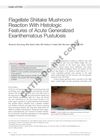
September 2021 in “Cutis” Eating shiitake mushrooms caused a man to develop a rash similar to a skin condition known as AGEP.
 August 2018 in “Journal of the American Academy of Dermatology”
 Calcipotriol may effectively treat hair loss in alopecia areata, working better in children than adults.
19 citations
,
April 2014 in “Veterinary Dermatology” Demodicosis should be considered in cats with facial skin issues exposed to inhalant glucocorticoids.
 September 2017 in “Journal of Investigative Dermatology”
 The new scalp treatment preserves hair color, reduces hair loss, and maintains hair strength.
 April 2017 in “The journal of investigative dermatology/Journal of investigative dermatology”
 Most patients experienced mild to moderate skin problems during a trial for a desmoid tumor treatment.
13 citations
,
June 2011 in “PubMed” The patient improved significantly after treatment, with only one small scar remaining.