April 2026 in “Journal of Plastic Reconstructive & Aesthetic Surgery” Plastic surgery journals should require standardized reporting for biologics studies to improve research quality.
 May 2025 in “JEADV Clinical Practice”
 Hair specialists vary in testing for alopecia areata, highlighting the need for standard guidelines.
January 2020 in “Faculty Opinions – Post-Publication Peer Review of the Biomedical Literature” More research is needed to make sperm DNA fragmentation a reliable tool for diagnosing male infertility.
2 citations
,
November 2024 in “PLoS ONE” Genomic prediction can improve breeding strategies for Korean Sapsaree dogs.
6 citations
,
January 2022 in “BIO-PROTOCOL” The protocol allows easy imaging of dividing cells in C. elegans and can be used for other organisms.
May 2021 in “FEBS open bio”  November 2023 in “Journal of animal science/Journal of animal science ... and ASAS reference compendium”
 SLICK cattle have better heat tolerance due to specific gene expression and pathway differences.
 5 citations
,
March 2019 in “Journal of lipid research”
5 citations
,
March 2019 in “Journal of lipid research” New probes were created to effectively measure specific enzymes involved in fat metabolism, which could help develop new drugs.
January 2026 in “SSRN Electronic Journal” 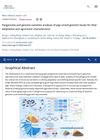
Pangenome analysis reveals key genes for pig adaptation and traits, aiding genetic improvement.
 August 2023 in “Military Medical Research”
 Scientists have improved 3D models of human skin for research and medical uses, but still face challenges in perfectly replicating real skin.
9 citations
,
January 1983 in “Journal of Chromatography B Biomedical Sciences and Applications” Human hair follicles can assess carcinogen metabolism and imidazole compounds might be effective anticarcinogens.
 106 citations
,
December 2015 in “Journal of The American Academy of Dermatology”
106 citations
,
December 2015 in “Journal of The American Academy of Dermatology” Correct skin biopsy techniques are crucial to avoid misdiagnosis of skin diseases.
June 2024 in “British Journal of Dermatology” Dermatologists vary widely in testing practices for alopecia areata, often exceeding guideline recommendations.
43 citations
,
December 1988 in “International Journal of Bio-Medical Computing”  November 2022 in “The journal of investigative dermatology/Journal of investigative dermatology”
 Researchers made a detailed map of gene activity for different parts of human hair follicles to help create targeted hair disorder treatments.
 September 2019 in “Journal of Investigative Dermatology”
 Specialized ribosomes affect aging in human skin cells.
21 citations
,
January 2017 in “MethodsX” Methanol is better than isopropanol for washing grizzly bear hair to measure cortisol.
46 citations
,
October 2022 in “Biomaterials”  September 2025 in “Cancer Innovation”
 Clinical trials should use innovative designs and biomarkers to improve precision therapy and patient outcomes.
April 2025 in “Frontiers in Genetics” Combining genetic models helps improve heat tolerance in beef cattle.
5 citations
,
January 2018 in “PubMed” Polish doctors find performance-enhancing substances unethical and want more knowledge to combat doping in sports.
 3 citations
,
April 2025 in “Nature Communications”
3 citations
,
April 2025 in “Nature Communications” GIANT improves brain imaging by using genetics to better map brain regions.
3 citations
,
January 2025 in “Biomaterials Science” Blue light-enhanced nanovesicles from stem cells improve skin and hair cell function, offering a safer treatment for skin and hair disorders.
75 citations
,
February 2017 in “Aging” SkQ1 antioxidant improved health and lifespan in mice.
 April 2012 in “Annals of Neurosciences”
 The document concludes that stem cell therapies lack solid proof of effectiveness, except for blood system treatments, and criticizes the ethical issues and commercial exploitation in the field.
January 2024 in “Bioanalysis” 11 citations
,
September 2023 in “ACS Omega” 3D bioprinting is advancing rapidly, improving regenerative therapy and drug delivery.
A new 3D breast tumor model helps test drug effects more accurately than traditional methods.