5 citations
,
November 2012 in “Journal of the American Academy of Dermatology” A 3-year-old girl has short anagen syndrome, causing her hair to stay short.
14 citations
,
September 1999 in “Mammalian genome” The scraggly mutation causes hair loss and skin defects in mice.
20 citations
,
July 2005 in “Experimental dermatology” The fuzzy gene is crucial for controlling hair growth cycles.
The man has patchy hair loss likely due to alopecia areata.
1 citations
,
November 2010 in “Pediatric dermatology” An 11-month-old girl has no scalp or body hair, and the cause is being studied.
 1 citations
,
July 2019 in “Case reports in dermatology”
1 citations
,
July 2019 in “Case reports in dermatology” A Thai boy was diagnosed with a rare hair disorder causing hair thinning and shedding.
 19 citations
,
October 1985 in “British Journal of Dermatology”
19 citations
,
October 1985 in “British Journal of Dermatology” The document concludes that unruly hair can be congenital or acquired, often lacks specific treatments, and can be managed with oils and short hairstyles.
8 citations
,
January 2020 Alopecia areata causes patchy hair loss, and certain hair features can suggest its presence.
September 2016 in “Journal of dermatological science” TSC2 is crucial for proper hair follicle development and patterning.
1 citations
,
August 2020 The Shaven mutation in mice affects hair growth and causes a greasy coat due to abnormal lipid content.
 January 2026 in “Cosmoderma”
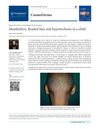
 A 9-year-old girl has a rare hair disorder causing beaded, sparse hair.
January 2005 in “Chinese Journal of Veterinary” Hairless mice lose hair by 3-4 weeks, develop thicker, folded skin, and show pigmentation differences.
 July 2019 in “Journal der Deutschen Dermatologischen Gesellschaft”
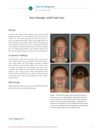
 A mother and daughter have a rare genetic hair loss disorder with no effective treatment.
 July 2024 in “Journal Archives of Health”
 Woolly hair is a rare genetic condition with no effective treatments.
 42 citations
,
September 2000 in “British Journal of Dermatology”
42 citations
,
September 2000 in “British Journal of Dermatology” Some children are born with unusually short, fine hair because their hair growth phase is short, but this often gets better by itself during puberty.
June 2023 in “Zenodo (CERN European Organization for Nuclear Research)”  February 2023 in “Cosmoderma”
 Loose anagen hair syndrome causes easily shed hair but usually improves with time.
2 citations
,
March 2010 in “European journal of dermatology/EJD. European journal of dermatology” A young Caucasian girl had both woolly hair and alopecia areata, which is rare.
 September 2023 in “Cutis”
 A baby girl has a hair disorder called monilethrix, causing fragile hair that may improve over time.
47 citations
,
April 2000 in “Experimental Dermatology” A new gene mutation causes a rare type of hair loss.
21 citations
,
April 2004 in “Australasian Journal of Dermatology” A 3-year-old girl has a rare condition causing sparse hair and nail issues, with minimal improvement from treatment.
 25 citations
,
October 1996 in “Dermatologic Clinics”
25 citations
,
October 1996 in “Dermatologic Clinics” Loose Anagen Syndrome causes easy-to-pull, thin hair, mainly in young girls, and improves with age.
May 2017 in “Journal of the American Academy of Dermatology” Monilethrix is a rare, inherited condition causing fragile hair and hair loss, with no cure but some treatments may help.
 5 citations
,
October 1984 in “The BMJ”
5 citations
,
October 1984 in “The BMJ” Up to 50% of scalp hair can be lost before it appears thin, and treatment is only needed for hair loss caused by diseases or deficiencies.
 2 citations
,
August 1994 in “Archives of dermatology”
2 citations
,
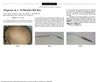
August 1994 in “Archives of dermatology” A 19-month-old boy with a rare hair disorder showed mild improvement with treatment, but his family chose gentle hair care due to limited success.
September 2016 in “Journal of dermatological science” The conclusion is that the variation in hair thinness in patients is mostly due to the amount of underdeveloped hairs, and treatments that thicken fine hairs might work for those with mild to severe conditions.
2 citations
,
January 1987 in “PubMed” Woolly hair syndrome is a genetic condition causing frizzy, fragile hair.
 41 citations
,
January 2014 in “Annals of Dermatology”
41 citations
,
January 2014 in “Annals of Dermatology” Dermoscopic examination helps diagnose different types of hair loss conditions by showing specific patterns.
23 citations
,
December 1991 in “Annals of the New York Academy of Sciences” Balding scalps slow down hair growth.
 47 citations
,
July 1967 in “Science”
47 citations
,
July 1967 in “Science” Not eating enough protein can cause hair roots to shrink and lose color, and hair to become thinner.