5 citations
,
May 2024 in “Current Issues in Molecular Biology” Single-cell sequencing can improve livestock health and productivity but faces challenges in precise cell analysis.
 5 citations
,
July 2022 in “Orphanet journal of rare diseases”
5 citations
,
July 2022 in “Orphanet journal of rare diseases” RSPO1 mutations in certain patients lead to skin cells that don't develop properly and are more likely to become invasive, increasing the risk of skin cancer.
2 citations
,
January 2025 in “Advances in Skin & Wound Care” Prevent skin tears by maintaining health, protecting skin, and ensuring safe environments.
1 citations
,
July 2025 in “Middle East Fertility Society Journal” Autoimmune markers may help diagnose and manage PCOS.
1 citations
,
December 2023 in “Life” PRP helps skin heal, possibly through special cells called telocytes.
 June 2026 in “Nature Communications”
 Stretching skin helps fibroblasts support stem cell renewal for skin growth.
 April 2026 in “Biomolecules”
 New treatments for PCOS using smart drug delivery, metabolic changes, and AI show promise but need more research.
 February 2026 in “Nature Communications”
 A specific group of immune and skin cells may cause chronic inflammation in atopic dermatitis.
December 2025 in “Reports — Medical Cases Images and Videos” Discoid lupus erythematosus can be mistaken for a skin infection, complicating diagnosis and treatment.
December 2025 in “Pharmacological Research - Natural Products” Shrimp extracts may help heal burns and fight bacteria.
August 2025 in “American Journal of Dermatopathology” Accurate diagnosis and personalized treatment are crucial in dermatopathology.
May 2025 in “The Open Biomedical Engineering Journal” Adipose tissue and PRP together improve healing and surgery outcomes but need more research for consistent use.
December 2024 in “Veterinary Dermatology” A sugar glider had a rare skin cancer that worsened despite treatment, highlighting the need for thorough checks in exotic pets.
October 2024 in “Biomedical Reports” Superoxidized electrolyzed solution (SES) is more effective for burn healing than common antiseptics.
 August 2023 in “Clinical, Cosmetic and Investigational Dermatology”
 Research on the human skin microbiome has grown, focusing on skin health and diseases, with more studies needed on antibiotic resistance and AI applications.
 July 2023 in “The Journal of Clinical Endocrinology and Metabolism”
 Gender-affirming hormone therapy improves physical performance in trans men to the level of cisgender men, while in trans women, it increases fat mass and decreases muscle mass, with no advantage in physical performance after 2 years.
 May 2023 in “IntechOpen eBooks”
 More research is needed to understand how testosterone is maintained in adult males.
 January 2022 in “Sustainable development goals series”
 The document concludes that significant investment in agricultural innovation is necessary to achieve global food security and nutrition.
January 1988 in “Bulletin of Hispanic Studies” Old Portuguese suffixes evolved under Latin and other language influences, with some becoming less common over time.
October 2021 in “Case Reports in Veterinary Medicine” The dog died from myxedema coma linked to severe atherosclerosis and thyroid issues.
May 2025 in “International Journal of Biology Pharmacy and Allied Sciences” Ayurvedic treatment can effectively manage PCOD symptoms.
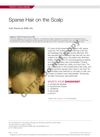
A 5-year-old girl has sparse, dry, and brittle hair but is otherwise healthy.
 June 2021 in “International journal of research in dermatology”
 A boy and his father with hereditary hypotrichosis simplex were treated for hair loss, but the treatment result is unknown.
 6 citations
,
June 1981 in “PubMed”
6 citations
,
June 1981 in “PubMed” Whisker hair in young people might predict severe future hair loss.
 18 citations
,
August 2018 in “The FASEB journal”
18 citations
,
August 2018 in “The FASEB journal” Rabbits lacking the Hoxc13 gene show similar hair and skin issues to humans with ECTD-9, making them good for research on this condition.
2 citations
,
July 2013 in “PubMed” The pubic hair loss was likely due to anorexia nervosa.
 3 citations
,
February 2009 in “Journal of The European Academy of Dermatology and Venereology”
3 citations
,
February 2009 in “Journal of The European Academy of Dermatology and Venereology” Sparse hairs below frontal hairline can indicate early male balding.
September 2014 in “Journal of the American Academy of Dermatology” The girl likely has Loose anagen hair syndrome, which may improve on its own or with minoxidil.
2 citations
,
July 2019 in “Indian dermatology online journal” A 17-year-old girl and her brothers have a rare hair condition with long eyelashes, thick eyebrows, and easily pluckable hair.
 6 citations
,
February 2016 in “American Journal of Dermatopathology”
6 citations
,
February 2016 in “American Journal of Dermatopathology” The boy with woolly hair nevus had thinner hair and abnormal hair follicles, which improved with treatment but worsened when treatment stopped.