 4 citations
,
November 2015 in “Journal of Investigative Dermatology”
4 citations
,
November 2015 in “Journal of Investigative Dermatology” Testosterone may worsen hair loss by affecting hair growth signals, while different prostaglandins can either hinder or promote hair growth.
 4 citations
,
January 2015 in “Endocrinology & metabolic syndrome”
4 citations
,
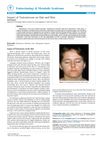
January 2015 in “Endocrinology & metabolic syndrome” Testosterone can cause acne and male-pattern baldness, affects hair growth in men and women, and makes male skin more sensitive.
 January 2018 in “Springer eBooks”
 The document says that early treatment of Acne Vulgaris is important to prevent scarring and that adult onset acne is common in women, often due to hormonal imbalances.
 April 2020 in “Research Square (Research Square)”
 Exosomes from stem cells help wounds heal faster by affecting specific cell signals.
 10 citations
,
January 2016 in “Elsevier eBooks”
10 citations
,
January 2016 in “Elsevier eBooks” Nanoparticles can speed up wound healing and deliver drugs effectively but may have potential toxicity risks.
 60 citations
,
November 2020 in “International Journal of Medical Sciences”
60 citations
,
November 2020 in “International Journal of Medical Sciences” NIR light therapy may effectively treat eye diseases and improve brain function without side effects.
 47 citations
,
February 2021 in “Pharmacological research”
47 citations
,
February 2021 in “Pharmacological research” Exosomes can improve skin health and offer new treatments for skin repair and rejuvenation.
 19 citations
,
August 2019 in “Expert Opinion on Therapeutic Targets”
19 citations
,
August 2019 in “Expert Opinion on Therapeutic Targets” New treatments for hair loss may target specific pathways and generate new hair follicles.
 6 citations
,
October 2018 in “Lasers in Medical Science”
6 citations
,
October 2018 in “Lasers in Medical Science” Low-level laser therapy using near-infrared light may help heart conditions and promote healing by releasing nitric oxide.
 4 citations
,
January 2025 in “Frontiers in Pharmacology”
4 citations
,
January 2025 in “Frontiers in Pharmacology” Multiomics helps understand and improve skin healing and repair.
 3 citations
,
September 2005 in “Experimental dermatology”
3 citations
,
September 2005 in “Experimental dermatology” The cornified envelope is crucial for skin's barrier function and involves key proteins and genetic factors.
 1 citations
,
September 2025 in “Clinical Cosmetic and Investigational Dermatology”
1 citations
,
September 2025 in “Clinical Cosmetic and Investigational Dermatology” Adipose-derived stem cell exosomes and AI can improve personalized skincare by offering anti-aging benefits and precise product customization.
 January 2025 in “Scripta Medica”
 Natural hydrolates may improve burn healing and fight antibiotic resistance.
 February 2024 in “Frontiers in physiology”
 Modifying certain signals in the body can help wounds heal without scars and regrow hair.
 May 2017 in “American Society of Health-System Pharmacists eBooks”
  July 2003 in “Journal of Cutaneous Medicine and Surgery”
 Certain drugs can cause lupus, stopping these drugs is the main treatment. NB-UVB phototherapy clears psoriasis faster when applied three times a week. Monoclonal antibodies and oral pimecrolimus are effective in treating psoriasis. Smoking and drinking are linked to psoriasis in men. No direct link between low iron and hair loss was found. Vaccines are effective against genital herpes and human papillomavirus type 16.
 July 2003 in “Journal of Cutaneous Medicine and Surgery”
 Blood pressure drugs can cause skin lupus, early treatment is key for baby herpes and diabetic foot ulcers, a certain vaccine works against genital herpes and HPV in women, more frequent light therapy helps psoriasis, smoking and drinking can worsen psoriasis, a cream clears up a type of skin cancer, and low iron levels don't cause chronic hair loss.
 July 2003 in “Journal of Cutaneous Medicine and Surgery”
 Various skin conditions can be treated effectively with different methods, such as discontinuing certain drugs, using specific vaccines, applying creams, and changing lifestyle habits like smoking and drinking.
 July 2003 in “Journal of Cutaneous Medicine and Surgery”
 The document concludes that various treatments for skin conditions are effective, but some require further research, and certain factors like gender and lifestyle can influence disease outcomes.
 July 2003 in “Journal of Cutaneous Medicine and Surgery”
 Stopping certain drugs can improve skin conditions, arsenicosis affects over half of a Bangladeshi village, males are more vulnerable, and certain treatments are effective for warts, acne, and psoriasis. Smoking and drinking are linked to psoriasis in men, a cream helps with a type of skin cancer, and low iron levels don't directly cause chronic hair loss in women.
 July 2003 in “Journal of Cutaneous Medicine and Surgery”
 High blood pressure drugs often cause skin lupus, stopping the drug usually helps. A vaccine helps prevent genital herpes and HPV-16. More frequent light therapy clears psoriasis faster. No link was found between low iron and chronic hair loss.
 July 2003 in “Journal of Cutaneous Medicine and Surgery”
 Treating psoriasis with UVB light three times a week is faster than twice a week, and certain medications and lifestyle factors affect psoriasis treatment outcomes.
 July 2003 in “Journal of Cutaneous Medicine and Surgery”
 Skin problems are common in Bangladesh due to arsenic, prompt treatment of diabetic foot ulcers is crucial, maternal transmission causes most neonatal herpes, treatments for pediatric vasculitis are effective, the chickenpox vaccine works, more frequent UVB therapy helps psoriasis, certain jobs increase hand dermatitis risk, monoclonal antibodies treat psoriasis well, lifestyle affects psoriasis, alefacept improves psoriasis, imiquimod cream partially clears basal cell carcinoma, and iron may not help chronic hair loss.
 July 2003 in “Journal of Cutaneous Medicine and Surgery”
 Blood pressure drugs can cause skin lupus, but it improves after stopping the drug. The glycoprotein D vaccine works against genital herpes in some women, and the HPV-16 vaccine reduces HPV-16 infection and related diseases. More frequent light therapy clears psoriasis faster. A cream called imiquimod effectively treats a type of skin cancer. Iron supplements don't necessarily help with chronic hair loss in women.
 July 2003 in “Journal of Cutaneous Medicine and Surgery”
 Some medications can improve skin conditions, while lifestyle factors like smoking and drinking may worsen them; treatments like monoclonal antibodies and imiquimod cream show promise for certain skin diseases.
 January 2026 in “Asian Journal of Pharmaceutical and Clinical Research”
 Umbilical cord and cord blood stem cells are promising for treating chronic diseases due to their versatility and ethical acceptability.
 January 2023 in “European endocrinology”
 People with alopecia have a higher risk of thyroid cancer.
 January 2011 in “Springer eBooks”
 Eating a balanced diet with the right vitamins and minerals is important for healthy hair, but too many supplements can be harmful.
 November 2015 in “European Journal of Inflammation”
 Cicatricial alopecia, a permanent hair loss condition, is mainly caused by damage to specific hair follicle stem cells and abnormal immune responses, with gene regulator PPAR-y and lipid metabolism disorders playing significant roles.
 June 2026 in “Discover Immunity.”
 Mesenchymal stem cells help improve skin healing and rejuvenation.