 3 citations
,
August 2012 in “The American Journal of Dermatopathology”
3 citations
,
August 2012 in “The American Journal of Dermatopathology” A man with a birthmark on his scalp developed hair loss that improved with treatment, but the link between the birthmark and hair loss was unclear.
 3 citations
,
January 2019 in “Indian Journal of Dermatology”
3 citations
,
January 2019 in “Indian Journal of Dermatology” Transverse scalp biopsy sections help diagnose different alopecias by showing hair follicle details and inflammation patterns.

Alopecia areata often starts around age 23, can be permanent in 30% of cases, and treatments are usually temporary.
 February 2024 in “Sohag Medical Journal”
 Various local treatments for alopecia areata show promise, but individualized plans and more research are needed.
 January 2019 in “Clinical Dermatology Open Access Journal”
 Combining corticosteroids and non-ablative fractional laser therapy may effectively treat extensive alopecia areata.
September 2025 in “Brazilian Journal of Health Review” Early diagnosis and less aggressive hair care improve outcomes for Black women with frontal fibrosing alopecia.
24 citations
,
August 2023 in “Journal of the American Academy of Dermatology” Trichoscopy helps diagnose and manage different types of hair loss effectively.
 September 2024 in “Kuban Scientific Medical Bulletin”
 Accurate diagnosis and early treatment are crucial for managing hair loss effectively.
 16 citations
,
January 2017 in “Anais brasileiros de dermatologia/Anais Brasileiros de Dermatologia”
16 citations
,
January 2017 in “Anais brasileiros de dermatologia/Anais Brasileiros de Dermatologia” Managing frontal fibrosing alopecia and lichen planus pigmentosus is challenging due to resistant hair loss and skin discoloration.
 1 citations
,
October 2016 in “The Indian Journal of Medical Research”
1 citations
,
October 2016 in “The Indian Journal of Medical Research” The book is a valuable guide for managing hair disorders, despite some missing details.
 3 citations
,
January 1989 in “PubMed”
3 citations
,
January 1989 in “PubMed” The review found that specific changes in scalp tissue can help diagnose different types of hair loss.
 January 2023 in “Indian dermatology online journal”
 Skin problems after waxing led to a sarcoidosis diagnosis.
 January 2023 in “Journal of Cosmetic Dermatology”
 Some children may develop hair loss after having COVID-19.
 12 citations
,
March 2018 in “Anais brasileiros de dermatologia/Anais Brasileiros de Dermatologia”
12 citations
,
March 2018 in “Anais brasileiros de dermatologia/Anais Brasileiros de Dermatologia” A patient had both chronic cutaneous lupus erythematosus and frontal fibrosing alopecia.
 October 2023 in “Dermatologie pro praxi”
 Alopecia areata causes hair loss and has various treatment options, but responses differ.
August 2017 in “Journal of biotechnology” Topical corticosteroids are the best initial treatment for children with Alopecia Areata.
July 2023 in “International Journal of Trichology” The man's hair turned white suddenly but returned to normal on its own in 6 months.
 19 citations
,
March 2013 in “Journal of Cutaneous Pathology”
19 citations
,
March 2013 in “Journal of Cutaneous Pathology” The study found unique skin changes in a rare type of alopecia linked to a skin condition called linear morphea.
 January 2023 in “The Egyptian Journal of Hospital Medicine”
 New treatments for sudden hair loss include oral medications and a special laser, both showing promise in hair regrowth.
15 citations
,
February 1987 in “Archives of Dermatology” Topical cyclosporine lotion led to noticeable hair regrowth in alopecia universalis.
March 2004 in “Journal of the American Academy of Dermatology” Middle-aged women with cicatricial alopecia/lichen planopilaris responded well to treatments like ketoconazole shampoo and steroids.
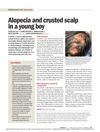 March 2026 in “Open MIND”
 Early treatment of scalp infections can prevent permanent hair loss.
Early diagnosis and treatment of frontal fibrosing alopecia are crucial to prevent permanent hair loss.
 13 citations
,
June 2013 in “Actas Dermo-Sifiliográficas”
13 citations
,
June 2013 in “Actas Dermo-Sifiliográficas” Syphilitic alopecia, linked to syphilis and high-risk sexual behavior, improves with penicillin treatment.
February 2026 in “JEADV Clinical Practice” Lichen planopilaris can cause hair loss on limbs, not just the scalp.
January 2016 in “Çağdaş tıp dergisi” Topical 1% pimecrolimus effectively treated alopecia areata.
January 2022 in “Clinical Cases in Dermatology” A 47-year-old man was diagnosed with a specific type of hair loss and advised to use certain medications and avoid hair transplants.

Alopecia Areata is treated with drugs and therapies to reduce inflammation and immune response.
 February 2023 in “Journal of vaccines and immunology”
 Alopecia areata causes sudden hair loss, often on the scalp, and can be severe, especially with early onset or related health issues.
Hair disorders can be genetic or acquired, affecting hair growth and loss differently.