 1 citations
,
January 2021 in “Dermatology online journal”
1 citations
,
January 2021 in “Dermatology online journal” A unique case showed a rare combination of two types of lichen planus on the face.
 August 2022 in “Frontiers in genetics”
 A new genetic change in the DSC3 gene is linked to a rare condition causing hair loss and skin blisters in a child.
 15 citations
,
December 2017 in “Journal of The European Academy of Dermatology and Venereology”
15 citations
,
December 2017 in “Journal of The European Academy of Dermatology and Venereology” Frontal fibrosing alopecia and androgenetic alopecia may be related, with a possible shared cause.
8 citations
,
August 2019 in “JAAD case reports” Chronic cutaneous lupus erythematosus causes scarring, hair loss, and skin discoloration, especially on sun-exposed areas.
 March 2021 in “CRC Press eBooks”
 The document concludes that different patterns of hair thickness and scalp changes can help diagnose types of non-scarring hair loss.
5 citations
,
September 2021 in “Clinical case reports” GLPLS is a rare skin condition with specific hair loss and skin symptoms.
May 2024 in “JAAD Case Reports” A young man was diagnosed with a rare hair loss condition usually seen in older women.
December 2024 in “Skin Appendage Disorders” Accurate diagnosis and treatment improved symptoms in a patient with alopecia linked to mycosis fungoides.
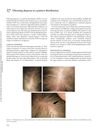 April 2012 in “Informa Healthcare eBooks”
 Fibrosing alopecia in a pattern distribution is a unique hair loss condition with inflammation and scarring, resembling but distinct from common balding.
 26 citations
,
October 2012 in “Dermatologic Clinics”
26 citations
,
October 2012 in “Dermatologic Clinics” The document details hair transplantation techniques and innovations, highlighting Follicular Unit Transplantation as the standard and discussing the effectiveness and challenges of the procedure.
 18 citations
,
December 2014 in “Plastic surgery”
18 citations
,
December 2014 in “Plastic surgery” Follicular Unit Transplantation is an effective and safe treatment for hair loss due to scarring.
 15 citations
,
January 2014 in “Dermatology”
15 citations
,
January 2014 in “Dermatology” Some patients with a type of skin lymphoma can experience a rare, non-scarring hair loss that looks like another hair loss condition but has distinct features.
 27 citations
,
January 2015 in “Current problems in dermatology”
27 citations
,
January 2015 in “Current problems in dermatology” The document concludes that primary scarring alopecias cause permanent hair loss, have unpredictable outcomes, and lack definitive treatments, requiring personalized care.
 2 citations
,
January 2019 in “PubMed”
2 citations
,
January 2019 in “PubMed” The study concluded that certain areas of the scalp and beard are safe for hair transplant donor sites in Indian men.
June 2026 in “Skin Appendage Disorders” Diffuse unpatterned alopecia causes widespread hair thinning and is hard to diagnose and treat.
January 2025 in “International journal of research studies in biosciences” Mitochondrial dysfunction and oxidative stress may play a role in Lichen Planopilaris.
Melanin-rich skin has unique challenges in diagnosing and treating skin diseases.
 December 2023 in “Journal of General Procedural Dermatology and Venereology Indonesia”
 A 61-year-old Filipino man had a skin condition that looked like another disease, making diagnosis difficult.
August 2018 in “Analysis of the application of various variants of bone plasty in victims with intraarticular fractures (Transplantology)” Follicular microautotransplantation effectively improves scalp scars and enhances quality of life.
 19 citations
,
February 2013 in “The American Journal of Dermatopathology”
19 citations
,
February 2013 in “The American Journal of Dermatopathology” Nonscarring alopecia has higher hair density than scarring alopecia, and hair density can help diagnose the type of alopecia.
 30 citations
,
May 2014 in “American Journal of Clinical Dermatology”
30 citations
,
May 2014 in “American Journal of Clinical Dermatology” The conclusion is that better understanding and more research are needed to effectively manage follicular and scarring disorders in skin of color, with an emphasis on patient education and cultural awareness.
56 citations
,
September 2010 in “Veterinary pathology” Certain mouse strains develop a skin condition similar to a human hair loss disease due to genetic defects.
 17 citations
,
September 2012 in “Dermatologic Clinics”
17 citations
,
September 2012 in “Dermatologic Clinics” The conclusion is that accurate diagnosis of different types of hair loss requires careful examination of tissue samples and understanding of clinical symptoms.
 53 citations
,
May 2010 in “Dermatologic Surgery”
53 citations
,
May 2010 in “Dermatologic Surgery” Hair transplantation may not work for Frontal Fibrosing Alopecia as transplanted hair was lost when the disease came back.
 37 citations
,
June 2011 in “Journal of The American Academy of Dermatology”
37 citations
,
June 2011 in “Journal of The American Academy of Dermatology” Loss of sebaceous glands and inflammation may contribute to the development of scarring alopecia.
 22 citations
,
January 2017 in “Skin appendage disorders”
22 citations
,
January 2017 in “Skin appendage disorders” The conclusion is that primary scarring alopecia is a complex condition that requires early and accurate diagnosis for effective treatment.
 7 citations
,
June 2019 in “Australasian Journal of Dermatology”
7 citations
,
June 2019 in “Australasian Journal of Dermatology” Elderly men with a scalp condition healed in about 26 days using specific creams and dressings, with no return of the condition in 6 months.
 1 citations
,
April 2016 in “Actas Dermo-Sifiliográficas”
1 citations
,
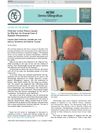
April 2016 in “Actas Dermo-Sifiliográficas” Wearing a wig caused a woman's skin condition to worsen due to pressure from the wig's fasteners.
 153 citations
,
August 2002 in “Dermatologic Surgery”
153 citations
,
August 2002 in “Dermatologic Surgery” Follicular Unit Extraction (FUE) is a less invasive hair transplant method with minimal scarring, suitable for about 60% of patients, especially those needing fewer grafts and quicker recovery.
 95 citations
,
February 2019 in “The New England Journal of Medicine”
95 citations
,
February 2019 in “The New England Journal of Medicine” Mutations in the PADI3 gene are linked to a higher risk of scarring hair loss in women of African descent.