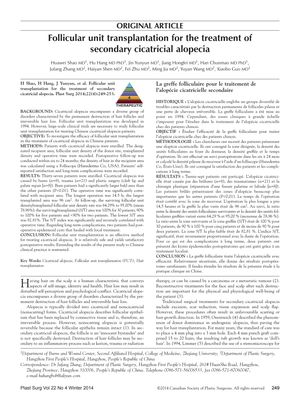
TLDR Follicular Unit Transplantation is an effective and safe treatment for hair loss due to scarring.
The study assessed the success of Follicular Unit Transplantation (FUT) in 37 Chinese patients with secondary cicatricial alopecia due to burns, trauma, or plastic surgery. The results showed a mean survival rate of 78.96% for transplanted follicular units, with 30 patients achieving a 100% survival/transplanted area, and only two patients experiencing postoperative complications in the form of epidermoid cysts. Despite a small sample size and variations in follow-up times, the study concluded that FUT is an effective, safe, and minimally invasive treatment for cicatricial alopecia, recommending its use in Chinese clinical practice.

25 citations
,
May 2011 in “Annals of Plastic Surgery” Nonhead hair transplantation is effective for patients with limited head donor hair, but more research is needed.
20 citations
,
December 2010 in “Burns” PL-FUT is an effective hair restoration method for burn victims with minimal scarring and high patient satisfaction.
23 citations
,
March 2001 in “Clinics in Dermatology” Hair restoration surgery techniques have evolved, with focus on patient selection and realistic goals, and future advancements may include cloning and gene therapy.
77 citations
,
April 1999 in “Dermatologic Clinics” The document concludes that follicular unit transplantation offers more natural results and better graft survival than older hair transplant methods.
72 citations
,
September 1997 in “Dermatologic Surgery” Careful planning and patient counseling can lead to excellent hair transplant results, often in one or two sessions.
172 citations
,
December 1994 in “The Journal of Dermatologic Surgery and Oncology” This hair transplant method improves cosmetic results for hair loss.