Lichen spinulosus, usually seen in young people, can rarely occur in adults, as shown by a 52-year-old woman with a rough, bumpy rash.
 3 citations
,
December 2015 in “Acta Veterinaria Brasilica”
3 citations
,
December 2015 in “Acta Veterinaria Brasilica” A chinchilla got ringworm from stress and contact with dog-related items.
 33 citations
,
December 2004 in “Differentiation”
33 citations
,
December 2004 in “Differentiation” Mouse amnion can turn into skin and hair follicles with help from certain cells and factors.
23 citations
,
April 2003 in “Journal of Structural Biology” Keratin structure changes during keratinization, but the exact model remains uncertain.
4 citations
,
December 2014 in “Indian Journal of Dermatology” A rare skin condition with cysts was found on a 5-year-old boy's scalp.
Spiny mice have resilient, large mitochondria that help them regenerate tissue.
 6 citations
,
July 2015 in “International Journal of Dermatology”
6 citations
,
July 2015 in “International Journal of Dermatology” Trichoepitheliomas can be hard to distinguish from other skin conditions and often start in teenage years.
 July 2018 in “Journal of Dairy & Veterinary Sciences”
 The dog recovered from a skin infection after treatment with medication.
January 2005 in “Enlighten: Publications (The University of Glasgow)” Melanocyte pathology requires keratinocyte hyperplasia and regulation dysfunction.
28 citations
,
May 2015 in “Molecular Neurobiology” LSD1 is crucial for regenerating hair cells in zebrafish.
106 citations
,
February 2014 in “eLife” Lanceolate complexes in mouse hair follicles are essential for touch and depend on specific cells for maintenance and regeneration.
37 citations
,
November 2002 in “Biology of Reproduction” Prenatal antiandrogen treatment altered hormone levels in adult spotted hyenas, affecting males and females differently.
9 citations
,
April 2019 in “Bioscience, biotechnology, and biochemistry” Ten miRNAs may play key roles in starting secondary hair follicle development in sheep foetuses.
22 citations
,
April 2012 in “The American journal of pathology” Loss of Msx2 function causes eye development issues similar to Peters anomaly.
14 citations
,
June 2005 in “PubMed” A rare ear cyst contained hair fragments.
5 citations
,
January 2024 in “The International Journal of Developmental Biology” Mouse models help target specific genes in lymphatic cells for research.
11 citations
,
October 2007 in “Journal of Investigative Dermatology” Mutations in the Sgk3 gene cause fuzzy hair in mice.
 January 2023 in “Indian dermatology online journal”
 Leukemia can sometimes appear as unusual skin issues in children.
Lhx2 helps retinal cells respond to signals for eye development.
5 citations
,
January 2020 in “Veterinary Dermatology” Enilconazole and lime sulfur work well for whole body treatment, while other products need frequent application for effective antifungal action.
 April 2023 in “Journal of Investigative Dermatology”
 The research mapped gene activity in developing mouse skin and found key markers for skin cell types and changes from fetal to early postnatal stages.
 November 2024 in “medRxiv (Cold Spring Harbor Laboratory)”
 Genetic factors affecting skin health and body weight may increase the risk of dermatophytosis.
January 2004 in “Laboratory Animal Science and Administration” The hairless mutant gene causes early hair loss and affects skin and thymus development in mice.
May 2024 in “Indian journal of child health” A 7-year-old girl had a non-painful skin growth at her belly button, which was removed and identified as a keratinous cyst.
13 citations
,
January 2001 in “Pediatric dermatology” A dark-haired Chinese girl had hair that looked banded under certain light but was normal under a microscope.
297 citations
,
January 2002 in “Development” Overexpression of ΔNLef1 in mouse skin leads to hair loss, cysts, and skin tumors.
11 citations
,
January 2015 in “JOURNAL OF HEALTH SCIENCE” A 12-year-old boy's rare skin condition improved with topical treatments and may resolve by puberty.
 5 citations
,
December 2017 in “The Journal of Dermatology”
5 citations
,
December 2017 in “The Journal of Dermatology” A new gene mutation caused a man's rare skin condition, Schöpf-Schulz-Passarge syndrome.
 11 citations
,
January 2020 in “BMC pediatrics”
11 citations
,
January 2020 in “BMC pediatrics” New mutations in the SLC39A4 gene found in twins help understand the genetic cause of acrodermatitis enteropathica.
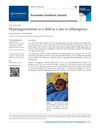 November 2024 in “Karnataka Pediatric Journal”
 Chikungunya can cause hyperpigmentation in children and should be considered in diagnosis.