319 citations
,
November 2005 in “Proceedings of the National Academy of Sciences” Hair follicle stem cells can help repair damaged nerves.
 130 citations
,
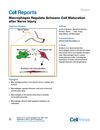
September 2018 in “Cell Reports”
130 citations
,
September 2018 in “Cell Reports” Macrophages help heal nerves by aiding the maturation of Schwann cells and are important for nerve repair.
44 citations
,
January 2015 in “Development” Human Schwann cells can be quickly made from hair follicle stem cells for nerve repair.
 5 citations
,
January 2023 in “Cell proliferation”
5 citations
,
January 2023 in “Cell proliferation” Chick embryo extract helps rat hair follicle stem cells potentially turn into Schwann cells, important for the nervous system.
1 citations
,
January 2025 in “Burns & Trauma” Targeting Midkine can help reduce pain and itching in keloids.
 June 2020 in “bioRxiv (Cold Spring Harbor Laboratory)”
 Activating β-catenin increases melanocytes and decreases Schwann cells.
January 2007 in “The FASEB journal” Human hair keratins help nerve regeneration and support Schwann cell activity.
July 2025 in “Journal of Investigative Dermatology” Schwann cell and M2 macrophage interactions contribute to keloid growth by increasing matrix deposition.
June 2025 in “Proceedings of the National Academy of Sciences” A PIK3CA mutation in Schwann cells causes severe nerve damage and increased glycolysis, but early treatment can help.
April 2009 in “The FASEB Journal” Keratin biomaterials from human hair help nerve regeneration by activating Schwann cells.
 May 2006 in “Frontiers in Neuroendocrinology”
 Progesterone and its metabolites affect myelin protein expression differently in male and female rat Schwann cells.
36 citations
,
September 2009 in “Molecular Neurobiology” 133 citations
,
June 2016 in “Nature Neuroscience” Zeb2 is crucial for nerve repair by controlling Schwann cell function.
144 citations
,
June 2008 in “Cell Cycle” Hair follicle stem cells can help repair spinal cord injuries and improve walking.
121 citations
,
June 2009 in “Journal of Cellular Biochemistry” Human hair follicle stem cells can safely and effectively help nerve regeneration.
 106 citations
,
September 2010 in “Stem cells”
106 citations
,
September 2010 in “Stem cells” Skin-derived precursors in hair follicles come from different origins but function similarly.
105 citations
,
May 2013 in “Biomaterials” Human hair keratin hydrogel may aid nerve repair better than traditional methods.
 66 citations
,
March 2019 in “Cellular and Molecular Life Sciences”
66 citations
,
March 2019 in “Cellular and Molecular Life Sciences” Melanocyte development from neural crest cells is complex and influenced by many factors, and better understanding could help treat skin disorders.
 37 citations
,
January 2009 in “The Journal of Dermatology”
37 citations
,
January 2009 in “The Journal of Dermatology” Hair follicle stem cells can turn into various cell types and help repair nerves.
 33 citations
,
October 2010 in “Journal of Dermatological Science”
33 citations
,
October 2010 in “Journal of Dermatological Science” Hair follicle stem cells are a practical and ethical option for nerve repair in regenerative medicine.
 21 citations
,
December 2016 in “PLOS ONE”
21 citations
,
December 2016 in “PLOS ONE” Scientists made skin stem cells from other human cells with over 97% efficiency, which could help treat skin conditions.
11 citations
,
September 2019 in “The journal of investigative dermatology/Journal of investigative dermatology” A specific group of skin stem cells was found to help maintain hair follicle cells.
3 citations
,
May 2013 in “International journal of molecular sciences” Epidermal stem cells show promise for treating orthopedic injuries and diseases.
 1 citations
,
January 2018 in “Elsevier eBooks”
1 citations
,
January 2018 in “Elsevier eBooks” The skin's dermal layer contains true stem cells with diverse functions and interactions that need more research to fully understand.
 1 citations
,
January 2008 in “Springer eBooks”
1 citations
,
January 2008 in “Springer eBooks” Hair follicle stem cells can turn into many cell types and may help repair nerve damage and have other medical uses.

Hair follicle stem cells are crucial for touch sensation and proper nerve structure in mice.
September 2016 in “Journal of dermatological science” HAP stem cells can repair nerves and spinal cords by becoming Schwann cells.
309 citations
,
October 2007 in “Biomaterials” Keratin from human hair helps nerves heal faster.
106 citations
,
February 2014 in “eLife” Lanceolate complexes in mouse hair follicles are essential for touch and depend on specific cells for maintenance and regeneration.
 84 citations
,
June 2013 in “Stem Cells Translational Medicine”
84 citations
,
June 2013 in “Stem Cells Translational Medicine” New methods for skin and nerve regeneration can improve healing and feeling after burns.