9 citations
,
September 2024 in “Journal of Clinical Medicine” Hidradenitis suppurativa is linked to autoinflammation and immune system issues.
3 citations
,
September 2021 in “Data in brief” Bleaching hair changes its structure and weakens it, which is important for understanding hair damage and creating treatments.
1 citations
,
December 2022 in “Journal of Family Medicine and Primary Care” Many people in Central India have long-term health issues after COVID-19, highlighting the need for prevention and support programs.
 May 2025 in “Orphanet Journal of Rare Diseases”
 TNF-α blockers and IL inhibitors improve symptoms in most patients with severe scalp condition, but more research is needed.
 May 2020 in “Research, Society and Development”
 Mutamba fruits are rich in soluble solids, vitamin C, and minerals, making them good for food industry use.
8 citations
,
July 2024 in “Children” Biologics and targeted therapies could improve treatment for children with certain chronic skin conditions.
7 citations
,
January 1988 5 citations
,
October 2022 in “Journal of Mind and Medical Sciences” Different drugs are linked to specific mental health issues.
4 citations
,
October 2018 in “Skin appendage disorders” Co-washing is gentler on hair but can cause residue buildup.
January 1988 in “Bulletin of Hispanic Studies” Old Portuguese suffixes evolved under Latin and other language influences, with some becoming less common over time.
February 2022 in “Cosmetic Dermatology” Permanent hair waving uses chemicals to create long-lasting curls.
34 citations
,
January 1998 in “Archiv für Pathologische Anatomie und Physiologie und für Klinische Medicin” Trichoblastomas may mimic fetal skin development by having many Merkel cells, unlike adult skin.
 February 2023 in “bioRxiv (Cold Spring Harbor Laboratory)”
 Merkel cells stabilize nerve endings in the skin, and they change independently of each other.
Sensory neuron remodeling and Merkel-cell changes happen independently during skin maintenance.
 November 2022 in “Journal of Investigative Dermatology”
 Some people with schwannomatosis have a new type of mutation in the LZTR1 gene.
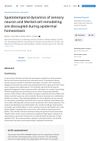
Sensory neuron and Merkel cell changes in the skin happen independently during normal skin maintenance.
February 2020 in “Journal of chemical neuroanatomy” Researchers found a way to make rat hair follicle cells start turning into motor neuron-like cells, but couldn't fully turn them into working motor neurons.
89 citations
,
May 2005 in “Stem Cells” Mouse skin has special cells in the epidermis that decrease with age and are linked to keratinocyte stem cells.
 January 1995 in “Skin Cancer”
 The outer root sheath in hair follicles changes during growth, with different keratinization processes in its layers.
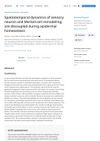
Sensory neuron and Merkel cell changes in the skin happen independently during normal skin maintenance.
 11 citations
,
September 1996 in “Neuroscience letters”
11 citations
,
September 1996 in “Neuroscience letters” Adding fetal calf serum helps Merkel cells survive and change shape.
 7 citations
,
August 2022 in “Nature communications”
7 citations
,
August 2022 in “Nature communications” A specific group of slow-growing stem cells marked by Thy1 is crucial for skin maintenance and healing in mice.
1 citations
,
January 2003 Merkel cells likely attract sensory nerve fibers.
Sensory neuron and Merkel-cell changes in the skin happen independently during normal skin maintenance.
 15 citations
,
April 2017 in “Cell Stem Cell”
15 citations
,
April 2017 in “Cell Stem Cell” Some brain cancer cells avoid immune system detection, and certain treatments could target this to slow their growth; also, certain fat cell precursors help regenerate hair and skin after injury.
24 citations
,
January 1998 in “Dermatology” Merkel cell increase is specific to certain skin diseases, not general skin growth.
64 citations
,
January 1995 in “Cells Tissues Organs” Merkel cells develop independently of nerves and are linked to specific hair follicles in mice.
352 citations
,
August 2003 in “Proceedings of the National Academy of Sciences” Nestin is found in hair follicle progenitor cells, linking them to neural stem cells.
 13 citations
,
October 2020 in “Journal of Neural Transmission”
13 citations
,
October 2020 in “Journal of Neural Transmission” CD34-positive cells help repair and form new blood vessels in salivary glands after radiation.
 November 2022 in “Journal of Investigative Dermatology”
 Scientists found a new type of skin cell that could help with skin repair and these cells work better with a certain protein.