4 citations
,
September 2019 in “Journal of Biomedical Optics” Medulla loss in scalp hair could help detect breast cancer.
23 citations
,
January 2008 in “Skin Pharmacology and Physiology” Optical coherent tomography can effectively detect steroid use by analyzing hair changes.
9 citations
,
August 2024 in “Journal of Orthopaedic Translation” Strontium zinc silicate may help treat osteoporosis and muscle loss.
 September 2009 in “European Urology Supplements”
 IGRT resulted in lower acute toxicity for stage III prostate cancer patients.
14 citations
,
July 2007 in “International Journal of Cosmetic Science” The new 3D imaging method accurately measures hair surface details quickly.
 December 2019 in “Дерматологія та венерологія”
 Trichoscopy is a useful tool for diagnosing hair and scalp disorders.
21 citations
,
July 2004 in “Apmis” Fluorescent proteins help visualize and understand tumor blood vessel growth.
100 citations
,
October 2006 in “Rapid Communications in Mass Spectrometry” A quick method effectively detects banned substances in urine.
April 2020 in “Journal of the Endocrine Society” Somatostatin analogues effectively manage ectopic ACTH syndrome when surgery isn't possible.
1 citations
,
May 2016 in “Journal of nature and science” The method successfully imaged hair follicles under the skin using iron nanoparticles.
 38 citations
,
May 2009 in “European journal of dermatology/EJD. European journal of dermatology”
38 citations
,
May 2009 in “European journal of dermatology/EJD. European journal of dermatology” TrichoScan® is a reliable tool for measuring hair growth, providing quicker and more consistent results than manual methods.
 10 citations
,
October 2016 in “Journal of Biomolecular NMR”
10 citations
,
October 2016 in “Journal of Biomolecular NMR” Solid-state NMR can effectively study keratin structure and treatment effects in fur.
 January 2015 in “Hair therapy & transplantation”
 New hair and scalp disease diagnosis methods are important for correct treatment.
 49 citations
,
December 2017 in “Journal of pharmaceutical and biomedical analysis”
49 citations
,
December 2017 in “Journal of pharmaceutical and biomedical analysis” The method effectively detects banned substances in urine for sports antidoping.
 17 citations
,
November 2017 in “PLoS ONE”
17 citations
,
November 2017 in “PLoS ONE” Transplanted bone marrow cells actively move, form clusters, and grow after transplantation.
 March 2018 in “Surgical and Radiologic Anatomy”
 High-resolution imaging is crucial for diagnosing and planning treatments in clinical anatomy and aging.
 21 citations
,
September 2008 in “Magnetic Resonance Imaging”
21 citations
,
September 2008 in “Magnetic Resonance Imaging” MRI can effectively image skin structures noninvasively.
 3 citations
,
August 2024 in “Frontiers in Oncology”
3 citations
,
August 2024 in “Frontiers in Oncology” Targeted radionuclide therapy shows promise for improving head and neck cancer treatment but needs more research.
 February 2010 in “Journal of The American Academy of Dermatology”
 The document concludes that using gadolinium-based contrast agents during MRI can be linked to Nephrogenic Systemic Fibrosis in patients with severe kidney disease.
 4 citations
,
March 2013 in “InTech eBooks”
4 citations
,
March 2013 in “InTech eBooks” Confocal Laser Scanning Microscopy (CLSM) is a useful tool for studying how drugs interact with skin and diagnosing skin disorders, despite some limitations.
3 citations
,
September 2013 in “Urology” More biopsy cores and MRI before biopsy can improve prostate cancer detection.
 42 citations
,
January 2011 in “Journal of Biomedical Optics”
42 citations
,
January 2011 in “Journal of Biomedical Optics” Infrared and Raman imaging can non-destructively analyze hair structure and help diagnose hair conditions.
 69 citations
,
January 2015 in “Current problems in dermatology”
69 citations
,
January 2015 in “Current problems in dermatology” Trichoscopy is a quick, noninvasive method to diagnose hair and scalp disorders, often reducing the need for biopsies.
 30 citations
,
August 2016 in “Advances in radiation oncology”
30 citations
,
August 2016 in “Advances in radiation oncology” Researchers developed a mouse model that successfully mimics the bladder damage seen in humans after radiation therapy.
 21 citations
,
January 2010 in “International Journal of Trichology”
21 citations
,
January 2010 in “International Journal of Trichology” TrichoScan often makes mistakes and needs improvement for correct hair growth analysis.
 July 2018 in “Journal of The American Academy of Dermatology”
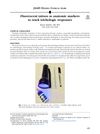
 Fluorescent tattoos are a good way to mark the scalp for hair treatments because they're accurate, invisible in normal light, and have low risk.
8 citations
,
March 2012 in “Mass spectrometry letters” The S9 fraction with GC-IDMS is effective for measuring 5α-reductase activity.
 14 citations
,
June 2018 in “JAMA Dermatology”
14 citations
,
June 2018 in “JAMA Dermatology” Trichoscopy is useful for diagnosing and monitoring hair and scalp conditions over time.
3 citations
,
June 2023 in “Modern Pathology” GLI1 RNA CISH effectively identifies basal cell carcinoma but is less specific for benign follicular tumors.
![Synthesis of 5,6,6-[2H3]Finasteride and Quantitative Determination of Finasteride in Human Plasma at Picogram Level by an Isotope-Dilution Mass Spectrometric Method](/images/assets/0026b639-99a8-455a-a986-c39aa65abfa9/small/2087.jpg) 20 citations
,
December 1995 in “Journal of Chromatography B: Biomedical Sciences and Applications”
20 citations
,
December 1995 in “Journal of Chromatography B: Biomedical Sciences and Applications” Accurate method measures finasteride levels in human plasma using gas chromatography-mass spectrometry.