13 citations
,
March 2008 in “Journal of the European Academy of Dermatology and Venereology” Triamcinolone acetonide therapy for hair loss may cause a skin condition called linear lichen planus.
23 citations
,
January 2024 in “Journal of Investigative Dermatology” Corticosteroids can reduce scarring in acne keloidalis by targeting specific cells.
January 2019 in “International Journal of Clinical & Medical Images” The patient showed signs of liver disease due to alcohol use but didn't need treatment for Dupuytren’s contracture.
18 citations
,
November 2003 in “Australasian Journal of Dermatology” Hair loss in this case was caused by a tumor, not typical baldness.
January 2014 in “Redalyc (Universidad Autónoma del Estado de México)” A Persian cat had a rare skin condition that didn't improve with treatment.
1 citations
,
January 2022 in “Skin appendage disorders” DCPA is a chronic skin condition affecting the legs, often misdiagnosed, and needs more research for better understanding and treatment.
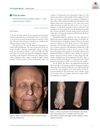 March 2019 in “Journal der Deutschen Dermatologischen Gesellschaft”
 Rothmund-Thomson syndrome type 2 can cause chronic, poorly healing wounds.
3 citations
,
August 2024 in “Skin Research and Technology” LC-OCT can help identify lupus-related scarring hair loss by spotting unique features.
 30 citations
,
October 2013 in “Lupus”
30 citations
,
October 2013 in “Lupus” Hair loss in lupus is different from hair loss in alopecia areata and may indicate lupus activity.
2 citations
,
October 1974 in “Archives of Dermatology” The woman's skin condition persisted for 20 years despite treatments.
 January 2023 in “World Journal of Clinical & Medical Images”
 Early diagnosis and prednisone treatment can improve outcomes in Cronkhite-Canada syndrome.
 June 2023 in “British journal of dermatology/British journal of dermatology, Supplement”
 A woman with rheumatoid arthritis had a unique type of scarring hair loss not caused by infection, requiring early treatment to avoid permanent hair loss.
 May 2017 in “InTech eBooks”
 Some hair loss disorders cause permanent loss due to scarring, and treatments like steroids don't always work well.
Cicatricial alopecia can progress to complete hair loss, making diagnosis and management difficult.
September 2024 in “International Journal of Women’s Dermatology” Early diagnosis and thorough evaluation are crucial for better outcomes in alopecic sarcoidosis.
 January 2023 in “Indian dermatology online journal”
 Skin problems after waxing led to a sarcoidosis diagnosis.
33 citations
,
February 2011 in “International Journal of Dermatology” Orange spots in scalp trichoscopy can help diagnose scalp sarcoidosis.
 2 citations
,
January 2019
2 citations
,
January 2019 The document concludes that autoimmune skin disorders are treated with corticosteroids and immunosuppressive drugs.
January 2024 in “Case Reports in Endocrinology” Cortisone tapering may help improve severe myasthenia gravis and alopecia areata after thymectomy.
7 citations
,
April 2021 in “Journal of Lower Genital Tract Disease” Erosive lichen sclerosus is a distinct subtype with specific skin features, and treatment led to complete resolution in half of the cases.
 1 citations
,
April 2017 in “Journal of Investigative Dermatology”
1 citations
,
April 2017 in “Journal of Investigative Dermatology” Topical glucocorticoids thin the skin and change collagen structure.

Trichodysplasia spinulosa can occur after a heart transplant due to immunosuppressive drugs.
 20 citations
,
March 2017 in “Journal of cutaneous pathology”
20 citations
,
March 2017 in “Journal of cutaneous pathology” Shrinking of oil glands in the skin is a key sign of hair loss linked to TNF inhibitor drugs and may improve if the treatment is stopped.
23 citations
,
February 2003 in “British Journal of Dermatology” A rare type of skin lymphoma was identified, affecting hair follicles and sweat glands.
 January 2024 in “Archives of pathology & laboratory medicine”
 New findings may help diagnose and understand scarring alopecia better.
November 2025 in “Indian Dermatology Online Journal” Clouston syndrome can lead to skin cancer, so monitoring is crucial.
 13 citations
,
March 2011 in “British Journal of Dermatology”
13 citations
,
March 2011 in “British Journal of Dermatology” A woman with scalp lymphoma and hair loss improved with radiotherapy, highlighting the need for biopsies in similar cases.
 132 citations
,
July 2000 in “Lupus”
132 citations
,
July 2000 in “Lupus” In Italian patients with lupus, the most common skin issue was chronic cutaneous lupus, especially discoid lesions, and nonspecific skin problems occurred in about a third of those with systemic lupus, mainly during active disease.
 1 citations
,
January 2021 in “Dermatology Review”
1 citations
,
January 2021 in “Dermatology Review” A young man developed a rare, bilateral scalp condition after head trauma, causing hair loss but no neurological or eye issues.
 November 2019 in “Harper's Textbook of Pediatric Dermatology”
 The document is a detailed medical reference on skin and genetic disorders.