 15 citations
,
August 2015 in “Scanning”
15 citations
,
August 2015 in “Scanning” Corkscrew and cigarette-ash-shaped hairs in tinea capitis are caused by internal hair degradation and external resistance.
 August 2020 in “Egyptian Veterinary Medical Society of Parasitology Journal (EVMSPJ)”
 10.5% of sheep in Ismailia, Egypt, had Sarcoptes scabiei, causing skin issues.
1 citations
,
April 2014 in “Journal of the American Geriatrics Society” Diagnosing mycosis fungoides, a rare skin cancer, is difficult in elderly adults and requires careful examination to avoid mistaking it for less serious skin conditions.
 6 citations
,
July 2011 in “Journal of Plastic Reconstructive and Aesthetic Surgery”
6 citations
,
July 2011 in “Journal of Plastic Reconstructive and Aesthetic Surgery” Eyebrow reconstruction using hair follicle grafts was successful in a man with a benign hereditary disorder affecting his eyebrows.
Researchers made a mouse model with curly hair and hair loss by editing a gene.
2 citations
,
May 2000 in “International Society of Hair Restoration Surgery” Scarring alopecias are a complex type of hair loss that are hard to treat and often can't be fixed with hair transplants.
1 citations
,
September 2024 in “Veterinary Dermatology” Trichography is important for diagnosing hair fragility in Pomeranian dogs with hair cycle issues.
20 citations
,
July 2005 in “Experimental dermatology” The fuzzy gene is crucial for controlling hair growth cycles.
4 citations
,
September 2020 in “Journal of Cutaneous Pathology” 9 citations
,
April 1985 in “Archives of Dermatology” Recognizing the "bamboo hair defect" is crucial for diagnosing Netherton's syndrome.
July 2020 in “Experimental Dermatology” Aging causes hair thinning in women due to changes in the scalp environment.
 44 citations
,
April 2012 in “American Journal of Clinical Dermatology”
44 citations
,
April 2012 in “American Journal of Clinical Dermatology” Scarring alopecias are complex hair loss disorders that require early treatment to prevent permanent hair loss.
 9 citations
,
February 2021 in “Frontiers in Cell and Developmental Biology”
9 citations
,
February 2021 in “Frontiers in Cell and Developmental Biology” Older mice have stiffer skin with less elasticity due to changes in collagen and skin structure, affecting aging and hair loss.
 40 citations
,
February 1990 in “Journal of The American Academy of Dermatology”
40 citations
,
February 1990 in “Journal of The American Academy of Dermatology” A 17-year-old developed woolly hair nevus in adolescence, which is unusual, and over time the hair darkened and straightened slightly, but microscopic changes persisted.
 14 citations
,
December 2020 in “Journal of Investigative Dermatology”
14 citations
,
December 2020 in “Journal of Investigative Dermatology” Aging causes changes in the scalp that can affect hair growth and lead to older-looking hair in women.
18 citations
,
November 2003 in “Australasian Journal of Dermatology” Hair loss in this case was caused by a tumor, not typical baldness.
 2 citations
,
June 2012 in “Journal of Cosmetic Dermatology”
2 citations
,
June 2012 in “Journal of Cosmetic Dermatology” Hair transplant using beard hair made acne scars on cheeks less visible with minimal scarring in the donor area.
 15 citations
,
October 2017 in “Clinics in Dermatology”
15 citations
,
October 2017 in “Clinics in Dermatology” Elderly abuse is often by family members, and doctors, especially dermatologists, can spot it by looking for unusual injuries and malnutrition.
31 citations
,
August 2000 in “Journal of Investigative Dermatology” Stem cells are key for hair follicle recovery.
11 citations
,
January 2005 in “Brazilian Journal of Medical and Biological Research” Hairless USP mice have enlarged skin cysts as they age.
 18 citations
,
August 2018 in “The FASEB journal”
18 citations
,
August 2018 in “The FASEB journal” Rabbits lacking the Hoxc13 gene show similar hair and skin issues to humans with ECTD-9, making them good for research on this condition.
 September 2023 in “Russian Journal of Skin and Venereal Diseases”
 A rare scalp condition caused scarring hair loss in a woman, improved slightly with treatment.
 19 citations
,
November 2001 in “Journal of Investigative Dermatology Symposium Proceedings”
19 citations
,
November 2001 in “Journal of Investigative Dermatology Symposium Proceedings” Human hair follicles can regenerate and recover after severe injury by going through a brief abnormal resting phase before growing again.
 85 citations
,
February 1989 in “Journal of The American Academy of Dermatology”
85 citations
,
February 1989 in “Journal of The American Academy of Dermatology” Children with loose anagen hair have easily pluckable hair due to root sheath problems, and it might improve without treatment.
March 2025 in “Buletin Veteriner Udayana” The cat's scabies and pneumonia improved significantly with treatment.
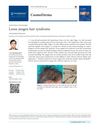 February 2023 in “Cosmoderma”
 Loose anagen hair syndrome causes easily shed hair but usually improves with time.
 June 2004 in “Dermatologic Surgery”
 The single-scar technique in hair transplantation minimizes scarring and preserves hairs for future use, with proper training overcoming its perceived drawbacks.
 July 2024 in “Journal Archives of Health”
 Woolly hair is a rare genetic condition with no effective treatments.
 9 citations
,
June 2014 in “British Journal of Dermatology”
9 citations
,
June 2014 in “British Journal of Dermatology” The study found that balding scalps have more thin hairs and larger oil glands, which might contribute to skin conditions related to hair loss.
578 citations
,
April 1993 in “Cell” TGFα gene mutation in mice causes abnormal skin, wavy hair, curly whiskers, and sometimes eye inflammation.