8 citations
,
July 2014 in “American Journal of Dermatopathology” Cutaneous keratocyst and steatocystoma should be called "sebaceous duct cyst" due to their similarities.
 13 citations
,
June 2018 in “Dermatopathology”
13 citations
,
June 2018 in “Dermatopathology” A new classification system for skin cysts was proposed to improve diagnosis.
June 2023 in “Dermatopathology” A woman had a unique skin growth with hair follicle, oil glands, fat cells, spindle cells, and nerve fibers.
297 citations
,
January 2002 in “Development” Overexpression of ΔNLef1 in mouse skin leads to hair loss, cysts, and skin tumors.
54 citations
,
May 1999 in “Journal of Cutaneous Pathology” Apocrine type cutaneous mixed tumors often resemble hair follicles, sebaceous glands, and apocrine glands.
31 citations
,
January 2007 in “Journal of the American Academy of Dermatology” A rare skin growth was successfully removed without recurrence after one year.
16 citations
,
July 2018 in “Experimental Dermatology” Removing Gata6 causes hair follicle and sebaceous duct enlargement.
14 citations
,
June 2005 in “PubMed” A rare ear cyst contained hair fragments.
14 citations
,
March 2014 in “Experimental and Molecular Pathology” Sulfur mustard damages hair follicles and sebaceous glands in mice.
 October 2022 in “Boletín médico del Hospital infantil de México/Boletín médico del Hospital Infantil de México”
 The patient has a rare skin condition that shows features of two known disorders.
January 2007 in “Linchuang pifuke zazhi” A 15-year-old boy had a rare skin growth on his buttock.
5 citations
,
February 2015 in “Ophthalmic plastic and reconstructive surgery” Two new types of eyelid cysts were identified, each with different treatment challenges.
January 2002 in “Linchuang pifuke zazhi” A young woman had a rare scalp tumor usually found in older women.
8 citations
,
April 2014 in “Clinical and Experimental Dermatology” Eruptive vellus hair cysts likely originate from the infrainfundibulum and sebaceous duct.
 16 citations
,
August 1992 in “PubMed”
16 citations
,
August 1992 in “PubMed” Anabolic-androgenic steroids can cause skin issues like acne and oily skin by enlarging oil glands and changing skin oils.
 2 citations
,
August 2008 in “Journal of Liaquat University of Medical & Health Sciences”
2 citations
,
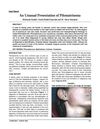
August 2008 in “Journal of Liaquat University of Medical & Health Sciences” A painless cheek lump was misdiagnosed but found to be a rare, benign skin lesion called pilomatrixoma, treatable by surgery.
1 citations
,
January 2013 in “Journal of the Scientific Society” A painless cheek lump was misdiagnosed but later identified as a rare benign skin lesion called pilomatrixoma.
 1 citations
,
December 2023 in “Indian Dermatology Online Journal”
1 citations
,
December 2023 in “Indian Dermatology Online Journal” Steatocystoma multiplex causes recurring skin cysts and needs early recognition for better management.
 March 2022 in “Folia Medica Indonesiana”
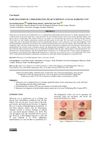
 The lump on a woman's scalp was a rare, potentially cancerous tumor from the hair follicle, not a common cyst.
September 2020 in “Oral surgery, oral medicine, oral pathology and oral radiology” The report shows that a rare benign tumor was successfully removed from inside the mouth to avoid scarring on the face.
July 2024 in “Indian Dermatology Online Journal” A benign tumor on the cheek, called trichoadenoma, should be surgically removed for cosmetic reasons.
81 citations
,
February 2014 in “EMBO molecular medicine” Activating Nrf2 in skin cells causes skin disease similar to chloracne in mice.
37 citations
,
January 1997 in “Journal of Pharmaceutical Sciences” Hairless rats absorb substances through their skin more easily than hairy rats.
34 citations
,
February 2012 in “American Journal of Dermatopathology” Calretinin can help identify certain skin structures and tumors.
18 citations
,
April 2002 in “Journal of cutaneous pathology” Tiny infundibular cysts are the main lesions in chloracne, not comedones.
18 citations
,
January 1992 in “Dermatology” A 4-year-old girl has a rare condition causing hairlessness and skin bumps, but normal teeth and sweating.
16 citations
,
February 2005 in “British journal of dermatology/British journal of dermatology, Supplement” Lack of Vitamin D receptor changes skin structure and increases certain immune cells in the skin.
 5 citations
,
October 2020 in “Experimental dermatology”
5 citations
,
October 2020 in “Experimental dermatology” A specific type of skin cell creates an opening for hair to grow out, and problems with this process can lead to skin conditions.
5 citations
,
January 1964 in “Naunyn-Schmiedeberg s Archives of Pharmacology” Iodine is absorbed by hair just below the skin surface.
 4 citations
,
December 2021 in “The journal of investigative dermatology/Journal of investigative dermatology”
4 citations
,
December 2021 in “The journal of investigative dermatology/Journal of investigative dermatology” Overactive Wnt signaling in mouse skin stem cells causes acne-like cysts and shrinking oil glands, which some treatments can partially fix.