
Skin stem cells are crucial for maintaining and repairing skin, with potential for treating skin disorders and improving wound healing.
 September 2016 in “Journal of Dermatological Science”
 A specific mutation known for causing cancer is also found to cause a skin condition in a young girl.
August 2016 in “KU ScholarWorks (The University of Kansas)” Using Wharton's jelly stem cells and scaffolds can help regenerate skin and hair.
 August 2016 in “Journal of Investigative Dermatology”
 The endocannabinoid system affects oil production and inflammation in skin cells.
 August 2016 in “Journal of Investigative Dermatology”
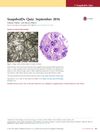
 Scalp psoriasis features reversible hair loss and specific immune activation, with no significant hair follicle damage.
 April 2016 in “Journal of Investigative Dermatology”
 A peptide known for reducing wrinkles also effectively inhibits an enzyme linked to skin inflammation and acne.
March 2016 in “Experimental Dermatology” EGFR helps hair follicles transition properly by controlling Stathmin levels.

Tissue from dog stem cells helped grow hair in mice.
January 2016 in “Lithuanian University of Health Sciences” Different diseases cause specific skin and hair follicle changes in dogs with alopecia.
 November 2015 in “European Journal of Inflammation”
 Cicatricial alopecia, a permanent hair loss condition, is mainly caused by damage to specific hair follicle stem cells and abnormal immune responses, with gene regulator PPAR-y and lipid metabolism disorders playing significant roles.
Alopecia areata is reversible because hair follicles can regenerate due to stem cells.
June 2015 in “The American journal of dermatopathology/American journal of dermatopathology” The study found that a one-step antibody method is better than the LSAB method for accurately studying hair follicle structures without false positives.
April 2015 in “The FASEB Journal” Nitrogen mustard causes DNA damage and structural changes in mouse skin hair follicles, but some recovery occurs after 5 days.
 March 2015 in “Plastic and reconstructive surgery”
 Human skin has multiple layers and functions, with key roles in protection, temperature control, and appearance.
 March 2015 in “Journal für Kardiologie (Krause & Pachernegg GmbH)”
 Testosterone affects skin by increasing oil production and influences hair growth.
 March 2014 in “Anais Brasileiros de Dermatologia”
 Hair follicles are a key source of stem cells for skin repair and could help treat baldness.
 January 2014 in “Pathology”
 The document concludes that understanding nail anatomy is key for diagnosing nail diseases, early signs of nail melanoma may allow for less aggressive treatment, and specific genetic mutations are important in thyroid cancer prognosis and treatment.
Xiaochuang Drink effectively treats rabbit ear acne and is safe at clinical doses.

Growing hair follicles from cultured cells could potentially treat baldness, but more research is needed.
 February 2013 in “Jurnal Biomedik : JBM”
 The sebaceous gland plays a significant role in hair loss and thinning, and using growth stimulators, DHT inhibitors, anti-inflammatory drugs, anti-androgens, and super oxide dismuse substances can help manage it.
January 2013 in “Journal of Tissue Engineering and Reconstructive Surgery” Inserting hair follicle units improved the development of tissue-engineered skin.
September 2012 in “대한피부과학회지” Desmocollin 1 helps maintain skin structure during fetal development.
April 2012 in “J. Willard Marriott Library” Cannabinoids like THC and THCA get into hair through skin oils, not hair color.
 April 2012 in “Informa Healthcare eBooks”
 The document concludes that diagnosing hair loss requires evaluating multiple histological features, as no single feature is definitive on its own.
 January 2012 in “Springer eBooks”
 The skin has different types of stem cells that can repair and regenerate tissue.
 January 2012 in “Journal für Kardiologie (Krause & Pachernegg GmbH)”
 Androgens can cause acne, excess hair, and hair loss, treatable with dermatologist-guided therapies.
January 2012 in “Chinese Journal of Aesthetic Medicine” Increased androgen receptor expression in certain hair follicle areas may cause male pattern baldness.
Tissue engineering advancements are improving skin substitutes for better burn treatment.
August 2011 in “동의생리병리학회지 = Journal of physiology & pathology in Korean Medicine” Green tea extract increases lipid production in human sebaceous gland cells.
January 2011 in “The Chinese Journal of Dermatovenereology” Curcuma anti-acne gel effectively reduces acne symptoms.