 24 citations
,
May 1963 in “Archives of Dermatology”
24 citations
,
May 1963 in “Archives of Dermatology” Most new moms had their hair grow back within 4-6 months after childbirth, and hair loss is likely due to hormonal changes.
 23 citations
,
July 1982 in “International Journal of Dermatology”
23 citations
,
July 1982 in “International Journal of Dermatology” The review concludes that accurate diagnosis of different types of hair loss requires proper biopsy techniques and understanding the hair growth cycle and underlying causes.
 18 citations
,
January 2013 in “Annals of Dermatology”
18 citations
,
January 2013 in “Annals of Dermatology” AGA increased yearly, type I most common, and family history and seborrheic dermatitis often linked.
 17 citations
,
January 2011 in “Skin Research and Technology”
17 citations
,
January 2011 in “Skin Research and Technology” Hair from people with seborrheic dermatitis is thicker scaled, more damaged, and thinner than healthy hair, and atomic force microscopy can help monitor the condition.
 13 citations
,
March 2016 in “Journal of Cutaneous Pathology”
13 citations
,
March 2016 in “Journal of Cutaneous Pathology” Some people's hair loss is caused by multiple factors, with the most common being a mix of AGA and CCCA.
 9 citations
,
June 2014 in “British Journal of Dermatology”
9 citations
,
June 2014 in “British Journal of Dermatology” The study found that balding scalps have more thin hairs and larger oil glands, which might contribute to skin conditions related to hair loss.
 4 citations
,
January 2002 in “Annals of Dermatology”
4 citations
,
January 2002 in “Annals of Dermatology” Androgenetic alopecia, or hair loss, is most common in people in their 30s, can start early, is often inherited, and may be influenced by factors like hormones and scalp health.
 4 citations
,
February 1995 in “Journal of Clinical Dermatology”
4 citations
,
February 1995 in “Journal of Clinical Dermatology” More men than women have hair loss, it's often inherited, and it's linked with higher testosterone levels. There's been a rise in female hair loss patients.
2 citations
,
February 2021 in “International Journal of Research in Dermatology” Minoxidil with PRP is the best treatment for hair loss.
 2 citations
,
October 2020 in “Research Journal of Health Sciences”
2 citations
,
October 2020 in “Research Journal of Health Sciences” The most common causes of hair loss in a Nigerian hospital were discoid lupus erythematosus of the scalp and alopecia areata, and more research is needed to understand and address these issues.
 1 citations
,
April 2020 in “International Journal of Research in Dermatology”
1 citations
,
April 2020 in “International Journal of Research in Dermatology” Trichoscopy is a reliable method for diagnosing different types of hair loss.
 1 citations
,
January 2009 in “Journal of Clinical Dermatology”
1 citations
,
January 2009 in “Journal of Clinical Dermatology” More men have Androgenic Alopecia than women, it's often inherited, and stress can contribute to it.
 June 2026 in “Revista Brasileira de Saúde”
 The scalp microbiome may be a key factor in treating hair loss.
 June 2025 in “Journal of Population Therapeutics and Clinical Pharmacology”
 The combination of microneedling, PRP, and minoxidil is more effective for hair loss than minoxidil alone.

Alopecia is caused by hormones, microorganisms, and immune issues.

Early diagnosis and personalized treatment are crucial for managing pediatric androgenetic alopecia.
 April 2016 in “Journal of The American Academy of Dermatology”
 People with lichen planopilaris often have seborrheic dermatitis, which can delay the diagnosis of lichen planopilaris.
 January 2015 in “Turkiye Klinikleri Journal of Dermatology”
 Peripilar keratin casts are a helpful sign for diagnosing traction alopecia.
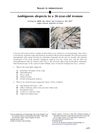
The woman has unexplained hair loss and it's unclear what her condition is or how to treat it.
 May 2012 in “CRC Press eBooks”
 Some patients on anti-TNF drugs experience a type of hair loss called TAIAPA.
 4 citations
,
March 2021 in “Postepy Dermatologii I Alergologii”
4 citations
,
March 2021 in “Postepy Dermatologii I Alergologii” High-frequency ultrasonography can be a useful tool for diagnosing different stages of alopecia areata, a type of hair loss.
June 2025 in “British Journal of Dermatology” Traction alopecia is common and preventable, especially among Indian women.
 May 2024 in “Research Square (Research Square)”
 Pediatric androgenetic alopecia is linked to obesity, family history, hormonal imbalances, and requires personalized treatment including managing comorbidities.
April 2014 in “The FASEB Journal” Women with androgenetic alopecia often have other symptoms of high androgen levels, requiring further hormone testing.
54 citations
,
January 1980 in “Dermatology” 17α-estradiol lotion can reduce hair loss but doesn't promote new hair growth.
 37 citations
,
January 1980 in “PubMed”
37 citations
,
January 1980 in “PubMed” Hair lotions with 17 alpha-estradiol can reduce hair loss but won't regrow new hair.
 10 citations
,
December 2002 in “International Journal of Dermatology”
10 citations
,
December 2002 in “International Journal of Dermatology” Cyproterone acetate can cause rare shortness of breath in women.
 June 2023 in “Faculty Opinions – Post-Publication Peer Review of the Biomedical Literature”
 Bicalutamide mesotherapy improved hair density in women with hair loss and was well received.
Phototherapy with red or blue light can safely improve hair growth and scalp health in androgenetic alopecia.
January 2023 in “International Journal of Trichology” Bicalutamide mesotherapy may help with hair loss and seborrhea but needs more research.