 February 2025 in “BMC Veterinary Research”
 Keratin proteins are crucial for hair growth in cashmere goats.
VDAC2 promotes cell death in cashmere goat hair follicles through the P53 pathway.
21 citations
,
June 2004 in “Experimental Dermatology” Ber‐EP4 marks cells related to the secondary hair germ in hair follicles.
 1 citations
,
May 2018 in “International Journal of Molecular Biology Open Access”
1 citations
,
May 2018 in “International Journal of Molecular Biology Open Access” Hydrogen peroxide is a major risk factor for melanoma in swimmers, more than UV light.
37 citations
,
February 2008 in “PubMed” Keeping radiation doses under 16 Gy may reduce permanent hair loss.
1 citations
,
January 2022 in “Book Publisher International (a part of SCIENCEDOMAIN International)” Hydrogen peroxide is the main risk factor for melanoma in swimmers, not UV light.
 November 2022 in “Journal of the Endocrine Society”
 An 8-year-old boy's early puberty was caused by a rare hormone-secreting brain tumor, which was successfully treated with surgery.
January 2016 in “AACE Clinical Case Reports” Treatment restored normal sexual characteristics and blood condition in a patient with testicular cancer.
 30 citations
,
March 2019 in “Archives animal breeding/Archiv für Tierzucht”
30 citations
,
March 2019 in “Archives animal breeding/Archiv für Tierzucht” The KRTAP15-1 gene affects cashmere fiber thickness in goats.
 10 citations
,
June 2005 in “Small ruminant research”
10 citations
,
June 2005 in “Small ruminant research” Melatonin treatment may increase cashmere production in Spanish goats.
9 citations
,
July 2021 in “Frontiers in genetics” Melatonin makes cashmere grow earlier and more by increasing certain gene activity in goats.
 7 citations
,
March 2018 in “Asian-Australasian journal of animal sciences”
7 citations
,
March 2018 in “Asian-Australasian journal of animal sciences” OCIAD2 and DCN genes affect hair growth in goats by having opposite effects on a growth signaling pathway and inhibiting each other.
4 citations
,
March 2016 in “Small ruminant research” Vicuña wool's quality is due to a high density of fine secondary hair follicles, and their skin glands may be used for communication.
 4 citations
,
April 2016 in “Experimental Dermatology”
4 citations
,
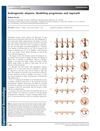
April 2016 in “Experimental Dermatology” AGA causes hair loss through follicle miniaturization and hair cycle changes; regrowth depends on anagen initiation in kenogen follicles.
2 citations
,
September 2017 in “Mehmet Akif Ersoy Üniversitesi Veteriner Fakültesi dergisi” Specific genes influence hair growth and quality in goats and sheep.
 February 2023 in “Mağallaẗ Tikrīt li-l-ʻulūm al-ṣirfaẗ/Tikrit journal of pure science”
 Horse skin has a layered epidermis, a dermis with hair follicles, sweat and sebaceous glands, and is supplied by small arteries.
January 2015 in “Faculty of 1000 Research Ltd” Androgenetic alopecia may be irreversible due to the detachment of a muscle from hair follicles.
 May 2015 in “Hair transplant forum international”
 Androgenetic alopecia causes hair loss by shrinking hair follicles due to androgens, with the connection between the muscle and hair follicle determining if the loss is reversible.
81 citations
,
September 2009 in “Birth defects research” Different body areas in mice produce different hair types due to interactions between skin layers.
 6 citations
,
June 2021 in “Developmental biology”
6 citations
,
June 2021 in “Developmental biology” Dermal EZH2 controls skin cell development and hair growth in mice.
 3 citations
,
September 2022 in “Frontiers in veterinary science”
3 citations
,
September 2022 in “Frontiers in veterinary science” Melatonin affects cashmere growth in goats by influencing stem cell and certain signaling pathways.
 3 citations
,
February 2019 in “Animal biotechnology”
3 citations
,
February 2019 in “Animal biotechnology” The PLP2 gene affects cashmere fiber quality in goats and is linked to hair growth and loss.
November 2024 in “Genomics” Melatonin boosts hair growth in cashmere goats by helping certain cells multiply.
 July 2025 in “Clinical Dermatology Review”
 A rare family case of multiple benign hair follicle tumors was identified, highlighting the need to distinguish them from similar conditions.
January 2024 in “Animals” Circular RNA ERCC6 helps activate stem cells important for cashmere goat hair growth by interacting with specific molecules in an m6A modification-dependent way.
Metabolic processes and key genes like FGF5, FGFR1, and RRAS significantly affect hair follicle growth in Inner Mongolian Cashmere goats.
69 citations
,
May 1997 in “Veterinary Pathology” The angora mouse mutation causes long hair and hair defects due to a gene deletion.
55 citations
,
March 2010 in “Aging” Circadian clock genes are important for hair growth and may affect aging-related hair loss and graying.
41 citations
,
April 2019 in “PLOS genetics” CD34+ and CD34- melanocyte stem cells have different regenerative abilities.
 33 citations
,
September 2007 in “Veterinary dermatology”
33 citations
,
September 2007 in “Veterinary dermatology” Topical 0.1% tacrolimus significantly improved ear infections in cats.