The hairline can reliably guide neurosurgical planning.
 February 2026 in “Bioimpacts”
 3D bioprinted hydrogels could improve diabetic wound healing but face challenges like limited blood supply and scalability.
 November 2025 in “Communications Biology”
 Human hair contains many different molecules that change along its length, influenced by personal care products.
 November 2025 in “Repositorio Comunidad Politecnico Grancolombiano”
 Milagros enterprise Group S.A.S. plans to expand globally by exporting its Professional Intensive Repair Mask to Mexico, France, and the U.S.
 November 2025 in “Scientific Reports”
 AI improves accuracy and consistency in diagnosing male pattern hair loss.
 November 2025 in “Kufa Journal of Engineering”
 AI can effectively detect hair and scalp disorders from images.

Menopause-related skin changes may increase fungal infections and inflammation.
 February 2025 in “bioRxiv (Cold Spring Harbor Laboratory)”
 Hair follicles protect melanocytes from sun damage, helping them replenish skin.
 January 2025 in “Directory of Open access Books (OAPEN Foundation)”
 PCOS affects women's hormones and metabolism, but can be managed with lifestyle changes and treatments.

Polarized microscopy helps identify hair irregularities in genetic disorders.
 January 2025 in “Bright Sky Publications eBooks”
 Advancements in medical physics and laser technology are improving healthcare but access remains unequal globally.

Correcting EDA fibronectin organization and YAP translocation can improve wound healing in fibrotic conditions.
 June 2024 in “Nature Cell and Science”
 The Scalp Coverage Scoring method reliably measures hair density from images.
 April 2024 in “arXiv (Cornell University)”
 STITCH improves suture accuracy and efficiency, especially with human help.
 February 2024 in “Frontiers in physics”
 The new model detects hair clusters more accurately and efficiently, helping with early hair loss treatment and diagnosis.
 December 2023 in “Frontiers in plant physiology”
 Root hairs are key for developing cereals that can fertilize themselves with nitrogen.
 October 2023 in “Biomedical science and engineering”
 Innovative methods are reducing animal testing and improving biomedical research.
 May 2023 in “Frontiers in chemistry”
 Zolpidem shows up in hair from the top back of the head after one dose and fades over time, suggesting it gets into hair through blood and sweat.
 January 2023 in “bioRxiv (Cold Spring Harbor Laboratory)”
 Newly born mesenchymal cells quickly spread out in response to tissue tension during early development.

There is no cure for myotonic dystrophy type 1, so treatment focuses on managing symptoms and complications.
 July 2022 in “Research Square (Research Square)”
 Certain miRNAs may play a role in sheep hair follicle development, which could help improve wool production.
 January 2021 in “arXiv (Cornell University)”
 Self-supervised learning improves medical image classification accuracy.

Proretinal nanoparticles are a safe and effective way to deliver retinal to the skin.
 August 2016 in “PolyPublie (École Polytechnique de Montréal)”
 Doxorubicin causes heart damage, so early detection and monitoring are important during chemotherapy.

Forensic hair analysis for drugs is now more reliable and accurate.
 January 2015 in “D-Scholarship@Pitt (University of Pittsburgh)”
 Diabetic patients' stem cells make vascular grafts more prone to clots, but new methods may improve grafts.
 June 2013 in “D-Scholarship@Pitt (University of Pittsburgh)”
 Patients should discuss complementary medicine use with doctors to improve health outcomes.
 November 2025 in “Frontiers in Pharmacology”
 Gentamicin-loaded exosomes improve healing of infected diabetic wounds in mice.
 May 2024 in “Plant and Soil”
 Root hairs in maize grow mainly in air-filled pores, limiting their role in nutrient uptake and plant anchorage.
 January 2024 in “International Journal of Advanced Computer Science and Applications”
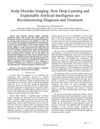
 Deep learning and explainable AI are improving scalp disorder diagnosis, but challenges in transparency and data quality remain.