June 2020 in “Zenodo (CERN European Organization for Nuclear Research)” Robertsonian translocation can cause recurrent miscarriages.
April 2019 in “Journal of the Endocrine Society” Mosaic Klinefelter syndrome can affect male fertility and may be missed in routine tests.
 April 2024 in “Pigment cell & melanoma research”
 Different types of resting melanocyte stem cells have unique characteristics and vary in their potential to become other cells.
October 2019 in “European Journal of Dermatology” The boy's hair and skin color differences are due to a pigmentation disorder.
February 2022 in “Authorea (Authorea)” PAON shows skin patterns due to genetic mosaicism.
March 2005 in “Journal of the American Academy of Dermatology” Recognizing minor skin lesions can help identify serious cancer syndromes.
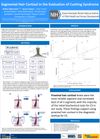 May 2016 in “Endocrine Abstracts”
 Proximal hair cortisol is a reliable tool for diagnosing Cushing's Syndrome.
 December 2024 in “Kırıkkale Üniversitesi Tıp Fakültesi Dergisi”
 Chromosomal microarray analysis is important for diagnosing rare genetic variations and guiding treatment.
25 citations
,
May 2004 in “Prenatal Diagnosis” Prenatal genetic diagnosis may not predict MELAS syndrome severity in offspring.
3 citations
,
April 2012 in “Cancer research” Mouse skin cancer progression involves a unique group of cells marked by ABCG2 and MTS24.
 61 citations
,
September 2008 in “Stem Cells”
61 citations
,
September 2008 in “Stem Cells” Most hair follicle stem cells do not protect their DNA by dividing it unevenly.
158 citations
,
December 2002 in “Development” Msx2-deficient mice experience irregular hair growth and loss due to disrupted hair cycle phases.
 14 citations
,
March 2020 in “Cold Spring Harbor Perspectives in Biology”
14 citations
,
March 2020 in “Cold Spring Harbor Perspectives in Biology” Mouse spermatogenesis shows that stem cells can behave flexibly and move widely in open environments.
September 2024 in “Dermatologica Sinica” Early and accurate diagnosis of congenital smooth muscle hamartomas is crucial to distinguish them from other conditions.
March 2021 in “AACE clinical case reports” A man with both Klinefelter syndrome and primary hyperparathyroidism showed a rare combination of symptoms and genetic patterns.
June 2025 in “Histopathology” Epithelial elements in superficial angiomyxomas are non-neoplastic growths mimicking embryogenesis.
19 citations
,
February 2001 in “Journal of paediatrics and child health” A new mutation in the mitochondrial DNA was found in a boy with MELAS, even though his family didn't show typical signs.
4 citations
,
December 2016 in “Blood” A new gene mutation may cause cyclic thrombocytopenia by affecting platelet production.
 October 2022 in “Boletín médico del Hospital infantil de México/Boletín médico del Hospital Infantil de México”
 The patient has a rare skin condition that shows features of two known disorders.
 November 2025 in “Archiv für Pathologische Anatomie und Physiologie und für Klinische Medicin”
 Sporadic trichoblastic neoplasms generally don't recur or spread, with one case showing a specific genetic fusion.
22 citations
,
January 1999 in “Dermatology” The condition might be caused by genetic changes after birth.
July 2025 in “Genome biology” HT-scCAT-seq helps understand gene regulation in embryonic skin development.
34 citations
,
January 1998 in “Archiv für Pathologische Anatomie und Physiologie und für Klinische Medicin” Trichoblastomas may mimic fetal skin development by having many Merkel cells, unlike adult skin.
March 2025 in “Laboratory Investigation” MESTSV is a rare tumor that is mostly benign but needs long-term monitoring due to potential recurrence.
 April 2016 in “The journal of investigative dermatology/Journal of investigative dermatology”
 MPZL3 is crucial for seborrheic dermatitis development.
15 citations
,
November 2020 in “Development” Stem cells in the eye have different roles and behaviors, helping maintain and repair the eye's surface.
 December 2025 in “Drug Discovery and Molecular Docking (DDMD)”
 Single-cell transcriptomics reveals detailed cellular diversity and key pathways in tissue regeneration.
 301 citations
,
May 1998 in “Genes & Development”
301 citations
,
May 1998 in “Genes & Development” Ets2 gene is crucial for placental development in mice.
 January 2008 in “Yearbook of Dermatology and Dermatologic Surgery”
 One type of progenitor cell can maintain normal skin in mice.
18 citations
,
February 2001 in “Der Hautarzt” A woman with myotonic dystrophy had multiple skin tumors on her scalp, suggesting a genetic link.