
A teenager had both alopecia areata and vitiligo, which are rare to occur together.
 March 2021 in “Indian Journal of Case Reports”
 A young woman with late-stage Vogt-Koyanagi-Harada disease was successfully treated at a hospital.
Treating vitiligo with stem cells and melanocytes from hair, along with UVB light, works better than without the light.

Wildebeest stress and hormone levels are influenced by food availability, human presence, and reproductive cycles.
 April 2018 in “Dermatologic Surgery”
 A new surgical technique using vellus hair grafts effectively treated vitiligo without causing unwanted hair growth.
Forensic hair analysis for drugs is now more reliable and accurate.
 March 2014 in “Journal of the American Academy of Dermatology”
 Alopecia areata is relatively common in children, has a variable course, and shows different responses to treatment; thyroid testing is recommended for those affected.
 February 2013 in “Journal of The American Academy of Dermatology”
 A boy with a rare birthmark called verrucous hemangioma needed careful timing for surgery due to its size and depth.
 February 2013 in “Journal of The American Academy of Dermatology”
 Most children with skin inflammation taking methotrexate had lab abnormalities, but liver issues often improved without changing the medication dose.
 February 2013 in “Journal of The American Academy of Dermatology”
 Using hair loss drugs finasteride and dutasteride may cause sexual side effects.
 September 2011 in “Clinical Biochemistry”
 The demineralized bone matrix scaffold is better for cell attachment than the mineralized bone allograft.
 January 2006 in “mediaTUM – the media and publications repository of the Technical University Munich (Technical University Munich)”
 Cattle hair isotope analysis can reveal diet and farm system characteristics.
 May 2002 in “British Journal of Dermatology”
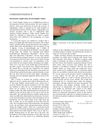
 A pregnant woman's skin condition improved after giving birth, possibly due to high estrogen levels during pregnancy.
 May 2002 in “British Journal of Dermatology”
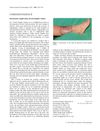
 Hair loss caused by longer latent hair cycle and sudden miniaturization, not gradual follicle size reduction.
 1 citations
,
August 2023 in “bioRxiv (Cold Spring Harbor Laboratory)”
1 citations
,
August 2023 in “bioRxiv (Cold Spring Harbor Laboratory)” The research created a detailed map of skin cells, showing that certain cells in basal cell carcinoma may come from hair follicles and could help the cancer grow.
 1 citations
,
August 2021 in “Movement disorders clinical practice”
1 citations
,
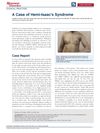
August 2021 in “Movement disorders clinical practice” A man with Isaac's syndrome affecting only one side of his body improved after immune system-targeted treatment.
January 2005 in “Enlighten: Publications (The University of Glasgow)” Melanocyte pathology requires keratinocyte hyperplasia and regulation dysfunction.
15 citations
,
October 2012 in “Journal of child neurology” The same genetic mutation in Sjögren-Larsson syndrome can lead to different levels of severity, suggesting other factors influence the symptoms.
 3 citations
,
March 2019 in “Case Reports”
3 citations
,
March 2019 in “Case Reports” A man with myotonic dystrophy type 1 had 28 skin cancers, suggesting a link between the disease and skin cancer, emphasizing the need for sun protection and regular skin checks.
7 citations
,
August 2008 in “Immunogenetics” A gene mutation in mice causes increased mast cells and disorganized hair follicles in their skin.
21 citations
,
April 2000 in “Journal of Cutaneous Pathology” The hamartoma is an abnormal hair growth with limited development in the upper hair follicle.
7 citations
,
February 2012 in “Journal of cutaneous pathology” The document describes previously unreported unique skin changes in a rare genetic disorder called Hereditary mucoepithelial dysplasia.
 January 2022 in “bioRxiv (Cold Spring Harbor Laboratory)”
 Skin lesions in Carney complex are likely caused by a specific group of skin cells that promote pigment production due to a genetic mutation.
5 citations
,
December 2016 in “Microscopy Research and Technique” EPI-NCSCs from hair follicles may help treat brain development issues in mice.
5 citations
,
December 2014 in “Molecular cytogenetics” A specific genetic change is linked to mental disorders, intellectual disability, and possibly autoimmune disease in a family.
78 citations
,
August 1996 in “The Journal of Clinical Endocrinology & Metabolism” The same gene mutation can cause different symptoms in family members.
 11 citations
,
December 2014 in “The American journal of pathology”
11 citations
,
December 2014 in “The American journal of pathology” A gene deletion in mice causes weak protein, immune issues, hair loss, airway problems, and wasting disease.
9 citations
,
May 2014 in “BMC medical genetics” A woman with a unique syndrome similar to TRPS has a genetic change near the TRPS1 gene, affecting its regulation.
64 citations
,
February 2008 in “Cancer Research” Inactivating both p53 and Rb genes in mice speeds up aggressive skin cancer development.
April 2019 in “Journal of Investigative Dermatology” Researchers created a new mouse model for studying scleroderma.