 7 citations
,
May 2005 in “Experimental Dermatology”
7 citations
,
May 2005 in “Experimental Dermatology” Two mouse mutations cause similar hair loss despite different skin changes.
April 2018 in “Dermatologic Surgery” 
Proper niche formation in Drosophila requires Slit-Robo signaling for cell migration.
2 citations
,
January 2024 in “Revista Paulista de Pediatria” A rare genetic mutation caused severe symptoms in a 6-year-old girl with mandibuloacral dysplasia type A.
76 citations
,
January 1998 in “Mammalian Genome” December 2022 in “Biochemical and Biophysical Research Communications” HtrA2 activity is crucial for normal hair growth by regulating fat cell development.
175 citations
,
September 1998 in “British Journal of Dermatology” Keratin 17 gene mutations cause both steatocystoma multiplex and pachyonychia congenita type 2.
June 2026 in “The Journal of Sexual Medicine” Rare seminoma found in a 33-year-old woman with atypical genitalia and no Y chromosome.
 20 citations
,
March 1985 in “Journal of The American Academy of Dermatology”
20 citations
,
March 1985 in “Journal of The American Academy of Dermatology” Genetic factors alone might not cause pemphigus vulgaris; other factors like birth complications and puberty may trigger it.
 July 2026 in “Journal of Ovarian Research”
 The study identified diverse cell types and gene expressions in ovarian steroid cell tumors, improving understanding of this rare tumor.
9 citations
,
January 2011 in “American Journal of Dermatopathology” Pilomatrixoma involves abnormal hair keratin production and cell death, causing debris and cysts.
3 citations
,
March 2019 in “American Journal of Dermatopathology” Recognizing rare tumor combinations is crucial for accurate diagnosis and treatment.
 50 citations
,
December 2011 in “Skin Research and Technology”
50 citations
,
December 2011 in “Skin Research and Technology” The algorithm effectively removes hair from skin images, improving melanoma diagnosis accuracy.
 48 citations
,
July 1993 in “The journal of investigative dermatology/Journal of investigative dermatology”
48 citations
,
July 1993 in “The journal of investigative dermatology/Journal of investigative dermatology” Hair growth is controlled by specific gene clusters and proteins, and cysteine affects hair gene expression in sheep.
14 citations
,
May 2022 in “Cell Reports” Basal cell carcinomas need extra mutations to grow from small to large tumors.
 1 citations
,
July 2023 in “Nature communications”
1 citations
,
July 2023 in “Nature communications” MOF controls key genes for skin development by regulating mitochondrial and ciliary functions.
 60 citations
,
February 2013 in “Cell reports”
60 citations
,
February 2013 in “Cell reports” The balance between androgen receptor and p53 is crucial for sebaceous gland differentiation.
20 citations
,
November 2004 in “Archives of Pathology & Laboratory Medicine” A rare benign skin growth called melanocytic matricoma was identified in a 69-year-old man.
53 citations
,
July 2002 in “Journal of Investigative Dermatology” The Dfl mutation in mice causes poor sebaceous gland function and complete hair loss.
1 citations
,
July 2024 in “Journal of Investigative Dermatology” Immune cells boost stem cell activity in hairy moles, causing more hair growth.
 April 2019 in “Journal of Investigative Dermatology”
 Merkel cell carcinoma is most likely to recur within two years of diagnosis, and factors like immune suppression, being over 75, and male sex increase this risk.
 November 2025 in “Frontiers in Immunology”
 SQSTM1 gene issues may increase the risk of alopecia areata.
75 citations
,
March 1998 in “Journal of Investigative Dermatology” The transgene likely activated an oncogene or interrupted a tumor suppressor gene, causing melanoma in mice.
93 citations
,
May 1990 in “The EMBO Journal” Mice with extra sheep genes had hair that fell out and regrew in cycles.
Deleting the MAD2L1 gene in mice led to rapid tumor growth despite chromosomal instability.
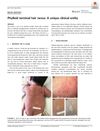 August 2018 in “Pediatric Dermatology”
 A baby had a unique skin condition with a pale patch and surrounding dark hairs, not linked to other health issues.
2 citations
,
January 2020 in “Skin Appendage Disorders” Ustekinumab treatment may reveal a genetic tendency for steatocystoma multiplex in psoriasis patients.
 6 citations
,
April 2010 in “Cellular Reprogramming”
6 citations
,
April 2010 in “Cellular Reprogramming” Pig skin cells can turn into mesodermal cells but lose their ability to become neural cells.
22 citations
,
May 2007 in “Molecular Biotechnology”  November 2024 in “NeoReviews”
 Pallister-Killian Syndrome is a complex genetic disorder requiring coordinated care and genetic counseling.