11 citations
,
October 2017 in “Dermatologic Surgery” Men need tailored laser and energy-based cosmetic treatments.
5 citations
,
March 2020 in “Aids Reviews” Hair antiretroviral concentration is affected by hair type, segment position, housing, drug use, sexual behavior, kidney function, and genetics.
5 citations
,
May 2016 in “Jahangirnagar University Journal of Biological Sciences” Eclipta alba was successfully grown in the lab with normal growth and flowering.
1 citations
,
July 2021 in “Forensic science international” Both a lock of hair and a single hair strand can show chronic drug use, but at least six single hairs are needed for accurate results.
1 citations
,
January 2006 High temperatures and cosmetic processes can damage hair keratin, affecting its structure and strength.
 April 2023 in “The journal of investigative dermatology/Journal of investigative dermatology”
 The TRPV3 channel structure changes linked to severe itch and hyperkeratosis were identified using cryo-EM.
June 2022 in “Indian Journal of Ophthalmology/Indian journal of ophthalmology” Early and aggressive treatment is crucial for preserving vision in infants with AEC syndrome.
 27 citations
,
June 2005 in “The journal of investigative dermatology/Journal of investigative dermatology”
27 citations
,
June 2005 in “The journal of investigative dermatology/Journal of investigative dermatology” The study found that variations in hair protein genes are likely due to evolutionary deletions or duplications.
22 citations
,
October 1996 in “Dermatologic clinics” Understanding intermediate filaments helps explain hair health and related diseases.
18 citations
,
April 2018 in “Biotechniques/BioTechniques” A new method was developed to extract and analyze proteins from very short human hairs.
 18 citations
,
January 2008 in “Sen'i Gakkaishi”
18 citations
,
January 2008 in “Sen'i Gakkaishi” Thioglycolic acid and L-cysteine change hair structure differently during perms, affecting hair strength and curling efficiency.
 13 citations
,
June 2018 in “Dermatopathology”
13 citations
,
June 2018 in “Dermatopathology” A new classification system for skin cysts was proposed to improve diagnosis.
58 citations
,
July 2005 in “Molecular and Cellular Biology” A specific gene segment can make mouse skin cells glow, helping study hair growth and gene effects.
 April 2026 in “Scientific Reports”
 MSF-VMDNet accurately segments skin cancer images better than existing methods.
41 citations
,
July 2018 in “Frontiers in Neurology” Myotonic dystrophy may be classified as a segmental progeroid disorder.
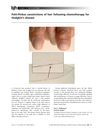 8 citations
,
February 2005 in “British Journal of Haematology”
8 citations
,
February 2005 in “British Journal of Haematology” Chemotherapy caused the patient's hair to have alternating thick and thin segments.
79 citations
,
June 1993 in “Molecular and Cellular Biology” The K5 promoter controls gene expression in skin cells, with specific DNA segments crucial for targeting and regulation.
July 2005 in “The American Journal of Human Genetics” The AR gene is linked to male-pattern baldness, TNFSF4 to heart disease, SLC19A3 to BBGD, MCT8 to a syndrome, and segmental duplications to genetic variation.
 9 citations
,
July 2010 in “British Journal of Dermatology”
9 citations
,
July 2010 in “British Journal of Dermatology” The document suggests a rare skin condition might be caused by a genetic phenomenon.
15 citations
,
November 2009 in “Journal of Comparative Pathology” Epidermolysis bullosa in calves was not caused by mutations in the keratin genes bKRT5 and bKRT14.
January 2007 in “Bristol Research (University of Bristol)” Epidermolysis bullosa in UK calves is not caused by mutations in keratin genes.
35 citations
,
April 2008 in “Journal of Biological Chemistry” Hirosaki hairless rats lack hair due to missing DNA with key keratin genes.
 4 citations
,
January 2014 in “Indian dermatology online journal”
4 citations
,
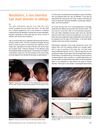
January 2014 in “Indian dermatology online journal” Monilethrix is a genetic hair disorder causing fragile, beaded hair with no effective treatment.

Hair shaft characteristics can affect mitochondrial DNA metrics, but more research is needed.
 November 2021 in “International journal of research - granthaalayah”
 The document suggests that human hair has electrical charges because of a gap in nerve cell coverage that affects electromagnetic radiation.
October 2008 in “Experimental and Clinical Endocrinology & Diabetes” Long-term unemployment leads to higher stress levels.
33 citations
,
January 2000 in “Acta Oto-Laryngologica” Epidermal growth factor increases extra hair cells in newborn rat ears.
30 citations
,
July 2023 in “Clinical Chemistry and Laboratory Medicine (CCLM)” Cortisone in hair is a more reliable indicator of stress hormone exposure than cortisol.
27 citations
,
January 1995 Melanin in black hair protects it from sun damage better than light-brown hair.
18 citations
,
April 2010 in “Langmuir” Human hair surface varies in wettability, showing daily and monthly patterns.