 April 2026 in “Scientific Reports”
 MSF-VMDNet accurately segments skin cancer images better than existing methods.
 8 citations
,
February 2005 in “British Journal of Haematology”
8 citations
,
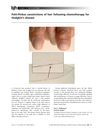
February 2005 in “British Journal of Haematology” Chemotherapy caused the patient's hair to have alternating thick and thin segments.
79 citations
,
June 1993 in “Molecular and Cellular Biology” The K5 promoter controls gene expression in skin cells, with specific DNA segments crucial for targeting and regulation.
 January 2011 in “Side effects of drugs annual”
 Tretinoin gel is safe for sun exposure, but tacalcitol doesn't significantly improve non-segmental vitiligo.
July 2005 in “The American Journal of Human Genetics” The AR gene is linked to male-pattern baldness, TNFSF4 to heart disease, SLC19A3 to BBGD, MCT8 to a syndrome, and segmental duplications to genetic variation.
 9 citations
,
July 2010 in “British Journal of Dermatology”
9 citations
,
July 2010 in “British Journal of Dermatology” The document suggests a rare skin condition might be caused by a genetic phenomenon.
 4 citations
,
October 2020 in “JAAD Case Reports”
4 citations
,
October 2020 in “JAAD Case Reports” Platelet-rich plasma may improve vitiligo treatment when used with phototherapy.
35 citations
,
April 2008 in “Journal of Biological Chemistry” Hirosaki hairless rats lack hair due to missing DNA with key keratin genes.
 4 citations
,
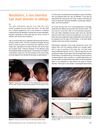
January 2014 in “Indian dermatology online journal”
4 citations
,
January 2014 in “Indian dermatology online journal” Monilethrix is a genetic hair disorder causing fragile, beaded hair with no effective treatment.

Hair shaft characteristics can affect mitochondrial DNA metrics, but more research is needed.
 January 2023 in “Research Square (Research Square)”
 Hair cortisol may be a good indicator of recent mood in people with bipolar disorder.
February 2019 in “Psychoneuroendocrinology” Hair samples can reliably show average long-term hormone levels in young women.
Hair cortisol levels can effectively indicate long-term hormone activity.
78 citations
,
August 2014 in “Anais Brasileiros de Dermatologia” New vitiligo treatments focus on controlling immune damage and restoring skin color.
33 citations
,
January 2000 in “Acta Oto-Laryngologica” Epidermal growth factor increases extra hair cells in newborn rat ears.
30 citations
,
July 2023 in “Clinical Chemistry and Laboratory Medicine (CCLM)” Cortisone in hair is a more reliable indicator of stress hormone exposure than cortisol.
27 citations
,
January 1995 Melanin in black hair protects it from sun damage better than light-brown hair.
18 citations
,
April 2010 in “Langmuir” Human hair surface varies in wettability, showing daily and monthly patterns.
 15 citations
,
July 1999 in “Dermatologic Clinics”
15 citations
,
July 1999 in “Dermatologic Clinics” The document concludes that immune system abnormalities cause alopecia areata, but the exact process is still not completely understood.
 13 citations
,
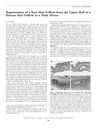
October 2002 in “Journal of Investigative Dermatology”
13 citations
,
October 2002 in “Journal of Investigative Dermatology” The upper half of a human hair follicle can grow a new hair in a mouse, but success is rare.
13 citations
,
January 2001 in “Pediatric dermatology” A dark-haired Chinese girl had hair that looked banded under certain light but was normal under a microscope.
 12 citations
,
February 1997 in “British Journal of Dermatology”
12 citations
,
February 1997 in “British Journal of Dermatology” The enzyme type 1 5α-reductase is more active in the hair follicle's lower part than in the skin's outer layer.
 7 citations
,
September 1977 in “PubMed”
7 citations
,
September 1977 in “PubMed” A new technique called hair-lifting was introduced to treat male-pattern baldness and can also give a partial face-lift.
5 citations
,
March 2009 in “Skin Pharmacology and Physiology” DNA flow cytometry effectively evaluates how different conditions affect hair growth cell activity.
2 citations
,
September 2008 in “International Journal of Cosmetic Science” Brushing causes more long hair breaks than combing, especially with bleached or wet hair.
November 2025 in “Psychoneuroendocrinology” Hair proteomics could be a useful, non-invasive tool for identifying stress-related disorders.
 March 2025 in “medRxiv (Cold Spring Harbor Laboratory)”
 Hair proteomics could be a promising non-invasive way to identify stress-related disorders.
 August 2023 in “Research Square (Research Square)”
 Melanocytes may trigger the immune response in alopecia areata, affecting hair regrowth.
 December 2022 in “Journal of Experimental Biology and Agricultural Sciences”
 Using certain plant growth regulators together improves the cloning of the medicinal plant Eclipta alba.
 November 2021 in “International journal of research - granthaalayah”
 The document suggests that human hair has electrical charges because of a gap in nerve cell coverage that affects electromagnetic radiation.