 6 citations
,
August 2017 in “Physiological Research”
6 citations
,
August 2017 in “Physiological Research” Setipiprant may reduce inflammation by blocking an enzyme called aldose reductase.
January 2004 in “Indian Journal of Nephrology” 
Low-dose sorafenib can cause severe facial acne, treatable with topical medication.
 September 2019 in “Journal of Investigative Dermatology”
 Targeted therapy with Ustekinumab significantly improved a skin condition called ILVEN, which is caused by mutations in the CARD14 gene.
 December 2025 in “International Journal of Innovative Technologies in Social Science”
 Oral JAK inhibitors effectively treat alopecia areata and are generally well-tolerated.
 20 citations
,
February 2002 in “Expert Opinion on Therapeutic Patents”
20 citations
,
February 2002 in “Expert Opinion on Therapeutic Patents” New research is needed to create better drugs that block the enzyme responsible for conditions like male baldness and prostate enlargement.
5 citations
,
January 2016 in “International Journal of Trichology” Erlotinib can cause hair loss and texture changes.
 January 2024 in “Journal of dermatology and skin science”
 Topical aprepitant reduces skin rash and hair loss caused by cancer treatment.
1 citations
,
January 2026 MicroRNA-200 prevents sebaceous gland development by inhibiting SOX9 and cell cycle progression.
 May 2026 in “SKIN The Journal of Cutaneous Medicine”
 Baricitinib may cause low blood sugar in some patients, so careful monitoring is needed.
21 citations
,
August 2002 in “British Journal of Ophthalmology” Intralesional cidofovir may be a viable alternative treatment for SCC.
1 citations
,
March 2025 in “Skin Appendage Disorders” Baricitinib for alopecia areata may rarely cause eye issues like keratitis.
 15 citations
,
October 2014 in “Journal of Investigative Dermatology”
15 citations
,
October 2014 in “Journal of Investigative Dermatology” New treatments targeting the Hedgehog pathway can help treat advanced skin cancer but may have side effects and their effectiveness in early stages is unknown.
May 2018 in “Dermatologic Surgery”  7 citations
,
August 2023 in “Journal of the American Academy of Dermatology”
7 citations
,
August 2023 in “Journal of the American Academy of Dermatology” JAK inhibitors offer new hope for treating severe alopecia areata.
December 2025 in “Biomedicines” Tyrosine kinase inhibitors for endocrine tumors often cause skin issues, requiring early management and treatment adjustments.
2 citations
,
January 2004 in “Linchuang pifuke zazhi” ZD1839 can cause skin issues like acne and hair changes.
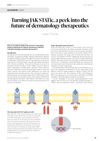 August 2024 in “New Zealand Medical Student Journal”
 JAK inhibitors show promise for treating skin diseases effectively and safely.

The treatment was ineffective in humans.
 January 2022 in “Dermatology Review”
 EGFR inhibitors can cause unusual localized hair growth.
 November 2017 in “Asian journal of pharmaceutical and clinical research”
 Three compounds from Dadap leaves may help treat hair loss.
January 2023 in “CINECA IRIS Institutial research information system (University of Pisa)” The composition helps treat hair loss.
 August 2013 in “Nature Reviews Drug Discovery”
 New treatments may restore cancer-blocking proteins, slow prostate cancer, identify drug targets, and potentially regrow hair.
![Synthesis of Spiro[cyclohexane-1,2'-[2H]indene] Derivatives as Inhibitors of Steroid 5α-Reductase](/images/research/d91300a7-4d66-4d2c-90ac-293b0dbc5ff5/small/21048.jpg) 8 citations
,
June 1995 in “Helvetica Chimica Acta”
8 citations
,
June 1995 in “Helvetica Chimica Acta” Compound 15a was effective in inhibiting 5α-reductase.
36 citations
,
December 2021 in “The journal of allergy and clinical immunology/Journal of allergy and clinical immunology/The journal of allergy and clinical immunology” Two drugs, ritlecitinib and brepocitinib, improved scalp hair loss condition markers.
15 citations
,
October 2014 in “The journal of investigative dermatology/Journal of investigative dermatology” Erlotinib causes skin inflammation through IL-1, which can be reduced by anakinra.
June 1996 in “Journal of Dermatological Science” 5 citations
,
April 2019 in “Journal of Investigative Dermatology” Oral JAK inhibitors improved alopecia areata by modulating immune responses and boosting hair growth.
 18 citations
,
October 2010 in “Bioorganic & Medicinal Chemistry Letters”
18 citations
,
October 2010 in “Bioorganic & Medicinal Chemistry Letters” New hybrid compound found to effectively prevent hair loss.
8 citations
,
January 2023 in “Indian Dermatology Online Journal” Baricitinib effectively treats certain skin conditions but may have serious side effects.