 2 citations
,
April 2022 in “PLoS ONE”
2 citations
,
April 2022 in “PLoS ONE” Vibration treatment may reduce migraine pain by changing cell structures.
 2 citations
,
April 2017 in “Molecular Medicine Reports”
2 citations
,
April 2017 in “Molecular Medicine Reports” Blocking autophagy increases survival of inner ear hair cells exposed to gentamicin.
 2 citations
,
January 2008 in “Journal of Society of Cosmetic Chemists of Japan”
2 citations
,
January 2008 in “Journal of Society of Cosmetic Chemists of Japan” PMS nanoparticles improve damaged hair by protecting and restoring its surface and color.
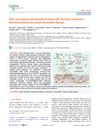 1 citations
,
October 2025 in “Nano Research”
1 citations
,
October 2025 in “Nano Research” A new microneedle patch effectively treats atopic dermatitis by reducing skin stress and restoring immune balance.
 1 citations
,
January 2021 in “Pakistan journal of zoology”
1 citations
,
January 2021 in “Pakistan journal of zoology” Red fox, golden jackal, and gray wolf hairs have similar features but differ in length, thickness, and inner structure.
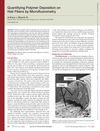 1 citations
,
July 2019 in “Microscopy Today”
1 citations
,
July 2019 in “Microscopy Today” Microfluorometry effectively measures how much polymer coats and penetrates hair, useful for evaluating hair products.
 1 citations
,
January 2015 in “Journal of nutrition & health”
1 citations
,
January 2015 in “Journal of nutrition & health” Fish oil improves skin health in people with diabetes and high cholesterol.
 1 citations
,
June 2012 in “Springer eBooks”
1 citations
,
June 2012 in “Springer eBooks” Acupuncture may improve reproductive and metabolic functions in PCOS without negative side effects, but more research is needed to confirm its effectiveness.

Neeli Bhringadi hair oil improves hair growth and reduces graying.
 July 2026 in “Frontiers in Cellular and Infection Microbiology”
 Staphylococcus levels may indicate hair loss in men and could help develop new treatments.
 June 2026 in “Institutional Repositories DataBase (IRDB)”
 Crickets have genetically controlled hair plates that help them sense and move their antennae.
 March 2026 in “Inflammopharmacology”
 Ursolic acid from Ochrosia elliptica leaves may help manage PCOS symptoms.

The new microneedle system improves hair growth in alopecia treatment.
 January 2026 in “Nature Communications”
 A wearable device using NIR light may help treat hair loss non-invasively.
 January 2026 in “RSC Advances”
 The hydrogel helps heal wounds without scars by releasing two drugs gradually.
 October 2025 in “Asian Journal of Pharmaceutical Research and Development”
 Phytosome technology improves the absorption and effectiveness of citrus flavonoids.

Whiskers can form without sensory nerves or Foxd1, thanks to Meis2 in mesenchymal cells.
 March 2025 in “Frontiers in Pharmacology”
 The hydrogel dressing rapidly heals wounds and promotes blood clotting better than existing options.
 March 2025 in “Scientific Reports”
 Menthol-based microemulsions improve skin delivery of finasteride and silodosin.

New hydrogel sensors can be quickly made and customized for wearable devices.
 July 2024 in “Anti-Infective Agents”
 The herbal shampoo effectively treats dandruff without harmful side effects.
 February 2024 in “Research Square (Research Square)”
 Proteins from Tianshan red deer abomasum have strong anti-inflammatory, anti-tumor, and antioxidant effects.
 January 2024 in “Journal of dermatology and skin science”
 Topical aprepitant reduces skin rash and hair loss caused by cancer treatment.
 January 2024 in “Seven Editora eBooks”
 Different techniques measure hair properties to ensure cosmetic products work.
 January 2024 in “Regenerative Biomaterials”
 Dissolvable microneedles with Ginsenoside Rg3 can help treat hair loss by improving drug delivery and stimulating hair growth.
 September 2023 in “bioRxiv (Cold Spring Harbor Laboratory)”
 The mTurq2-Col4a1 mouse model shows that cells can divide while attached to stable basement membranes during development.
 January 2023 in “Annals of Dermatology”
 Patients with a specific genetic variant have more severe alopecia areata and higher recurrence rates.

Human hair keratins can be turned into useful 3D biomedical scaffolds through a freeze-thaw process.

Delonix polymeric nanoparticles with isotretinoin effectively treat acne by targeting hair follicles and reducing skin irritation.
 April 2018 in “D-Scholarship@Pitt (University of Pittsburgh)”
 Keratin-75 is secreted by ameloblasts in a unique way without a signal peptide.